
The Kremlin on Wednesday rejected a new investigation that estimates at least 700,000 Russian troops have died in President Vladimir Putin’s war against Ukraine, as analysts warn that the scale of the losses could make it increasingly difficult for Moscow to maintain its offensive.
The analysis, released Monday by the independent Russian outlets Meduza and Mediazona, used leaked government records along with statistical modeling.
“The only body authorized to publish official casualty figures is the Russian Defense Ministry,” Kremlin spokesman Dmitry Peskov told reporters Wednesday, according to The Moscow Times.
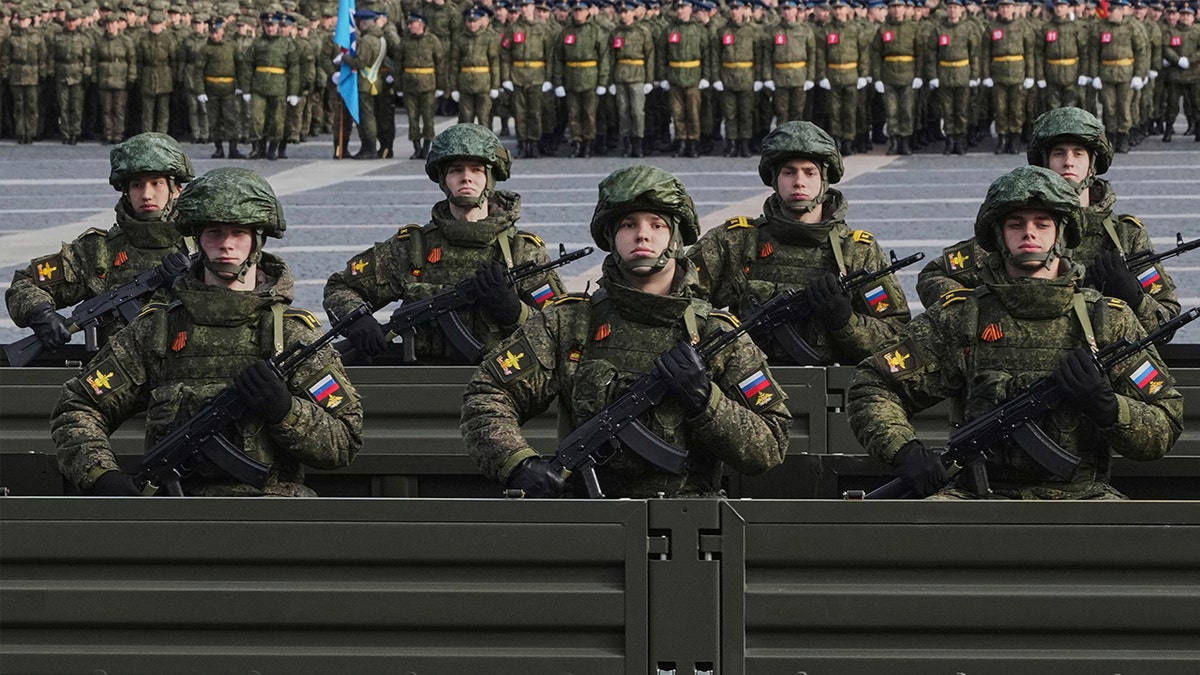
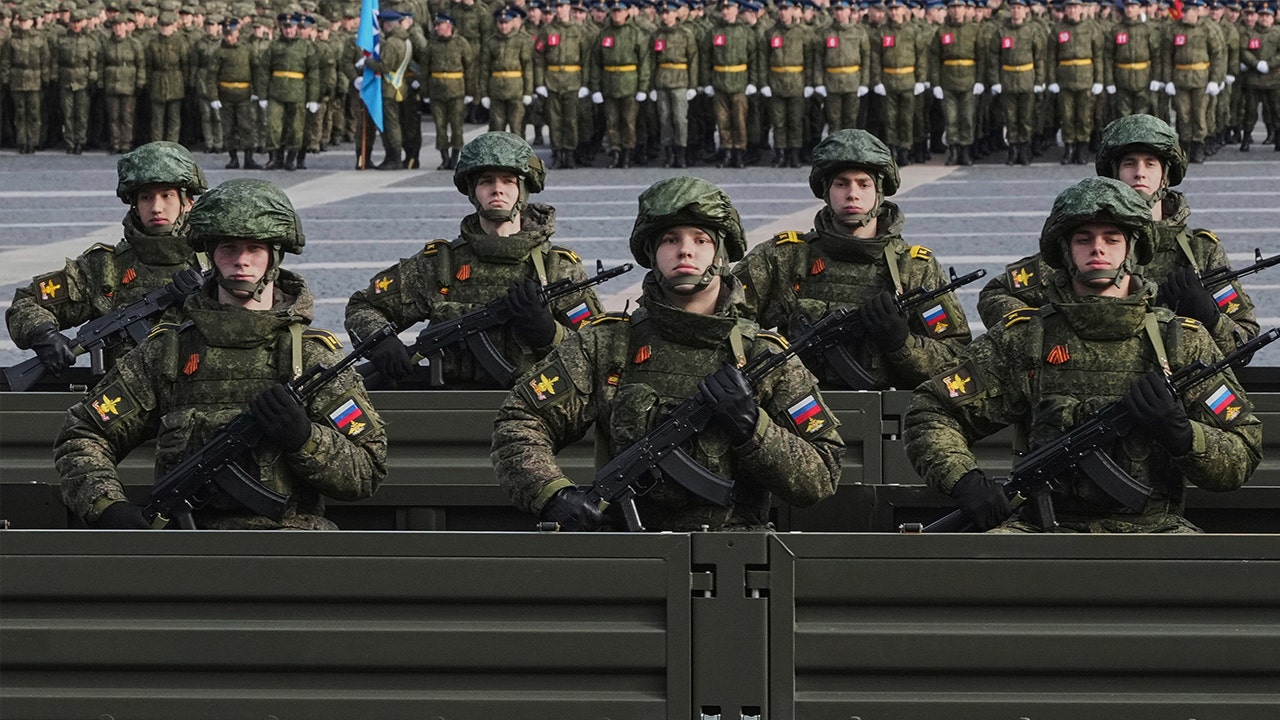
Russian troops ride in a truck during a rehearsal for the Victory Day military parade at Palace Square in St. Petersburg, Russia, on April 30, 2025. (AP Photo/Dmitri Lovetsky)
Peskov advised journalists to ignore alternative casualty estimates, but he did not provide a new official figure for Russian military deaths.
The investigation is based in part on documents obtained by the hacking groups Belarusian Cyber Partisans and Silent Crow after they infiltrated Russia’s federal statistics agency, Rosstat.
The researchers found records indicating that at least 490,000 military deaths had been registered by late September 2026. Because fatalities can take time to be recorded—and many troops officially classified as missing are believed to have died—the investigators concluded that the real toll likely stood at 700,000 or higher by that point.
Keti Korkiya, a research analyst at the Foundation for Defense of Democracies, told News Outlet that the estimate appeared credible. She noted that Britain’s defense chief had already placed Russia’s military death toll above 500,000 in September. “The largest unknown is how many of those still listed as missing are actually dead,” Korkiya said.
“Russia remains capable of continuing the war despite these losses,” she said. “The country is still bringing in tens of thousands of recruits each month, and the Duma this week approved a budget allocating 35% of next year’s federal spending to defense. The war is placing serious strain on the Russian economy, but that pressure is not likely to persuade Putin to end the fight anytime soon.”
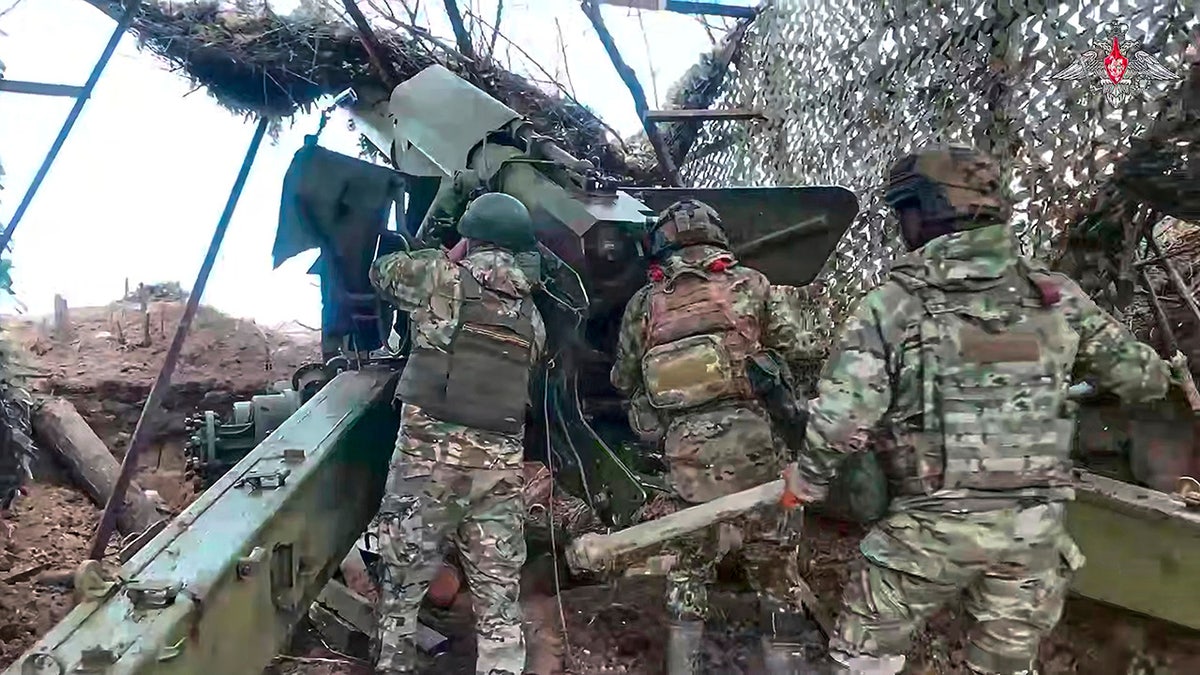
Russian Army troops prepare a 152mm Giatsint-B howitzer to fire on Ukrainian positions in Ukraine, in a video released by the Russian Defense Ministry press service on May 15. (Russian Defense Ministry Press Service via AP)
The figures are also prompting fresh questions about whether Russia can continue replacing its battlefield losses nearly five years after the war began.
A European intelligence source who spoke with News Outlet last week characterized Russia’s recruitment drive as a form of “hidden mobilization.” According to the source, recruiters have approached people in public places, including homeless individuals, and offered them military contracts.
The source said Russia is also continuing to enlist prisoners and people facing financial hardship, including individuals with unpaid debts or child-support obligations. Military service is effectively being presented as “a kind of social deal,” the source said.
The approach is increasingly focused on “more quantity, less quality,” the source added.
A separate report from the Washington-based Center for Strategic and International Studies found that Russia’s heavy losses have produced only limited territorial gains.

Ukraine launches domestically produced FP-5 “Flamingo” long-range cruise missiles during an operation targeting Russian military sites. (Den Shtilierman via X/East2West)
The CSIS report, written by Seth G. Jones and Riley McCabe, estimated that Russia had sustained roughly 1.4 million battlefield casualties by mid-2026, including as many as 450,000 deaths.
Ukraine has endured substantial losses as well. The report estimated that between 125,000 and 150,000 Ukrainian troops were killed from February 2022 through June 2026, while total Ukrainian military casualties ranged from 525,000 to 625,000.
MORE STORY: California Deploys Robotic Dogs Ahead of El Niño Storms
Even under mounting military and economic pressure, the researchers said Putin was unlikely to give up his objectives in Ukraine unless the costs of the war increased further.
“Without imposing greater costs in lives and resources, Putin is likely to continue fighting,” Jones and McCabe wrote.
Korkiya said Putin’s continued commitment to the war reflects his belief that Russia can outlast Ukraine and its Western supporters. “Putin has had chances to halt the fighting. When Ukraine accepted a U.S. proposal for a 30-day ceasefire, he decided to continue,” she said.
“He continues to believe Russia can absorb these losses longer than Ukraine and its allies can maintain their support. Until now, even the deaths of hundreds of thousands of Russian soldiers have not altered that calculation.”
Latvian President Edgars Rinkēvičs offered a similar assessment in an interview with News Outlet on Monday, saying Western governments may be underestimating the ideological and religious beliefs that influence Russia’s war strategy.
“The West is too pragmatic and rational,” Rinkēvičs said.
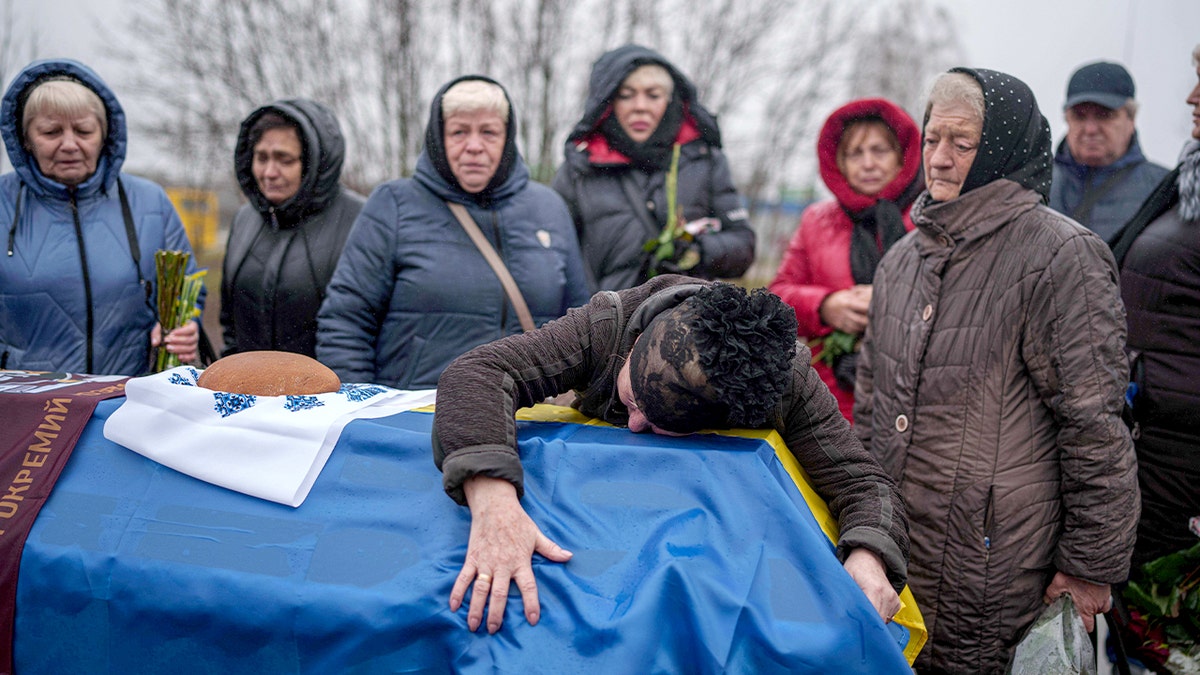
A mother weeps beside the coffin of her son, Oleh Borovyk, a Ukrainian serviceman killed near Pokrovsk during fighting with Russian forces, at his funeral in Boiarka, Ukraine, on Dec. 3, 2025. (Evgeniy Maloletka/AP)
Rinkēvičs cited the idea of Russia as the “Third Rome” and its claimed historic role as Christianity’s protector, saying those beliefs help shape Moscow’s foreign policy and its invasion of Ukraine.
“Russia is using diplomatic diversions simply to extend the war,” Rinkēvičs said.
He said a meaningful diplomatic opportunity might arise in the spring or summer of 2027 if Ukraine manages to withstand Russia’s winter offensive.
“At present, Russia is pursuing diplomacy to prolong the war, not to bring it to an end,” he said.
At the same time, Ukraine continues to strike Russian military targets far behind the front lines.
Ukraine’s General Staff said Wednesday that its forces damaged five Russian aircraft at Savasleyka airbase in Russia’s Nizhny Novgorod region. The aircraft reportedly included three MiG-31 fighter jets and two Su-34 fighter-bombers, according to an official Ukrainian military statement.
Russia had not immediately responded to the claim, Reuters reported Wednesday.
The continued escalation has also fueled concern that the conflict could spill into NATO territory.

Two suspected Russian missiles and a drone crashed in southeastern Poland on Friday, with two landing within 30 miles of the Polish-Ukrainian border, according to the Associated Press. Polish soldiers are pictured above on Friday. (Wojtek Radwanski/AFP via Getty Images)
Poland’s military said Tuesday that a Russian drone briefly crossed into Polish airspace during an overnight assault on western Ukraine. The incident occurred four days after three Russian cruise missiles came down in Poland.
Reuters contributed to this report.
SEE ALSO: Deloitte Consultant Inherits Multimillion-Dollar Fortune From Grandfather


