Share this @internewscast.com
On Sunday, Treasury Secretary Scott Bessent suggested that President Trump might need to “escalate to de-escalate” the ongoing conflict with Iran. In his remarks, he also justified the increased costs that Americans are experiencing due to the situation, emphasizing that these sacrifices are necessary to prevent Iran from developing nuclear weapons.
Bessent made these statements during an appearance on NBC’s “Meet the Press,” shortly after President Trump issued a stern warning to Iran. Trump threatened to “obliterate” Iran’s energy infrastructure if the nation did not comply with a 48-hour ultimatum to completely reopen the Strait of Hormuz.
This deadline set by Trump is scheduled to lapse shortly after 7:30 p.m. on Monday.

During his “Meet the Press” interview with Kristen Welker, Bessent explained the president’s position by stating, “Sometimes you have to escalate to de-escalate,” in response to questions about Trump’s recent threat. This comes even as the president mentioned he was considering “winding down” the military actions in Iran.
Bessent clarified that the ideas of reducing the conflict and intensifying military strikes are “not mutually exclusive.”
“This is the only language the Iranians understand,” Bessent added, reinforcing his stance on the administration’s strategy.
The Trump administration official signaled that the current focus of Operation Epic Fury â launched by Trump just over three weeks ago â is on taking out the Iranian military units that could prevent ships from sailing safely through the Strait of Hormuz.
âWe have demolished the Iranian capabilities. Their air force is completely destroyed, navy destroyed, and every day we are taking out their missiles, their missile systems and the factories that build those missiles,â Bessent explained.

âAnd now, [Joint Chiefs of Staff Chairman Gen. Dan Caine and War Secretary Pete Hegseth] are leading a campaign to destroy all the fortifications along the Strait of Hormuz.â
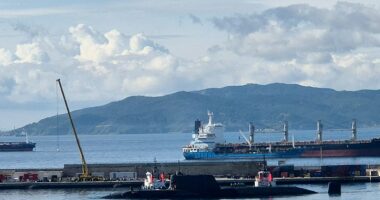
The Strait of Hormuz â responsible for a fifth of the worldâs oil exports â has been effectively closed by Tehran since Trump launched the joint US-Israeli attack on Iran on Feb. 28.
The Iranian regime has repeatedly attacked oil tankers attempting to use the critical waterway, sending oil and gas prices skyrocketing.
Bessent argued Americans should view the tradeoff of high prices for global security as a worthwhile policy.
âFifty days of temporary elevated prices â prices will come off on the other side â for 50 years of not having an Iranian regime with a nuclear weapon, the American people, they are beginning to understand, thanks to President Trump, that there is no prosperity without security,â he said.
Bessent noted that he’s not sure if prices will remain elevated for more than or less than 50 days.
The treasury secretary also defended temporarily lifting sanctions on Iranian oil âstranded at sea,â claiming that Iran was already set to make money off the crude and that the new policy would help US allies.
âIf it goes to Indonesia, if it goes to Japan or Korea â we have a much better line of sight and are able to block accounts that the oil goes into,â Bessent said. âWhen it goes into China, it completely gets recycled.â
âIn essence, we are jiu-jitsuing the Iranians. We are using their own oil against them.â