
Washington — A Republican-backed effort to advance a House-approved bill restricting congressional stock trading failed in the Senate on Wednesday. Democrats said the measure was too weak and objected to a voter ID provision they warned could severely limit mail voting.
The legislation failed on a 53-47 vote, with senators divided along party lines. It needed 60 votes to move forward.
Known as the Stop Insider Trading Act, the bill passed the House in July with support from every Republican and 13 Democrats. It would bar lawmakers, their spouses and dependent children from buying publicly traded stocks. The measure would also require them to disclose any planned sale at least one week in advance, an effort to reduce the possibility of profiting from insider information.
Democrats said the proposal falls short of what is needed, calling instead for a complete trading ban covering members of Congress, the president and members of the administration.
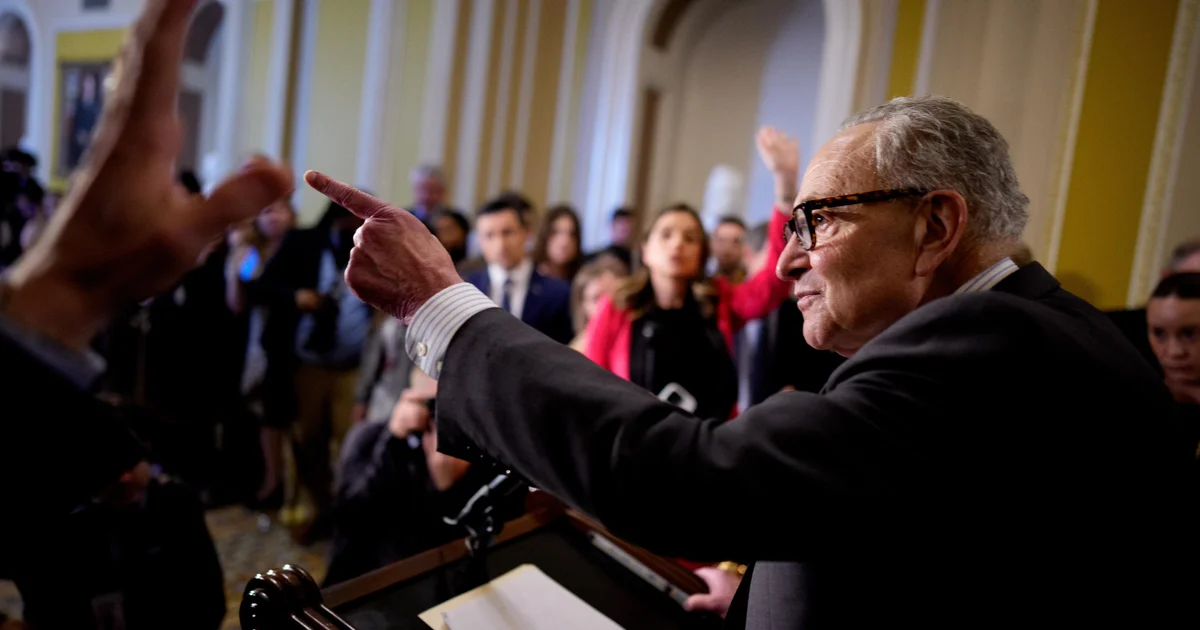
“The Republican toothless stock-trading bill is as ineffective as a screen door on a submarine,” Senate Minority Leader Chuck Schumer said on the Senate floor before the vote. “And let’s be clear: they don’t even want it to pass. They designed the bill to fail.”
The New York Democrat criticized the legislation earlier in the week, emphasizing that it would not cover the executive branch. Republicans, he said, had “carved the White House out of their supposed crack down on corruption.”
Democrats also called the bill’s requirement that voters present photo identification in federal elections a poison pill. They argued the unrelated provision was intended to make them oppose otherwise popular stock-trading restrictions. President Trump has pressed Congress to pass election-related legislation before the midterm elections.
Republican leaders proceeded with the vote Wednesday as senators prepared to leave Washington for the campaign trail. Later in the day, they were also scheduled to vote on a measure intended to protect Americans from energy costs linked to data centers. Both votes were expected to fail and were seen as efforts to force Democrats to take public positions on issues as several Senate Republican races become more competitive and control of the chamber next year remains uncertain.
Senate Majority Leader John Thune, a South Dakota Republican, described the legislation as a “common-sense piece of legislation,” citing both its stock-trading restrictions and voter ID requirement.
“It’s a pretty simple measure,” Thune said. “But an important way to ensure that members of Congress are held to the standards that America should be able to expect of their representatives.”
Congress has considered several proposals to prohibit lawmakers from trading stocks in recent years. Schumer said the latest measure “isn’t a stock-trading ban, it’s Republicans’ last-ditch effort to save face.” If Republicans truly want to ban congressional stock trading, he said, Democrats are “ready to go.”