
Spanish voters are going to the polls Sunday in a pivotal national election that could end eight years of Socialist Party rule under Prime Minister Pedro Sánchez and hand power to a center-right alliance led by the conservative People’s Party (PP).
Polling indicates the PP, led by former Galician regional president Alberto Núñez Feijóo, is likely to finish as Spain’s largest party. The decisive question is whether the PP and Vox, the right-wing party headed by Santiago Abascal, can win the 176 seats required for a majority in the 350-member Congress of Deputies, the lower chamber of Spain’s parliament. If the right fails to reach that threshold, Sánchez could again remain in office through coalition talks, even if he trails in most surveys.
“This is the most important election in Spain in the last 30 years,” said Javier Negre, a Spanish journalist and founder of EDATV. He said corruption allegations, immigration, economic pressures and concerns about the country’s direction under Sánchez are driving many right-leaning voters to the polls.
“Spain right now is divided,” Negre told News Outlet. “There is a lot of social tension between left and right. There is no middle point, there is no center (as) in other elections like eight years ago.”

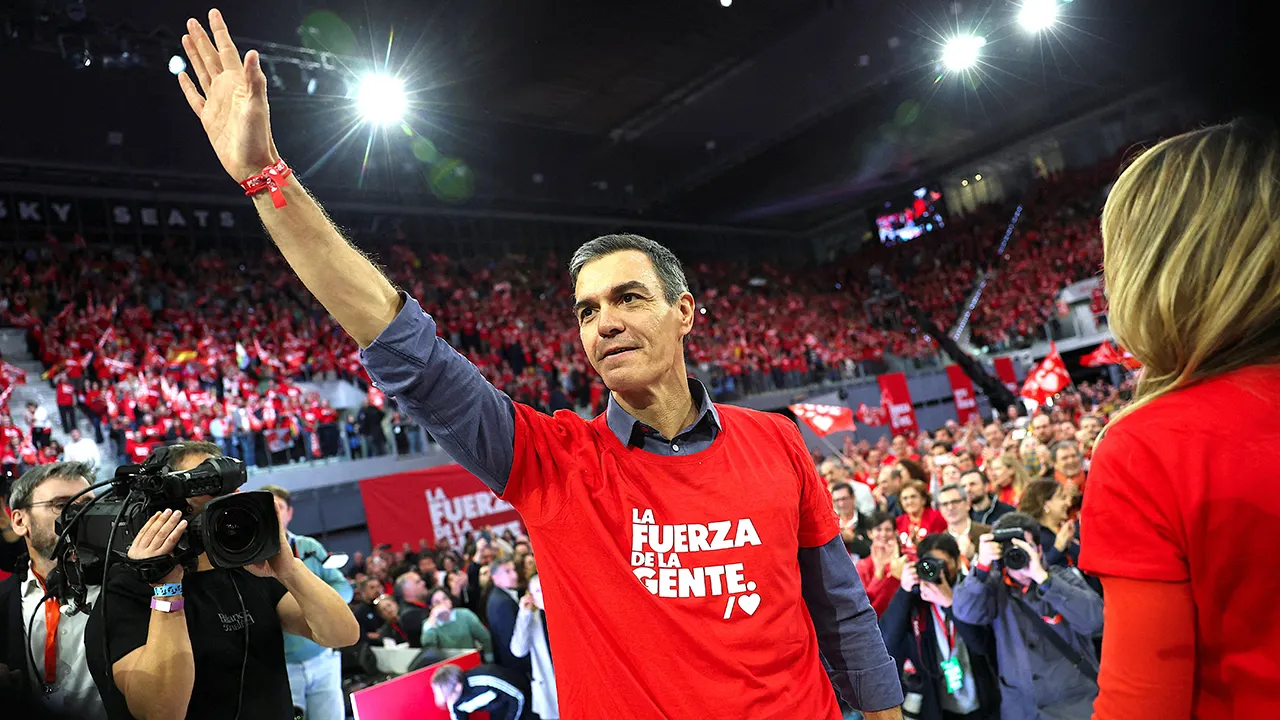
Prime Minister Pedro Sanchez wears a shirt reading “The strength of the people” as he arrives at a campaign-closing rally ahead of Spain’s general election in Madrid on Nov. 27, 2026. (Isabel Infantes/Reuters)
Immigration has emerged as a central campaign issue, but Simone Rodan-Benzaquen, the Foundation for Defense of Democracies’ senior envoy for Europe, said the snap election was set in motion by another problem.
“This election was triggered by housing, not immigration,” she told News Outlet. Sánchez called the election after parliament rejected his housing proposals, following protests over soaring affordability problems and the widely reported eviction of an 87-year-old woman who became a symbol of Spain’s housing crisis. “But voters don’t separate these issues,” Rodan-Benzaquen said. “When young Spaniards cannot afford a flat and the evening news shows a border being overrun, both feed the same verdict: the state is not in control.”
The election is being watched closely throughout Europe, where parties on the right have gained ground from Italy to the Netherlands amid heated arguments over immigration, national identity and the cost of living.

Moroccan security forces clash with migrants attempting to enter Spain’s North African enclave of Ceuta near Fnideq along the Morocco-Spain border on July 31, 2026. (Abdel Majid Bziouat/AFP via Getty Images)
Sánchez first became prime minister in 2018 after a no-confidence vote brought down the center-right government of Mariano Rajoy. He won elections in 2019 and remained in power after the 2023 election produced no clear majority. Although the PP finished first, Sánchez built a coalition and won backing from smaller regional parties.
That precedent has made political observers wary of assuming that a PP victory at the polls would automatically bring a change in government. This election, however, polling points to a potentially stronger route to an outright majority for Spain’s right than in recent contests.

People’s Party leader Alberto Nunez Feijoo addresses a campaign rally in Seville, Spain, on Nov. 27, 2026. (Marcelo del Pozo/Reuters)
Feijóo, who led the northwestern region of Galicia for more than a decade before taking charge of the national PP, has presented the election as a chance to restore what he calls political stability. He has portrayed himself as a pragmatic alternative to Sánchez, pledging tougher border enforcement, action on housing costs, less political polarization and a renewed sense of trust in government after years of controversy surrounding the Sánchez administration.
MORE STORY: Iranian adult film star wins immigration appeal over ‘implausible career’ ruling
Vox is another major factor. The nationalist right-wing party supports tighter immigration controls, a stronger concept of national unity and the reversal of some progressive measures adopted under Sánchez. Polls indicate that Vox could determine whether the PP-led right reaches a governing majority.
Rodan-Benzaquen said Sánchez has tried to make Vox, rather than his own record in office, the defining issue of the campaign. “Sánchez’s entire campaign is designed to turn an election about his record into a referendum on Vox, and the late narrowing in the polls suggests it is working,” she said. “That is his talent and his alibi.”
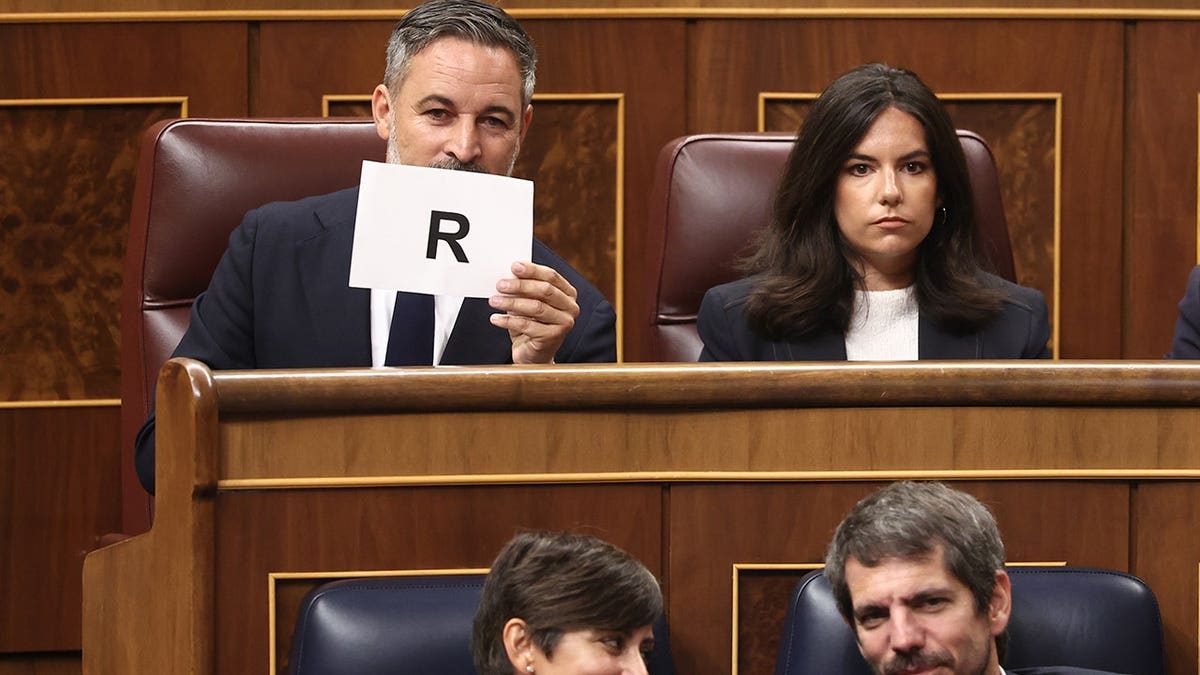
Vox leader Santiago Abascal and the party’s parliamentary spokesperson, Pepa Millan, attend a plenary session in Madrid’s Congress of Deputies on Wednesday. Abascal holds letters spelling “traidor,” or traitor, while referring to Spanish Prime Minister Pedro Sanchez. (Europa Press via Getty Images)
An average of recent surveys compiled by Spanish polling website Pulso Electoral projects that the PP and Vox would win a combined 195 seats, well above the 176 required for a majority.
Sánchez’s Spanish Socialist Workers’ Party, or PSOE, is projected to remain parliament’s second-largest force with 113 seats. To stay in power, Sánchez would probably need the support of Sumar, a left-wing coalition polling near 6%, along with several smaller regional parties—much like the alliance that kept him in office after the 2023 election.
A PP-Vox government would represent Spain’s sharpest rightward shift in years. It could reshape the country’s policies on immigration and national identity, influence its role in Europe and affect its relationships with the United States and NATO.
Vox’s advance has attracted international attention as analysts consider whether Spain is joining the broader European movement toward nationalist and anti-establishment parties.
Negre dismissed direct comparisons between Vox and other European populist parties, including Germany’s AfD. He called Vox “an old school party” that has developed into a permanent force in Spanish politics. “Vox represents the right wing, anti-establishment party,” he said, describing it as “a party of law and order” similar to Viktor Orbán’s Fidesz party in Hungary.
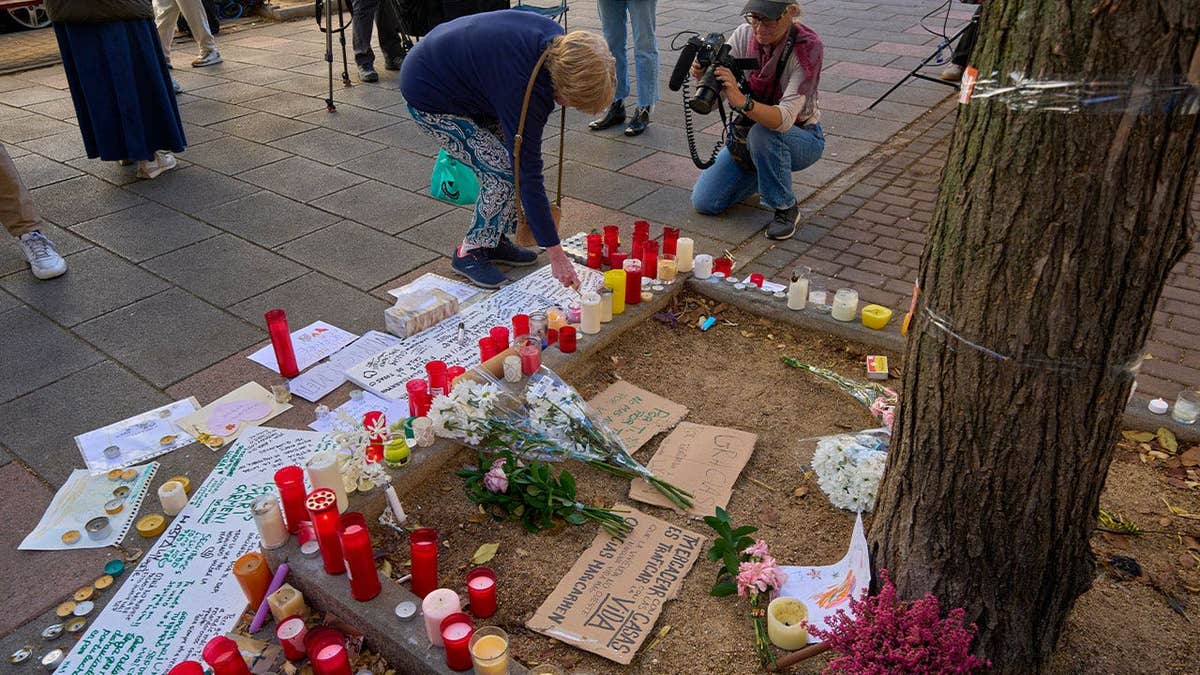
A woman places flowers near the entrance of the Madrid building where Maria del Carmen Abascal, 87, was evicted from her home, sparking nationwide protests, on Oct. 8, 2026. (AP Photo/Manu Fernandez)
“Spain’s exceptionalism was a delay, not an immunity,” Rodan-Benzaquen said. She argued that Spain avoided the populist wave seen elsewhere for years largely because of memories of the Franco era and because the broad coalition created by the People’s Party left limited room for a radical-right force.
“Elsewhere in Europe, the radical right grew mainly on immigration. In Spain, it grew on the nation itself,” she said. In her view, Vox’s growth has been fueled as much by arguments over national unity and Catalan separatism as by immigration, setting it apart from many other European right-wing movements.
Sunday’s election is expected to reveal not only whether Sánchez can once again defy the political forecasts, but also whether Vox will enter a national government for the first time in modern Spanish history. “The issue is no longer whether the right can govern, but on what terms,” Rodan-Benzaquen said, “and whether Vox sits at the cabinet table for the first time.”