
Share this @internewscast.com

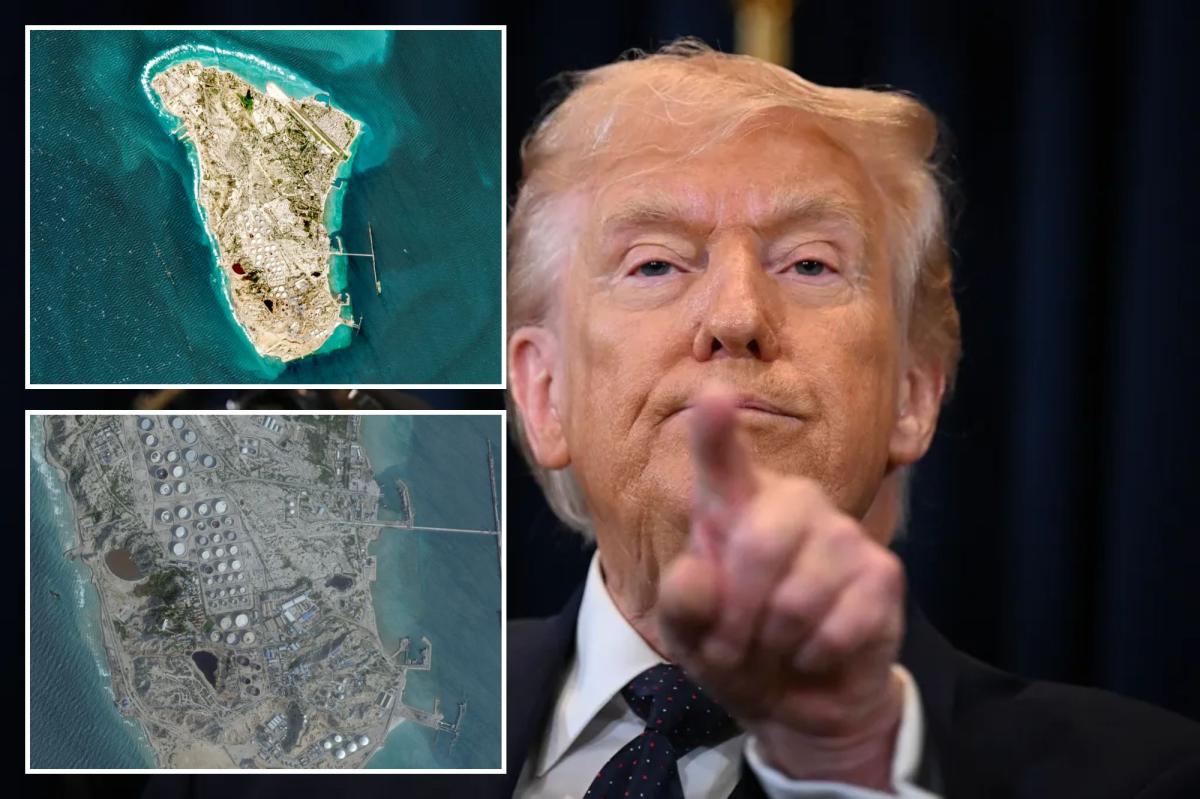
WASHINGTON — Nestled in the Persian Gulf, a diminutive island, roughly a third of Manhattan’s size, holds the key to nearly all of Iran’s crude oil exports. Experts suggest that its destiny could play a pivotal role in President Trump’s strategy with Tehran.
Kharg Island, situated approximately 16 miles from Iran’s shoreline, is strategically challenging to defend yet susceptible to isolation, a factor that reportedly piques the interest of those crafting U.S. policy.
“Around 90% of Iran’s crude oil exports flow through Kharg Island. Disabling it would mean slashing the military’s budget and cutting off crucial services that sustain Iranian society,” explained Mohammed Soliman, a senior fellow at the Middle East Institute based in Washington, DC.
Soliman further noted, “Even a temporary loss of Kharg could thrust Iran into a simultaneous security and societal upheaval. Tehran wouldn’t have the luxury of choosing which crisis to prioritize.”
“A revenue shortfall would reach billions monthly. This would trigger a currency collapse, soaring inflation, and crumbling subsidies, significantly intensifying pressure on Iran without a swift remedy,” he added.
Under heavy U.S. sanctions, most of the crude oil leaving Kharg Island finds its way to China.
JP Morgan cautioned in a Monday statement that “a direct strike [on Kharg Island] would immediately halt the bulk of Iran’s crude exports, likely triggering severe retaliation in the Strait of Hormuz or against regional energy infrastructure.”
Oil shipments from the Persian Gulf have slowed to a trickle since the war started on Feb. 28 — causing wild swings in global trading as Trump attempts to coax ships to traverse the Strait of Hormuz with a new reinsurance program and offers of US military escorts.
The possibility of a US mission to seize Kharg was first reported by Axios.
The island’s economic importance could give Trump leverage, said former administration official John Ullyot, who has served in defense roles including at the National Security Council during Trump’s first term.
A US raid to capture Kharg would be “high-risk, high-reward,” Ullyot said.
“To take such a high percentage of the Iranian oil supply off the table would cripple the regime and would also give the US, as it has in Venezuela, a big say on where Iran’s oil supply would go,” he said.
“This is the whole source of their economy.”
Trump has repeatedly referenced Venezuela since launching the Iran war — regaling his audiences on how he captured dictator Nicolas Maduro and swapped him out for his more pliable vice president Delcy Rodriquez, who agreed to send oil to the US and allow American companies into the sector.
Ullyot said that Trump clearly understands the pitfalls of an occupation of Iranian territory and that “boots on the ground” may not be needed due to the island’s location.
“One option would be to do a naval blockade of the island,” he said.
“President Trump can essentially seize the island by having an aggressive blockade of the island, [which] he could use down the line to essentially make the Iranian oil supply subject to his call… It would also give him leverage to influence who would be, ultimately, the next leader or interim leader of Iran.”
Trump said Monday afternoon that he believes the war is “going to be finished pretty quickly.”
“I think you’ll see it’s going to be a short-term excursion,” the president said.
“So the rest is going to be a determination as to my attitude, along with the people in the Trump administration, what we want to do.”