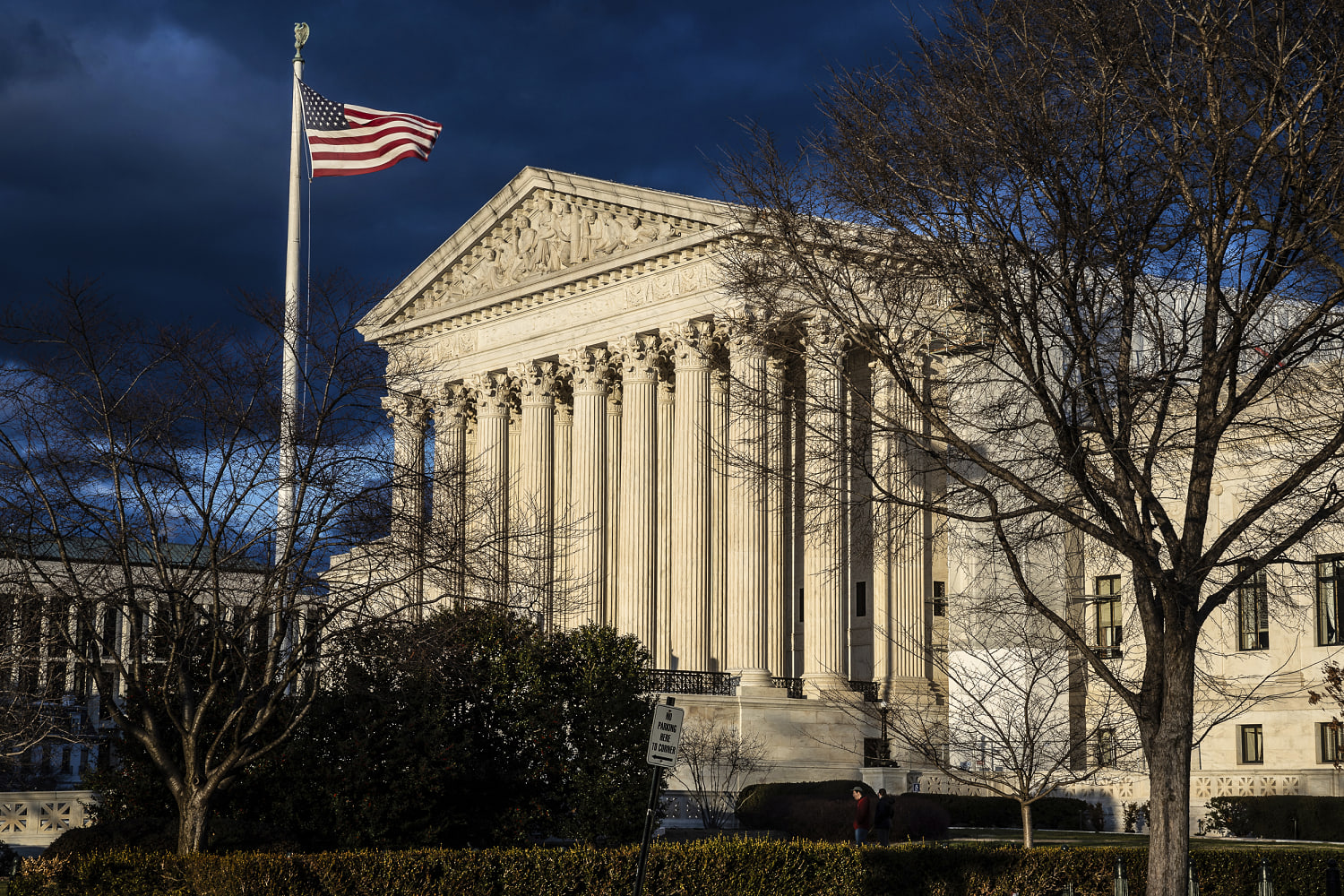
WASHINGTON — The Supreme Court on Monday questioned laws in Florida and Texas that seek to impose restrictions on the ability of social media companies to moderate content based on the assumption that they disfavor conservative speech.
Platforms like Facebook and YouTube, represented by trade groups NetChoice and the Computer and Communications Industry Association, known as CCIA, say that both laws infringe upon the free speech rights of companies under the Constitution’s First Amendment by restricting their ability to choose what content they wish to publish on their platforms.
Various other tech companies that routinely moderate user content oppose the laws, including Reddit, Discord and Yelp.
After the first of two oral arguments concerning the Florida law, it appeared a majority of the justices had concerns that the measure violates the free speech rights of big social media companies by prohibiting them from limiting the speech of some problematic users.
“Why isn’t that a, you know, a classic First Amendment violation for the state to come in and say, ‘We’re not going to allow you to enforce those sorts of restrictions?” asked liberal Justice Elena Kagan.
Some justices, however, suggested the law might have some legitimate applications against other platforms potentially covered by it, which could mean the court stops short of striking it down altogether.
“Separating the wheat from the chaff here is pretty difficult,” said conservative Justice Neil Gorsuch.
The arguments over Texas’ law were ongoing Monday afternoon.
The laws were enacted by the Republican-led states in 2021 after Twitter, Facebook and others banned former President Donald Trump after his effort to overturn the 2020 presidential election ended in his supporters storming the U.S. Capitol on Jan. 6, 2021.
This was before Twitter was taken over the following year by billionaire Elon Musk, who has allied himself with conservative critics of the platform and allowed various banned users, including Trump, to return.
Both laws seek to impose restrictions on content moderation and require companies to provide individualized explanations to users when content is removed.
The Florida law among other things prevents companies from banning public figures running for political office and restricts “shadow banning,” whereby certain user content is made difficult to find by other users. The state claims that such actions are a form of censorship.
The Texas law similarly prevents platforms from banning users based on the views they express. Each law requires the companies to disclose their moderation policies.
The states seek to equate social media companies with the telecommunications industry, which transmits speech but has no editorial input. These “common carriers” are heavily regulated by government.
The Florida law “does little more than require the platforms to adhere to their general business practice of holding themselves open to all comers and content, which is how common-carrier regulation has functioned for centuries,” state Attorney General Ashley Moody wrote in court papers.
The trade groups point out the differences between the telecommunications industry and social media platforms, noting that companies routinely use “editorial discretion” to heighten the user experience by, among other things, restricting spam, trolling and hateful rhetoric.
Media groups, including the Reporters Committee for Freedom of the Press, support the tech companies, saying the laws threaten free speech more broadly.
The same rationale adopted by the states could be used against news organizations, film studios and video game publishers, they argue.
Some tech commentators have pointed out that Musk’s actions since acquiring Twitter have undermined the rationale behind the laws because he has shown how moderation policies in many ways define a social media platform’s identity.
Conservatives now champion the newly named X, while liberals bitterly complain about what they view as the promotion of right-wing content.
“The origin story has been completely undercut,” Ari Cohn, a lawyer at TechFreedom, a think tank that opposes the laws, said of the reasoning behind enacting them.
The cases nevertheless retain a political edge, with President Joe Biden’s administration filing a brief backing the legal challenges and former President Donald Trump supporting the laws.
In May 2022, after the New Orleans-based 5th U.S. Circuit Court of Appeals declined to put the Texas law on hold, the Supreme Court stepped in, preventing it from going into effect. Then, four of the nine justices said the court should not have intervened at that stage.
The Florida measure was blocked by the Atlanta-based 11th U.S. Circuit Court of Appeals, prompting the state to appeal to the Supreme Court.
A legal question not present in the case but lurking in the background is the scope of immunity that internet companies have for content posted by their users. Last year, the court sidestepped a ruling on that issue.
The challenges to the Texas and Florida laws are among several legal questions related to social media that the Supreme Court is currently grappling with.