Share this @internewscast.com

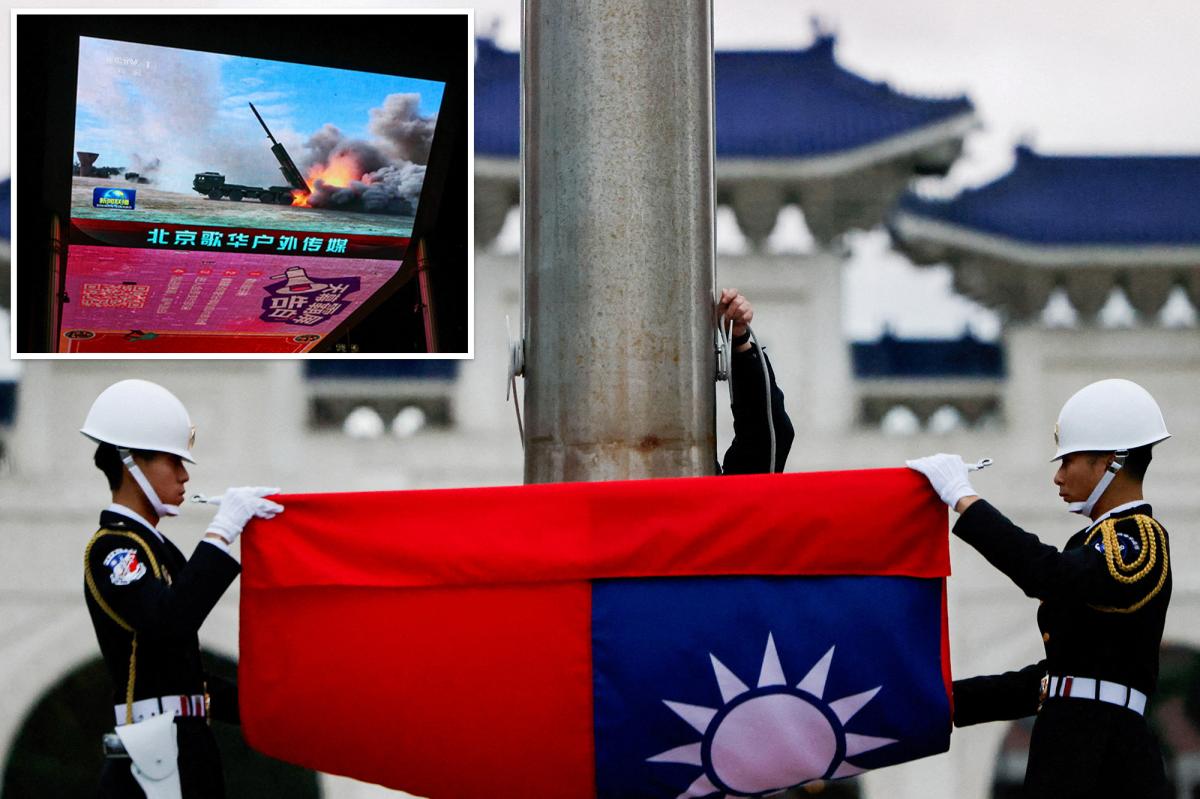
TAIPEI, April 10 (Reuters) – Taiwanese authorities are closely monitoring a concerning increase in Chinese naval maneuvers and military pressure on the island. This escalation occurs even as Beijing projects a narrative of peace and cooperation in discussions with Taiwan’s opposition leader.
This strategy by China is particularly troubling for Taipei, especially since opposition forces continue to impede a proposed increase in defense spending, a move strongly advocated for by Washington. The heightened military activity coincides with the United States’ current preoccupation with the Middle East conflict and President Donald Trump’s upcoming meeting with China’s Xi Jinping scheduled for May.
Taiwan’s Defense Minister, Wellington Koo, addressed lawmakers on Thursday, expressing deep concerns over China’s ongoing military expansion and the growing threat it poses to Taiwan. His comments came amid frustration within the ruling party over the Kuomintang (KMT) opposition’s decision to boycott discussions on the stalled defense budget.
Koo emphasized the importance of Taiwan demonstrating its commitment to self-defense to both the United States and other allied nations.
“The most alarming possibility,” he said, “is if our international allies begin to doubt our resolve. What consequences might we face then? It’s hard to envision.”
China considers Taiwan to be a part of its territory and has not ruled out the use of force to assert control over the island. Meanwhile, Taiwan’s government firmly rejects Beijing’s sovereignty claims, insisting that only the island’s residents have the authority to determine their future.
Two Taiwanese security officials told Reuters that China has deployed nearly 100 naval and coast guard vessels in and around the South and East China Seas this week. One official said China usually deploys around 50-60 ships in the region, so the increase in the past weeks was “very rare,” especially because this time of year is not usually busy for Chinese naval drills.
A second highlighted the timing of the increased presence, coming with Washington focused on Iran, and as Taiwan’s opposition leader visits China.
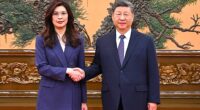
Meeting KMT chairwoman Cheng Li-wun in Beijing on Friday, Xi said people on both sides of the Taiwan Strait want peace and cooperation, but added China will “absolutely not tolerate” independence for Taiwan.
The KMT says there is “no connection whatsoever” between Cheng’s trip and government defense spending plans.
A ‘NEW NORMAL’ FROM CHINA?
China’s defense ministry did not respond to a request for comment.
The number of vessels was corroborated by separate intelligence reports reviewed by Reuters, which showed a notable increase in Chinese vessels over the last few weeks, from nearly 70 at the end of March to nearly 100 this week.
Two other, non-Taiwanese, security sources confirmed the numbers, though said they viewed it as more of a “new normal” from China rather than an alarming anomaly.
Reuters was not able to independently verify the numbers of the Chinese ships around the same time last year.
China’s daily military activities around the island have been maintained during Cheng’s visit to China.
On Friday, Taiwan’s defense ministry reported seven Chinese military aircraft operating around the island in the previous 24 hours, as well as seven warships.
Kuan Bi-ling, head of Taiwan’s Ocean Affairs Council, which runs the coast guard, this week took the unusual step of posting on her Facebook account the locations and names of the Chinese warships in waters around the island.
“Because the leader of the main opposition party is planning to meet with Chinese leadership … it is necessary to appropriately disclose to the public and the international community the situation of China’s harassment in our waters, so that our people are informed and understand the serious implications,” she wrote.
‘RESERVED’ AIRSPACE OFF CHINA’S EAST COAST
Added to the naval activity, China has also declared “reserved” airspace off its eastern coast, running from March 27 to May 5 — which is around a week before Trump is due to visit China.
China has provided no explanation for that, but it has previously issued such notifications defining a block of airspace as off-limits to civilian or foreign aircraft ahead of military drills.
Speaking to reporters in Taipei on Wednesday, Tsai Ming-yen, head of Taiwan’s National Security Bureau, said he believed China was using this to test how often US aircraft operate in the area.
“This may also be politically intended to demonstrate the state of US air activity in the Indo-Pacific region prior to the Trump-Xi meeting,” he added.