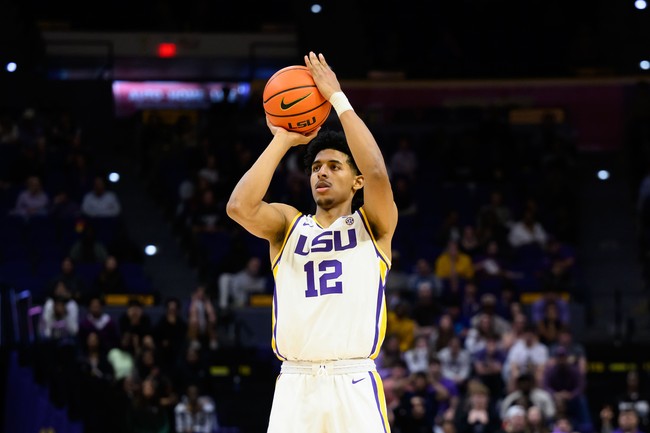
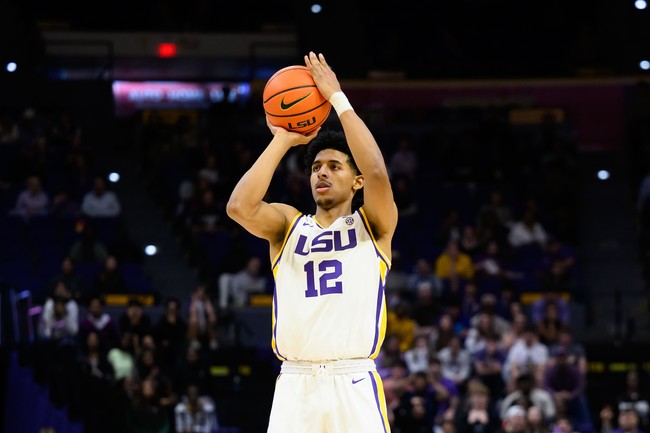
The Southeastern Conference has scheduled a Dec. 3 meeting of its presidents and chancellors to consider ending Louisiana State University’s membership. The move follows LSU coach Will Wade’s decision to add and briefly play RJ Luis Jr., a former St. John’s guard who appeared in Boston Celtics preseason games last season.
Under rules adopted by the conference in August, member schools may not use former NFL, NBA or WNBA players. LSU added Luis on Nov. 17, and he scored 11 points in a victory the following day. After facing additional pressure, the university later directed Wade to stop playing him.
This marks the second time in 2026 that the SEC has considered expelling LSU. The earlier dispute centered on football coach Lane Kiffin’s interest in two players who had signed NFL contracts but had not appeared in regular-season games.
Statement from the Southeastern Conference: https://t.co/gXedSwjME3
— Southeastern Conference (@SEC) November 23, 2026
That vote never took place after LSU backed away. The conference now contends that LSU has demonstrated a lack of institutional control and that allowing the university to remain a member would weaken the SEC’s shared standards. Terminating LSU’s membership would require approval from two-thirds of the other 15 presidents.
The SEC said Monday’s filing “advances the Conference’s obligation to defend its governance framework and the shared interests of its member universities.”
LSU has belonged to the SEC since the conference was founded in 1932. Ten of the original 13 members remain, including LSU, which has helped shape the league’s identity in football, basketball and other sports for more than nine decades. Seeking to remove a charter member over a single roster decision—particularly after courts restricted the conference’s ability to impose standard penalties—would represent an extraordinary escalation. It would suggest that a long-standing partner is expendable after ordinary disciplinary options have been limited.
“This is very serious.” @finebaum says the SEC is not fooling around with potentially expelling LSU 😳 https://t.co/ilGIgo5cUN
— First Take (@FirstTake) November 24, 2026
At the center of the dispute is a student-athlete who played only a handful of professional preseason minutes. College sports have traditionally drawn clear distinctions between amateur and professional status, and conferences have the authority to establish their own eligibility standards.
Yet the practical consequence is that a young player who has never appeared in an NBA regular-season game is being classified as fully professional, while an entire university faces possible expulsion for allowing him to play once. Rules serve an important purpose, but the response has moved well beyond an ordinary sanction and into a debate over whether LSU still belongs in the conference it helped create.
@FirstTake @finebaum They’ll never kick LSU out. Why? Money. The answer is money. They’re being the lazy parent, threatening to take the iPad away from their kid, but they never do. Then they wonder why their kid won’t behave.
— Sensei Thunderfist MD (@NotBumpWills) November 24, 2026
If the Dec. 3 vote results in LSU’s removal, the school would need to find a new conference home. The Big 12 could be a logical destination, given LSU’s athletic profile and the league’s national ambitions.
Lane Kiffin is LSU’s current football coach, while Kim Mulkey has built a championship women’s basketball program and ranks among the sport’s most prominent coaches. Those figures do not determine conference membership, but they reflect the high-profile, competitive culture that could fit comfortably within the modern Big 12. A move would not necessarily diminish LSU’s visibility or ambition.
Conferences have the authority to establish standards and enforce them. They also have a responsibility to respect their history and treat member institutions and student-athletes with a measure of proportionality. Expelling a founding member over a disputed eligibility decision, especially after courts have limited ordinary disciplinary measures, puts both responsibilities under scrutiny.
LSU’s place in the SEC was built through decades of competition rather than granted as a temporary privilege. The Dec. 3 meeting will reveal whether the conference still recognizes that distinction.
Editor’s Note: Do you enjoy RedState’s conservative reporting that takes on the radical Left and woke media? Support our work so that we can continue to bring you the truth.


