
New York City’s leading business advocacy organization is pushing back hard against Gov. Kathy Hochul’s one-year freeze on new high-powered data center construction across the state, warning that the policy is anti-business and could undermine New York’s economic momentum.
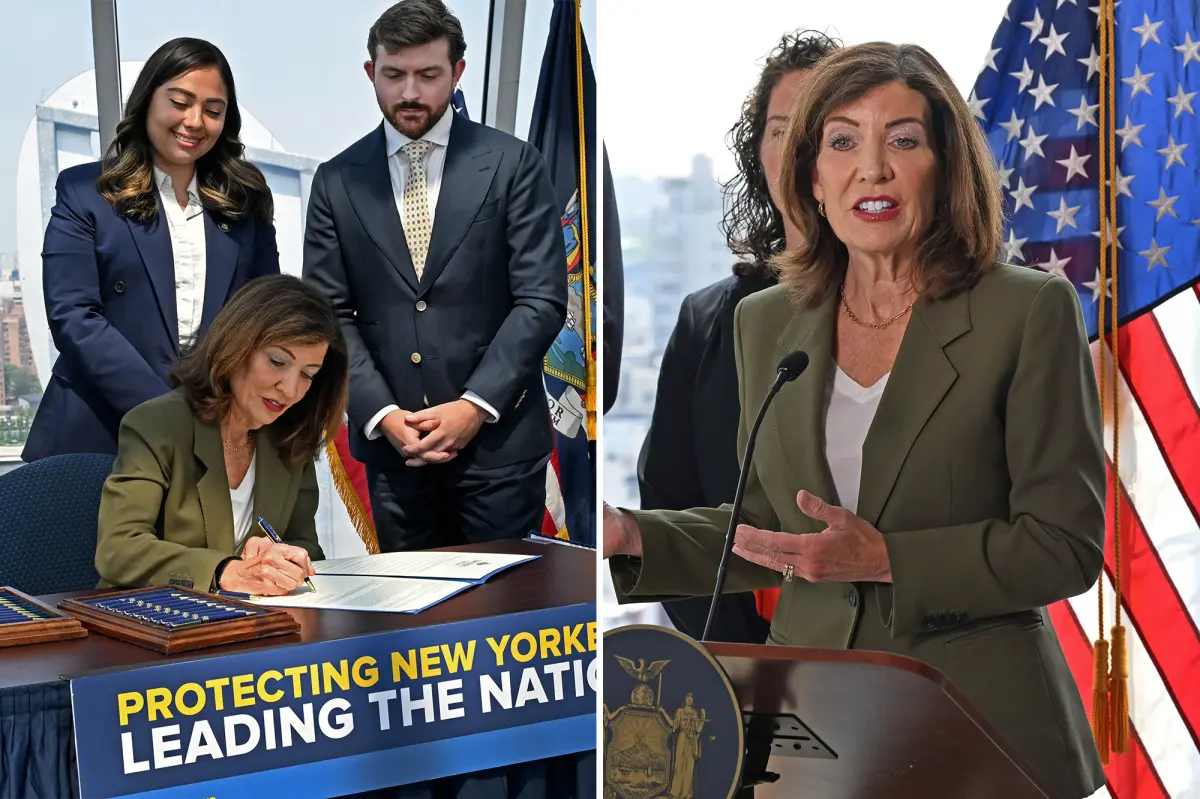
Hochul signed an executive order last week creating a statewide, one-year moratorium on new “hyperscale” data centers — massive facilities that require at least 50 megawatts of electricity to operate. The governor has argued that the pause will give New York time to plan for the facilities more responsibly.
Steve Fulop, CEO of the Partnership for the City of New York, said the decision risks putting the state at a disadvantage as artificial intelligence fuels soaring demand for data infrastructure. The group represents the city’s 300 largest companies, including major Wall Street firms and businesses across the financial services sector.
“Ultimately, the solution is going to be whether data centers get built or they don’t get built,” Fulop said Sunday on 77 WABC’s “Cats Roundtable” program.
“The signal when you put a moratorium on this sort of stuff … is that it becomes a riskier proposition to put your money into New York versus maybe another state,” he told host John Catsimatidis.
He continued, “It sends a signal about our competitiveness to the private sector. Other states like Pennsylvania … continue to grow, and they haven’t put a moratorium on [data centers]. They work with the communities to find solutions. But they recognize that data centers are important.”
Data centers are the backbone of the modern digital economy, housing thousands of servers, storage systems and networking equipment that store, process and move enormous amounts of information.
Fulop pointed out that everyday online activity — from searching for information on a smartphone to streaming a television show — depends on data centers operating behind the scenes.
“We need more access to data,” he said.

“A one-year moratorium accomplishes nothing. A one-year procrastination or delay doesn’t solve anything.”
ALSO READ: Andy Burnham's Policies Poised to Benefit His Wife Financially
New York City also wants to be a leader in emerging artificial intelligence, and supporters say data centers are needed to accomplish that.
The governor defended her one-year freeze — which immediately drew a rebuke from President Trump — on Sunday as the right approach.
She claimed local governments aren’t equipped to negotiate with the Big tech companies on an ad hoc basis.
“The state has to take the lead. We have to get it right,” Hochul said on CBS News’ “Face the Nation” program.
There are 30 pending applications to build data centers in the state, which she referred to as “flooding the zone.”
“There is a huge tax on our [energy] grid. I want to make sure the power is there for the large companies creating jobs,” Hochul said.
“New Yorkers want protection; there’s a lot of anxiety. Companies want certainty. We’ll give them both.”
The governor insisted her moratorium is not anti-business or anti-union, defending her record in bringing in jobs and building projects.
But the construction trades oppose the one-year ban, and critics have argued Hochul caved to the political left — including lawmakers with ties to the Democratic Socialists of America — who’ve pushed against data centers serving Big Tech.
“Technology should make our lives better, not pollute our water, strain our energy grid, or drive up our utility bills,” state Sen. Kristen Gonzalez, a DSA member who reps parts of Queens, Manhattan and Brooklyn, said last week.
New York Republican gubernatorial candidate Bruce Blakeman — who supports data-center industry expansion — accused Hochul of backing the moratorium because she thinks it’ll score her political capital with the far left.
“Kathy Hochul will always put the interests of [New York City Mayor] Zohran Mamdani and big-government socialists ahead of New Yorkers, even if it means blocking economic opportunity while families struggle under the nation’s highest taxes and utility bills,” he said.
Hochul’s team insisted her decision was not tied to politics or her re-election campaign.