
Share this @internewscast.com
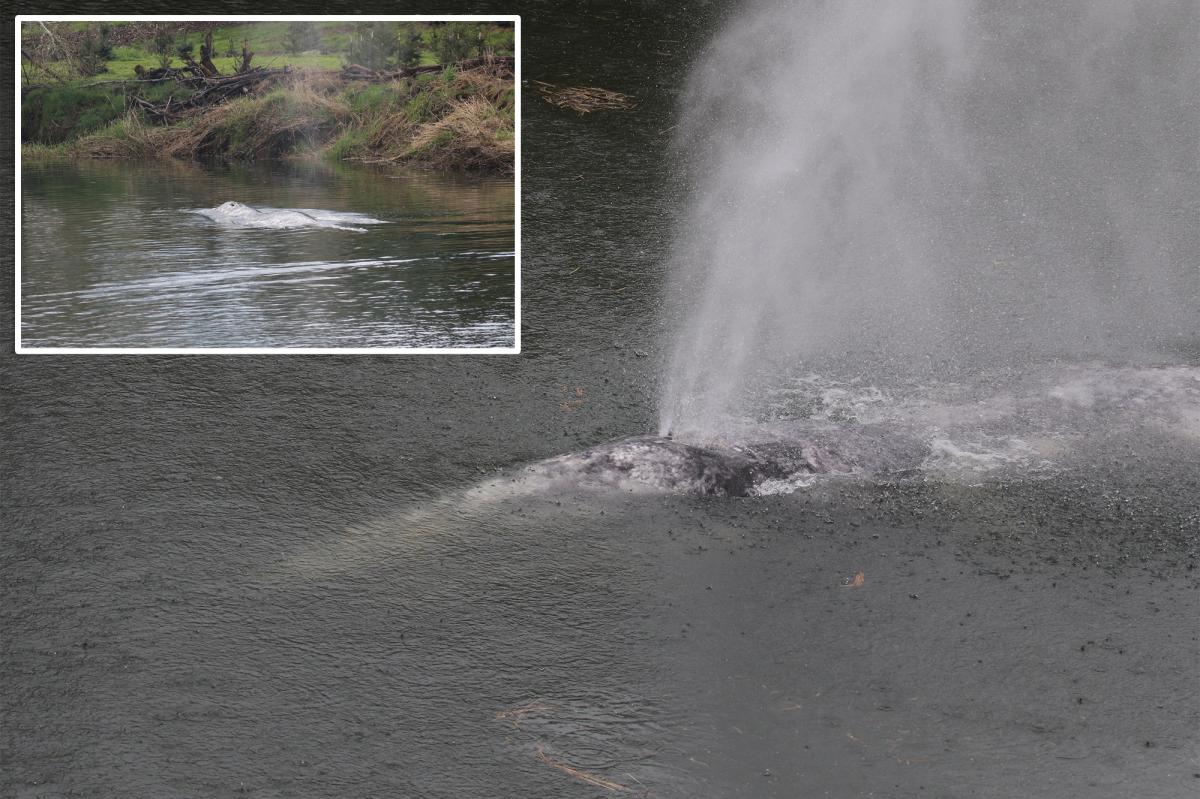
A young gray whale, which captivated the residents of Washington state by navigating 20 miles up a modest river, was discovered deceased, with experts from a marine mammal research group suggesting the creature’s search for food in the wake of a declining population may have led it to explore new areas.
The whale’s body was found on Saturday near Raymond, Washington, in the Willapa River, a waterway that flows into the ocean at Willapa Bay. This area is currently hosting several gray whales as they embark on their extensive 5,000-mile spring migration from Baja California, Mexico, to the nutrient-rich feeding grounds in Alaska.
Since 2019, the eastern Pacific gray whale population has been struggling due to dwindling food sources in the northern Bering and Chukchi seas off Alaska’s coast, explained John Calambokidis, a research biologist from the Cascadia Research Collective, in an interview with The Associated Press on Sunday.

“Gray whales are confronting a significant crisis, primarily linked to challenges in finding prey in the Arctic,” he noted.
The National Oceanic and Atmospheric Administration Fisheries agency has marked the period from late 2018 to late 2023 as an unusual mortality event for eastern gray whales, highlighting the alarming number of 690 whale strandings reported from Alaska to Mexico during this timeframe.
The National Oceanic and Atmospheric Administration Fisheries agency declared an unusual mortality event for eastern gray whales — meaning those in the eastern Pacific — from late 2018 to late 2023. It involved 690 gray whale strandings during that time, stretching from Alaska to Mexico.
NOAA Fisheries investigators concluded the preliminary cause was “localized ecosystem changes in the whales’ sub-Arctic and Arctic feeding areas that led to changes in food, malnutrition, decreased birth rates and increased mortality.”
Officials believed the population was rebounding, but the most recent count from 2025 instead showed a continuing decline. The federal agency estimated there were about 13,000 gray whales, the lowest count since the 1970s.

“A lot of these gray whales are looking very emaciated, very thin,” Calambokidis said.
Their migration north is typically the most challenging period for gray whales, the longest they’ve gone without eating, forcing the animals to use up their nutritional reserves.
“When that happens, you often see gray whales in a more desperate search for new areas to feed,” Calambokidis said. “That’s the most likely context for this whale.”
Researchers will attempt to examine the whale, possibly as soon as Monday.
It entered the north fork of the Willapa River on Wednesday, via a bay about 185 miles southwest of Seattle. Residents gathered on bridges along the river just to catch glimpses of the massive mammal and flooded social media with photos and video of it expelling air through its blowhole.
While the gray whale appeared thin, it was behaving normally and didn’t appear to have any injuries, the nonprofit Cascadia Research Collective said in a Facebook post.
The organization was giving the whale time and space to leave the river on its own, but when researchers attempted to find it Friday, the animal had traveled further upriver into waters that were unnavigable by boat, Calambokidis said.