
Share this @internewscast.com
Tragedy struck Maiduguri, Nigeria, as suicide bombings claimed the lives of at least 23 individuals and left over 100 wounded, officials disclosed on Tuesday. This horrific event underscores the persistent threat of violence and religious persecution in the region, a concern highlighted by a leading Christian nonprofit.
The Associated Press detailed that this tragic wave of violence, one of the most severe in Maiduguri in recent memory, occurred on Monday night. Explosions rocked densely populated areas, including a bustling market in the heart of Borno state’s capital and near the entrance of the University of Maiduguri Teaching Hospital.
Borno police spokesperson Nahum Kenneth Daso confirmed the attack’s aftermath, stating the injured individuals suffered a range of injuries. The assaults have been attributed to suspected suicide bombers.
Nigerian President Bola Tinubu, who embarked on a two-day official visit to the United Kingdom on Tuesday, expressed his condolences to the victims. He has directed security officials to assert control over the situation in Maiduguri.
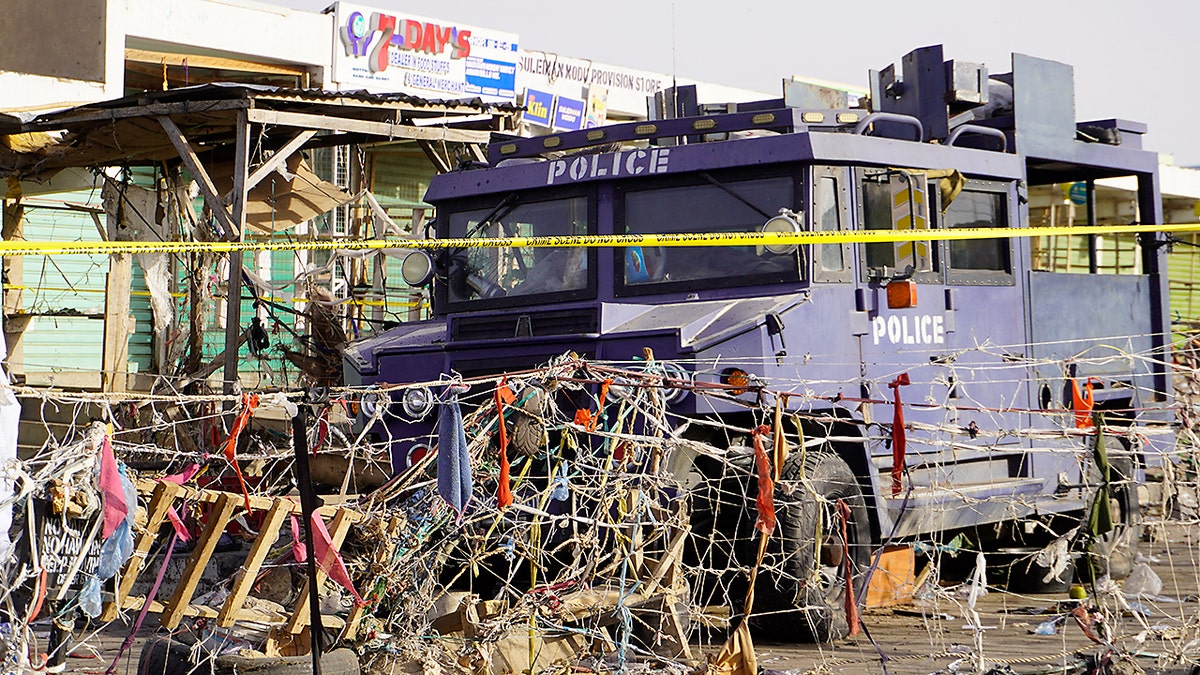
A photograph from March 17, 2026, shows an armored police vehicle stationed at a market in Maiduguri, a day following the coordinated blasts. The explosions, carried out by suspected suicide bombers, devastated a busy market and other areas in the city, marking one of the deadliest attacks in Borno’s capital. The blasts occurred on the evening of March 16, 2026, targeting a central market, the entrance to Maiduguri’s largest teaching hospital, and a post office, just as residents were breaking their Ramadan fasts.
President Tinubu denounced the attacks as “desperate acts of the evil-minded terrorist groups,” vowing that Nigeria’s valiant military and civilian forces will decisively quell these threats.
While no group has claimed responsibility, the AP reported suspicion has fallen on the Boko Haram jihadi group, which launched an insurgency in northeastern Nigeria in 2009 to enforce its radical interpretation of Shariah law.
Since launching its insurgency, Boko Haram has grown stronger, with thousands of fighters and multiple factions, some aligned with the Islamic State group.
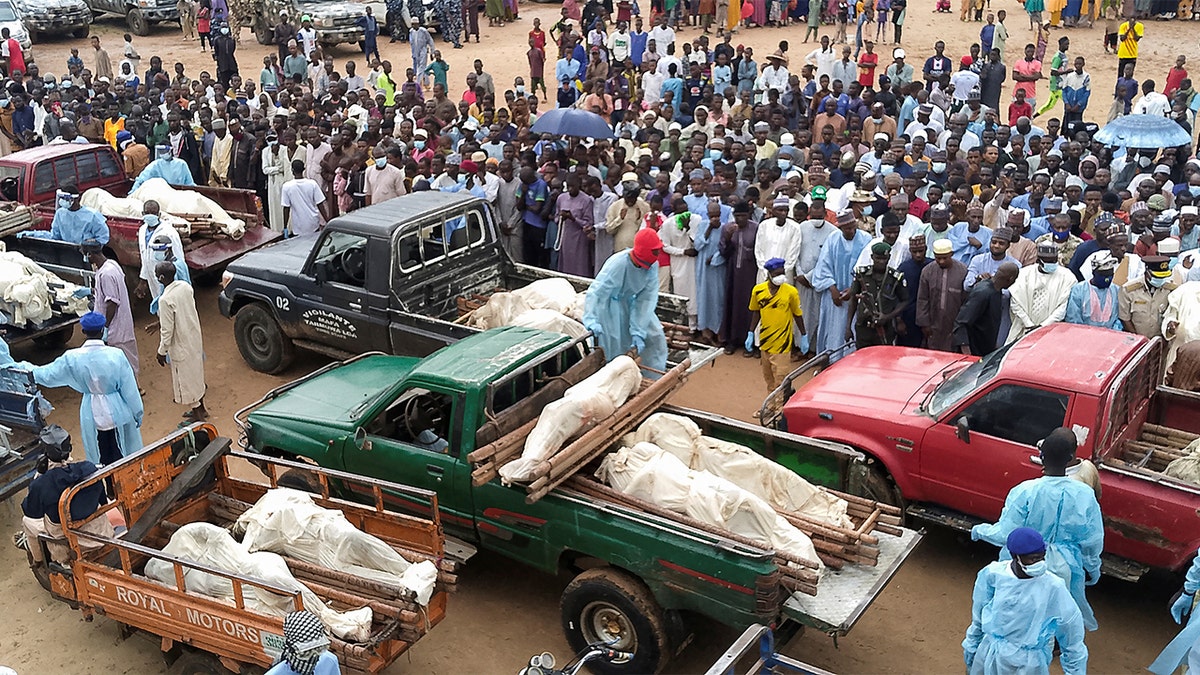
Funeral for Boko Haram victims in Yobe, Nigeria (Stringer/Reuters)
The explosions on Monday night began at about 7:30 p.m. at the entrance of the teaching hospital. A few minutes later, a second and third blast followed at the Monday Market and a nearby post office hub, both about 2.5 miles from the hospital.
Caleb Jonah, who survived the explosion at the hospital entrance, told the AP he suffered injuries to his legs and hands.
“I was coming to the hospital to check (in on) a patient when I saw two men struggling with the security men at the gate,” Jonah said. “Before I could process what was going on I heard the deafening blast and I passed out.”
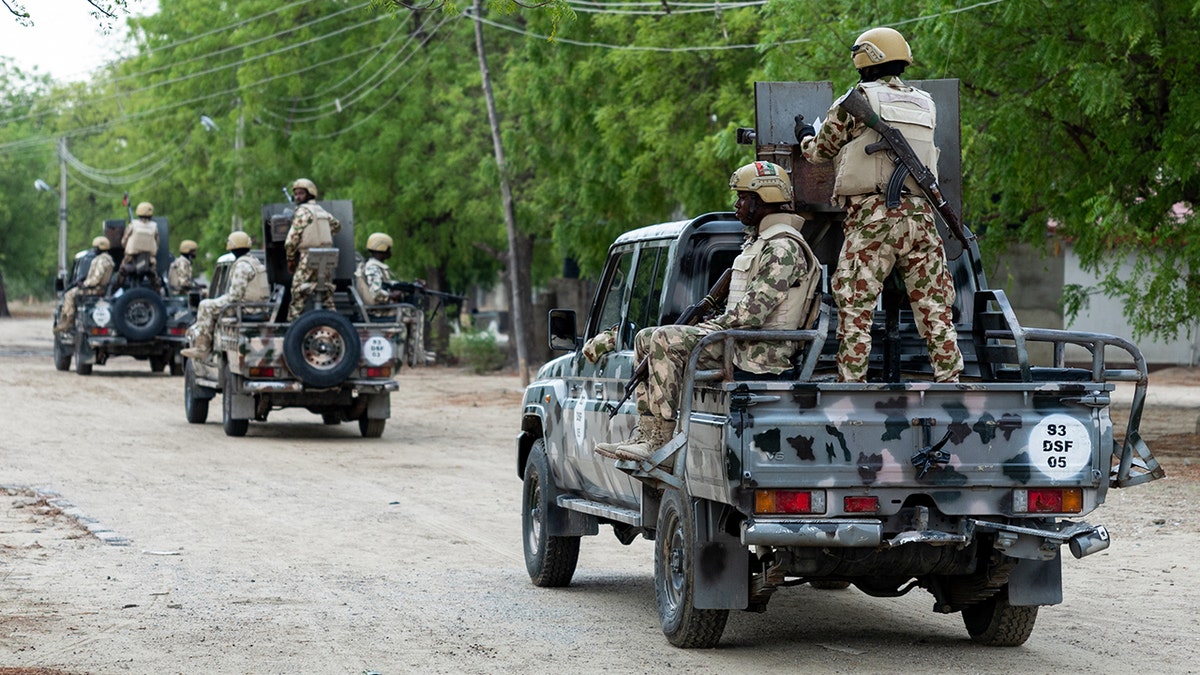
Nigerian soldiers drive around in pick-ups during training at a military base in Borno state, Nigeria, on July 5, 2025. (Joris Bolomey/AFP via Getty Images)
Brad Brandon, CEO and founder of Across Nigeria, said the attack was personal. His organization is committed to transforming Nigeria and the surrounding regions by sharing the love of God through Jesus Christ, according to the group’s website.
“As the CEO and founder of Across Nigeria, these recent attacks in Maiduguri are personal and a stark reminder that the devastating violence continues in northern Nigeria,” he said in a statement. “This is the result of radical Islamic groups that are allowed to operate unchecked. The only question is, how many more must be killed, before the world wakes up to the genocide that slaughters thousands of Christians every year.”
“We condemn these violent acts and the perpetrators who commit them,” he added. “We also call on the U.S. Government to intervene and the media to embrace their role in bringing light to the hidden things of darkness.”
While Maiduguri has been at the center of deadly violence in Nigeria, it has experienced relative peace in recent years, even as extremists batter the countryside.
Monday’s attack took place less than 24 hours after the Nigerian military repelled attacks by militants outside Maiduguri.
By Tuesday morning, heavy security had been deployed to the affected locations and along major roads.