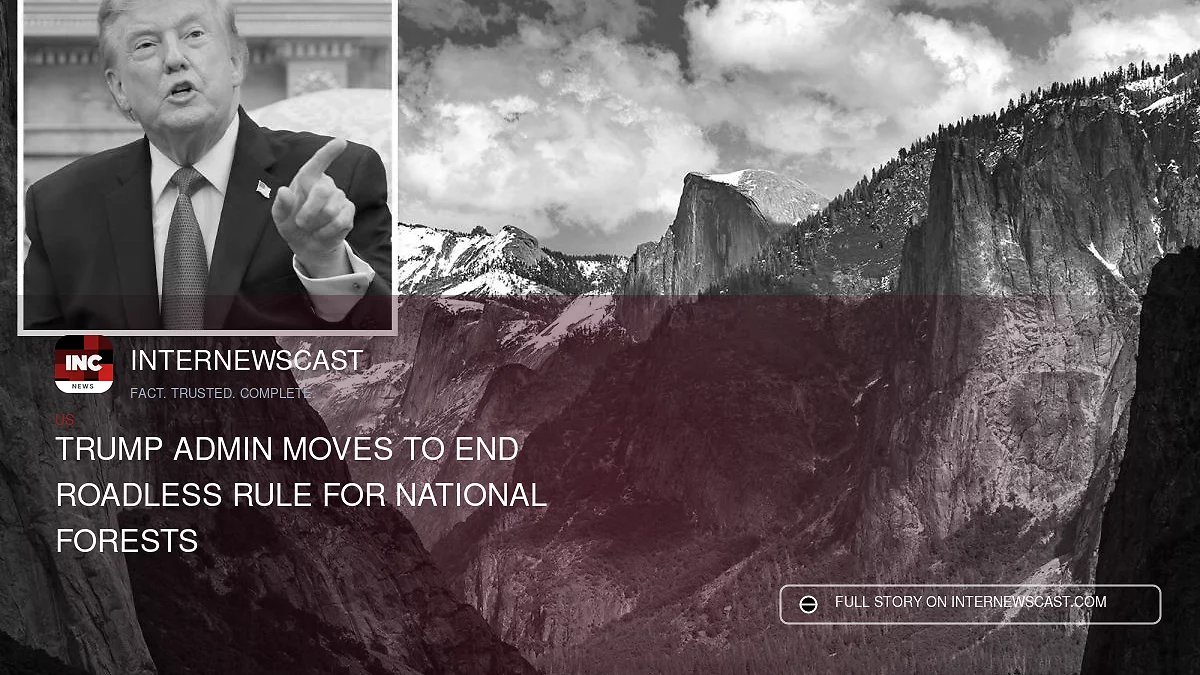

The Trump administration said Tuesday it is pressing forward with a plan to repeal a 25-year-old federal rule that has restricted logging, road construction and other development across large swaths of national forest land, prompting sharp criticism from environmental groups around the country.
The U.S. Forest Service is submitting a proposal to eliminate the so-called roadless rule, a policy adopted in 2001 during the final days of President Bill Clinton’s administration. The agency cast the rule as an overly broad, one-size-fits-all mandate that has limited the flexibility of forest managers and complicated efforts to reduce wildfire danger in national forests.
“Our forests can’t afford another decade of inaction. Across the country, we’ve watched preventable conditions — overgrown stands, insect outbreaks and disease — turn healthy landscapes into tinderboxes,” U.S. Agriculture Secretary Brooke Rollins said in a statement.
Scientists say the growing severity of wildfires is linked to several overlapping forces, including climate change that leaves forests hotter and drier, reduced logging and decades of fire suppression that have allowed flammable vegetation to accumulate.
Clinton approved the roadless rule to protect undeveloped national forest areas from commercial logging and mineral leasing, aiming to preserve intact ecosystems and safeguard drinking water sources.
Rollins called the roadless rule a failure, saying the new proposal would return decision-making power to local forest managers and lift restrictions she said have prevented them from improving forest health across millions of acres.
According to the U.S. Department of Agriculture, which oversees the Forest Service, the roadless rule has applied to about 30% of national forest lands nationwide — roughly 59 million acres, or 24 million hectares.
The Forest Service will seek public input on the proposal as well as on a draft environmental impact statement filed Tuesday in the Federal Register. Officials said that while repealing the rule would remove the national designation for roadless areas, it would not require timber harvesting or new road construction.
The filing of the proposal comes as no surprise as the Trump administration first announced its intention to get rid of the rule during a meeting last summer of Western governors in New Mexico.
Environmentalists have been sounding the alarm since then and reiterated Tuesday that lifting protections would have detrimental effects for old growth forests, wildlife and water supplies.
“Americans across the political spectrum have made it crystal clear that they don’t want political appointees removing protections from public lands,” said Chris Krupp, an attorney with the group WildEarth Guardians. “It would be a gross misreading of public sentiment to take the roadless rule away from Americans and our wildlife, and politicians do so at their jeopardy.”
The Alaska Wilderness League and other groups raised concerns about what a rescission could mean for places such as Alaska’s Tongass National Forest, the nation’s largest national forest and a lightning rod for litigation. State political leaders there have supported an exemption to the roadless rule that they argue impedes economic opportunities.
During the latter part of Trump’s first term, the federal government lifted restrictions on logging and road-building in the Tongass, something the Biden administration later reversed.
Emma Powell, the Alaska Wilderness League’s government affairs manager, described the Tongass as a global treasure that serves as a home for salmon runs and abundant wildlife. She added that cultures and livelihoods are connected to the forest.
“From fisheries to tourism and outdoor recreation, these landscapes also support thousands of jobs and generate billions in economic activity each year,” Powell said.
Alex Craven, the Sierra Club’s forest campaign manager, disputed officials’ claims that getting rid of the rule would allow for more work to be done to reduce wildfire threats. Craven suggested more roads would lead to more fires and that it never prevented the Forest Service from doing targeted work to reduce wildfire fuels.
He vowed that the Sierra Club and other groups would fight the proposal at each step.
The deadline for comments is Sept. 21.