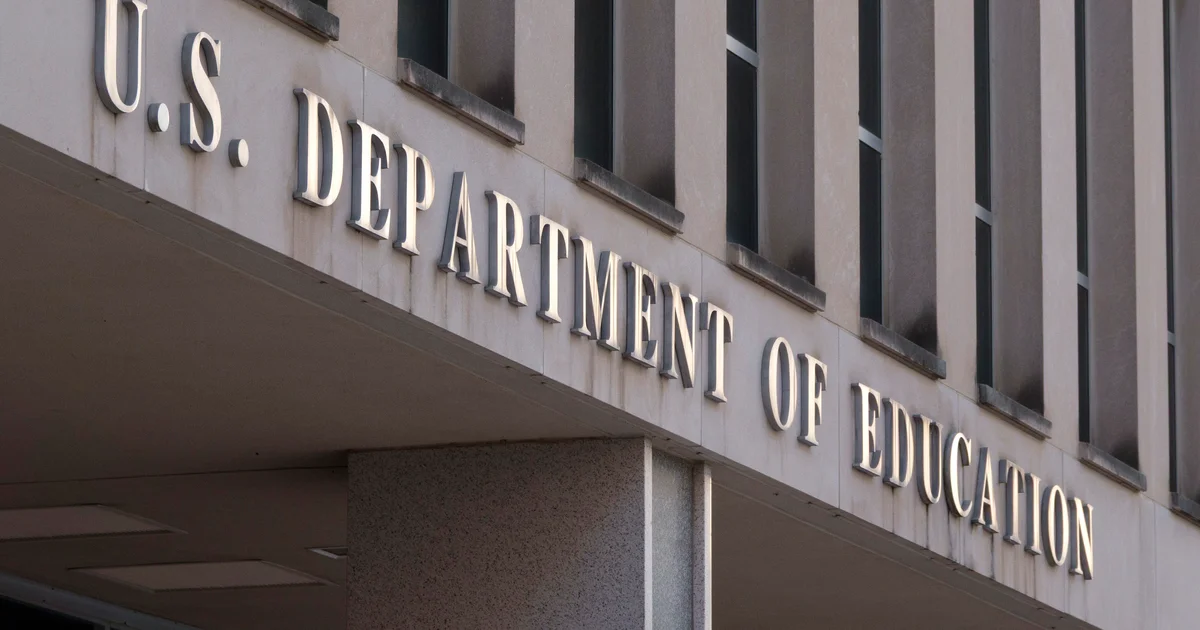

The Trump administration has abandoned its effort to rewrite the Public Service Loan Forgiveness program, ending a proposal that could have prevented some U.S. public-sector workers from qualifying for the widely used student loan relief plan.
In a court filing Wednesday, the administration said it would withdraw its appeal of a June 30 federal court ruling that struck down the changes. The filing did not explain the decision. Student borrower advocates welcomed the move, with Dan Zibel, chief counsel for the advocacy group Student Borrowers, calling it a “significant victory for millions of Americans who have dedicated their careers to public service.”
The proposed changes to the federal Public Service Loan Forgiveness (PLSF) program, first introduced in August 2025, would have barred employees from participating when their organizations were involved in certain illegal conduct. The proposal targeted workers at groups that supported terrorism, violated immigration laws or engaged in what it called the “chemical and surgical castration or mutilation of children,” and would have made them ineligible.
The Department of Education did not immediately respond to a request for comment.
Here is what the decision means for borrowers and public-sector workers.
What is the Public Service Loan Forgiveness program?
The PLSF program serves employees of government agencies, public schools, police and fire departments, public hospitals and nonprofit organizations. It is designed to offer a route to federal student loan forgiveness for people who spend their careers in public service. Eligible borrowers can have their remaining debt canceled after making 120 qualifying monthly payments, typically over 10 years.
Nearly 720,000 federal student loans were forgiven through the program from 2018 through the middle of 2025, according to the Education Data Initiative, which tracks data on the U.S. education system.
What did the Trump administration want to change?
When the Trump administration announced the proposal, Nicholas Kent, the Education Department’s undersecretary, said the overhaul was intended to support public servants who “strengthen their communities and serve the public good,” rather than organizations involved in illegal activity that harms Americans.
The proposal would have disqualified borrowers whose employers pursued “a substantial illegal purpose.” Its list of covered conduct included immigration violations, terrorism, trafficking, violations of state law and “violence for the purpose of obstructing or influencing federal government policy.”
The rule was finalized in October 2025.
YOU MAY ALSO READ: Irish PSA Telling Grandparents to Ask Before Hugging Grandchildren Pulled After Backlash
Who challenged the overhaul?
Several nonprofits and municipalities challenged the rule in court. The plaintiffs included Public Citizen Litigation Group and Student Defense, which represented the Robert & Ethel Kennedy Human Rights Center and the American Immigration Council, as well as Albuquerque, New Mexico, Boston and Chicago.
The organizations argued that the regulation granted the Education Department too much discretion to determine whether an employer was pursuing “a substantial illegal purpose.”
Shortly before the rule was scheduled to take effect in July, U.S. District Judge Myong Joun in Massachusetts vacated it, ruling that the Education Department had exceeded its authority and that the policy threatened First Amendment free-speech protections. That same day, District Judge Amir Ali in Washington issued a comparable ruling in a separate lawsuit brought by nonprofit groups.
Nonprofit leaders said Thursday that the administration’s decision to end the appeal should ease uncertainty for thousands of public servants.
“With the appeal dismissed, the court’s order vacating the rule stands, and PLSF remains as Congress designed it,” Diane Yentel, CEO of the National Council of Nonprofits, said in a statement.
She added that the decision would give nonprofit employees confidence that the loan relief they earned through years of public service will remain available, allowing them to continue work that strengthens their communities.