The Trump administration faces pressure to proactively ensure the next United Nations leader aligns with American and Western values, steering clear of what many describe as a growing anti-American sentiment within the institution.
Current U.N. Secretary-General António Guterres, whose term concludes on December 31, 2026, has faced significant criticism. As the former socialist prime minister of Portugal, Guterres has been accused of bias, particularly concerning issues related to Israel, amidst a backdrop of major global conflicts and crises.
Experts emphasize the importance of U.S. influence in selecting a U.N. chief who will best represent American interests.
Anne Bayefsky, who leads the Touro Institute on Human Rights and the Holocaust and presides over Human Rights Voices, conveyed to Fox News Digital the importance of U.S. involvement. She stated, “Given that the United States remains the largest financial contributor to the U.N. and hosts its headquarters close to our financial capital, we should be deeply invested in who heads the organization.”
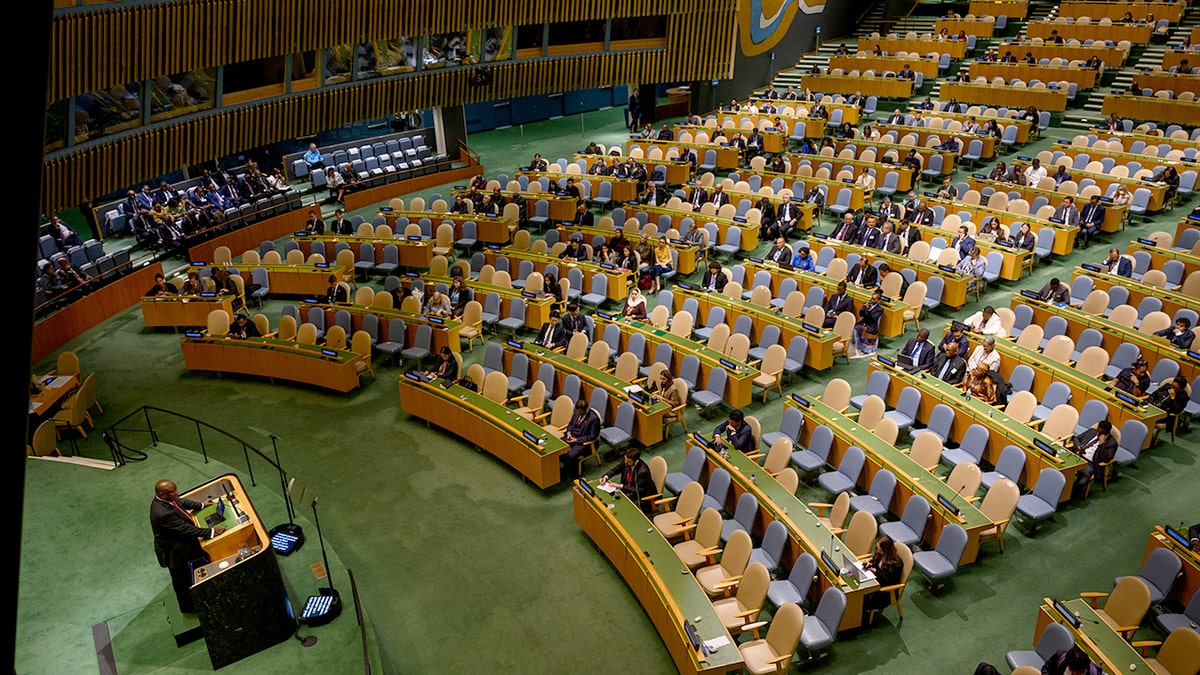
South African President Cyril Ramaphosa addressed the 80th session of the United States General Assembly on September 23, 2025, at the U.N. headquarters in New York City. (Photo by Alexi J. Rosenfeld/Getty Images)
Jonathan Wachtel, who served as a director of communications and senior policy advisor to U.S. ambassadors Nikki Haley and Kelly Craft at the United Nations, remarked, “The United Nations, since its inception, has been at the forefront of Cold War tensions. Today, it increasingly stands as a stage of opposition to the United States.”
“As the Security Council prepares for its mid‑2026 straw polls, we face the stark reality that Russia and China can veto any candidate who reflects our values, even as they work to undermine U.S. foreign policy and erode Western principles. The next secretary‑general must … be a leader with backbone and conviction to champion the ideals on which the U.N. was founded, and the United States has long stood — life, liberty and the pursuit of happiness for as many people as possible.”
With just over a year to go for the selection process, member states have begun to nominate candidates who best fit their national interests.
Brett Schaefer, a senior fellow at the American Enterprise Institute, told Fox News Digital that of the candidates named thus far, few would be considered acceptable to the U.S.
“The announced and rumored candidates … are, for the most part, either U.N. insiders or on the left side of the political spectrum,” Schaefer said. “It’s hard to say that the U.S. would be willing to support any of them at the current stage.”
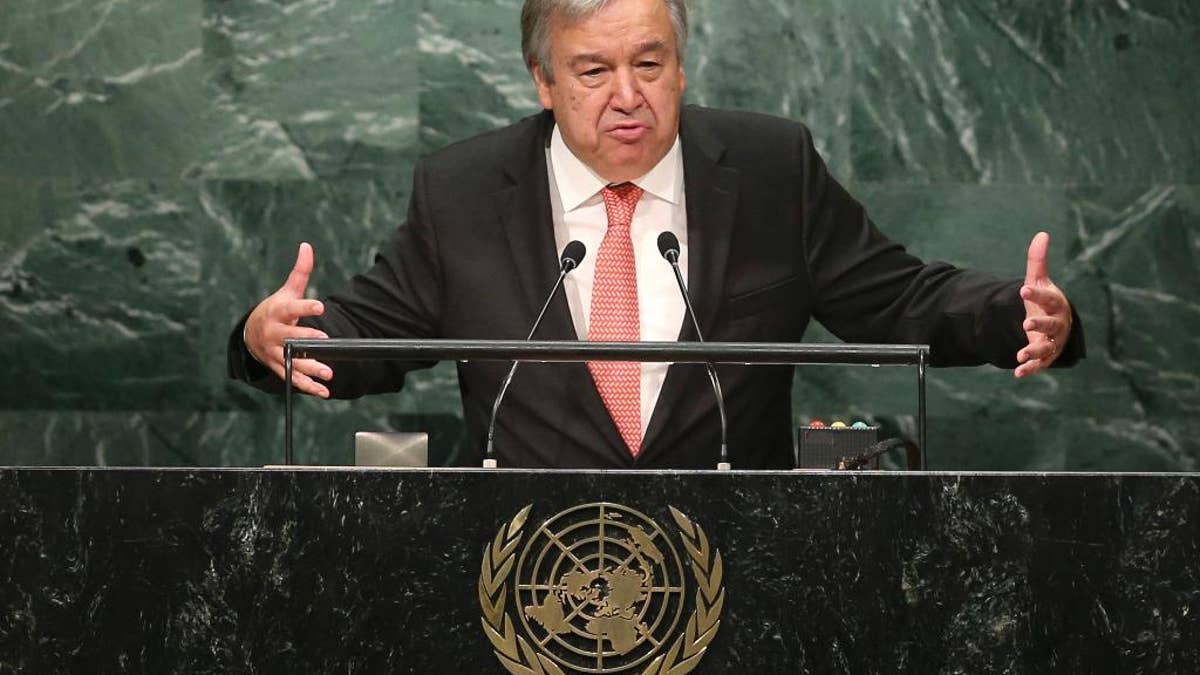
In this Oct. 13, 2016, file photo, António Guterres of Portugal, secretary-general designate of the United Nations, speaks during his appointment at U.N. headquarters. (Seth Wenig/File/The Associated Press)
As electioneering gets underway, Hugh Dugan, former National Security Council special assistant to the president and senior director for international organization affairs, told Fox News Digital, “After campaigns and a series of straw pulls and eliminations of candidates, members of the Security Council will present the U.N. General Assembly with a preferred candidate for their formal acceptance late next year.”
Dugan said that custom would indicate that the next secretary-general should come from Latin America. He also emphasized that there is an appetite to appoint a woman after 15 years of calls for a female secretary-general.
“If they really are to take the helm of a suffering, more or less irrelevant and unmanageable organization like this, they’re going to have to show up as managers,” Dugan said.
In the midst of the election’s “three-ring circus,” he said, there are six candidates who have officially been named and an additional eight who are considered possible contenders for the role.
The declared candidates
Seemingly the most palatable candidate for the U.S. of those declared is the current head of the International Atomic Energy Agency, Rafael Grossi of Argentina. An Argentine diplomat, Grossi has been dealing with Iran’s ambition to develop nuclear weapons while also working to prevent a nuclear disaster in Russia’s war against Ukraine.
Schaefer said Grossi is “probably the most acceptable among the candidates that have been listed so far” given the “great deal of courage” he has shown in his role at the IAEA.
Others include former Bolivian Vice President David Choquehuanca. A member of the Movement for Socialism, Choquehuanca once expressed his disdain for Western thinking after his election as Bolivia’s foreign minister.
Former Chilean President Michelle Bachelet was the U.N. high commissioner for human rights between 2018 and 2022. U.N. Watch said that, in this role, Bachelet often condemned Israel and the U.S. but “turned a blind eye to widespread violations by China, Turkey, North Korea, Cuba, Eritrea” and others.
According to Schaefer, it is “extraordinarily unlikely that [Bachelet] would receive support from the U.S.” given her political leanings and her “remarkable lack of bravery in the conduct of her position as the high commissioner for human rights.”
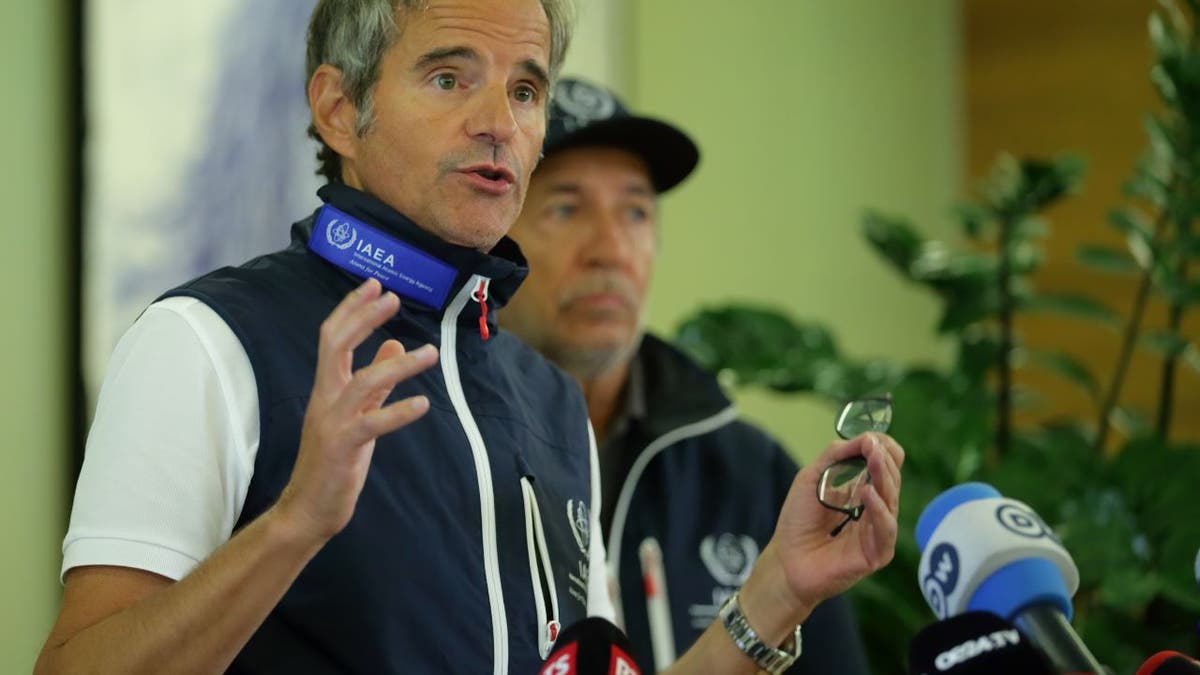
International Atomic Energy Agency Director General Rafael Grossi speaks to the media at Vienna International Airport in Schwechat, Austria, upon his return from inspecting the Zaporizhzhia nuclear power plant Sept. 2, 2022. (Heinz-Peter Bader/Getty Images)
Former Vice President of Costa Rica Rebeca Grynspan, who headed the U.N. Conference on Trade and Development (UNCTAD), had recommended regulation as a means “to address the deepening asymmetries” of international finance.
Schaefer said Grynspan would not “be an ideal candidate from a U.S. perspective” because her 30-year U.N. career makes her a “consummate insider” who would likely be unwilling “to shake up the system.”
The field is rounded up by two outside candidates, Colombe Cahen-Salvador, a left-wing political activist and co-founder of the Atlas Movement, and Bruno Donat, a joint Mauritius-U.S. citizen and official at U.N. Mine Action Service.
Possible candidates
Though they have not been officially named by a member state, Dugan listed several other officials that are likely to be nominated in the coming months. Many come from the left of the political aisle and are unlikely to get the backing of the Trump administration.
Jacinda Ardern is a former prime minister of New Zealand who resigned from the role but is considered “a global icon of the left.” Schaefer noted that Ardern’s prior resignation is not “a ringing endorsement” of her capability to take on the demanding role of secretary-general.
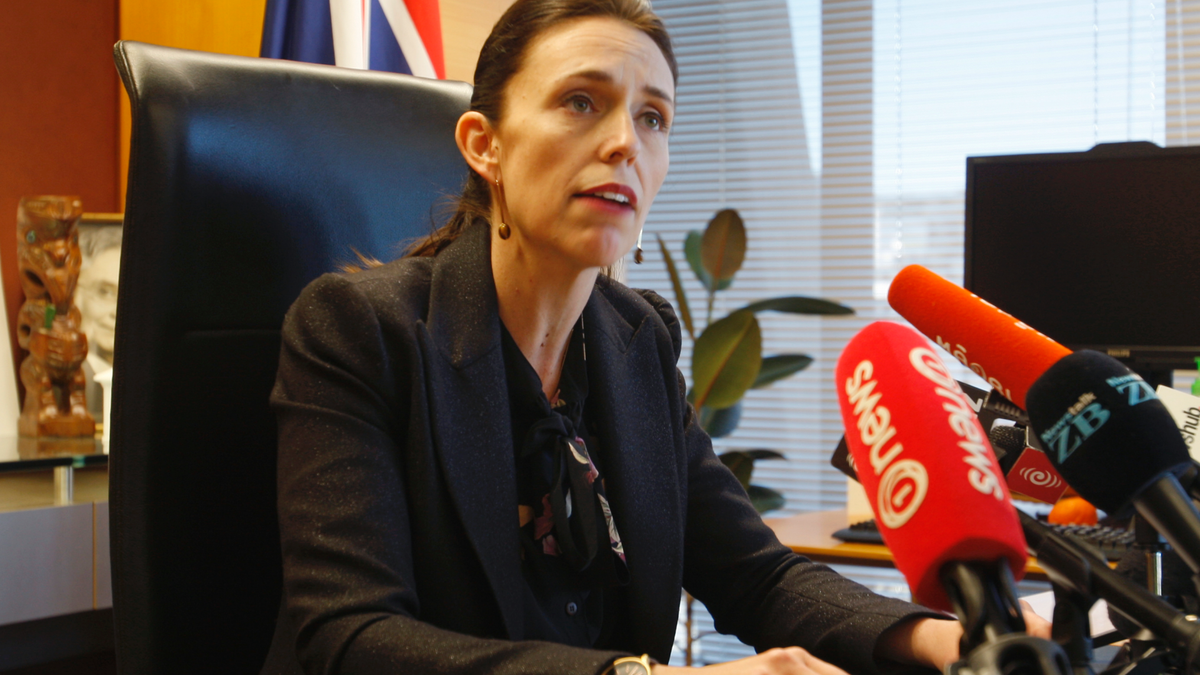
Former New Zealand Prime Minister Jacinda Ardern is a possible candidate for U.N. secretary-general. (Nick Perry/AP Photo)
Mexico’s former top diplomat, Alicia Bárcena, has 14 years of experience as the head of the U.N.’s Economic Commission for Latin America and the Caribbean. She is the secretary of environment and natural resources.
Other names include María Fernanda Espinosa, formerly defense and foreign minister of Ecuador; Nigeria’s Amina Mohammed, U.N. deputy secretary‑general; Kristalina Georgieva, managing director of the International Monetary Fund since 2019 of Bulgaria; and former head of the U.N. Development Programme Achim Steiner of Germany.
“A long list of anti-American secretaries-general, topped off by the profoundly hostile Antonio Guterres, have done enormous damage to America’s international relations, fueled antisemitism on a global scale and gravely diminished global peace and security,” Bayefsky said.
“We take a back seat in this election at our peril.”