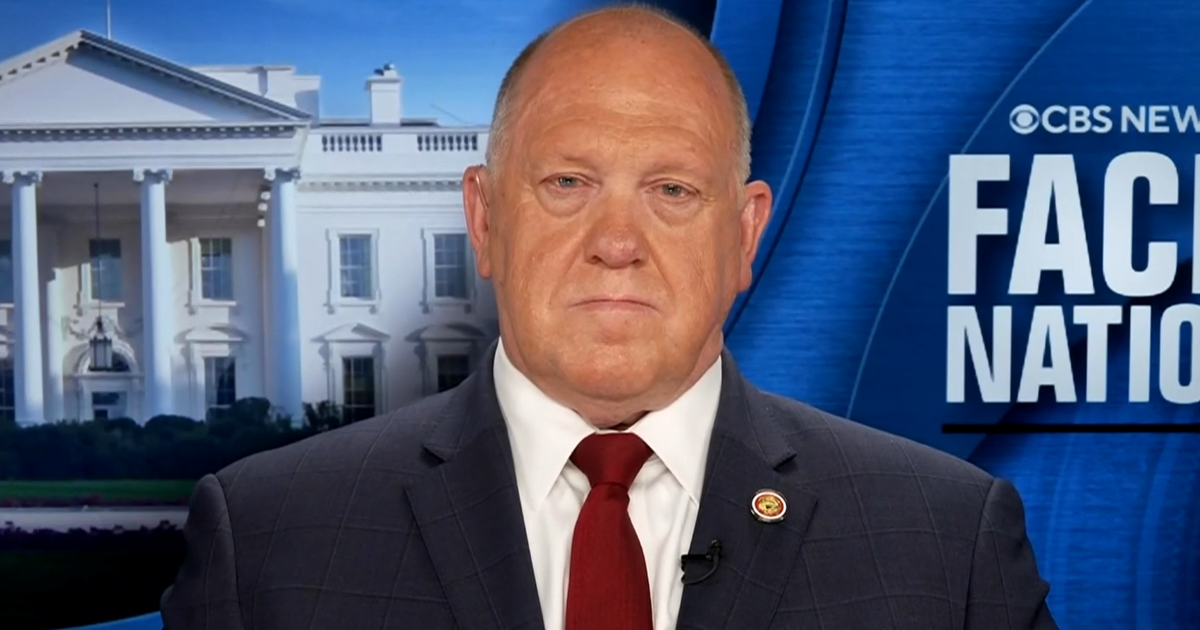

White House border czar Tom Homan voiced support Sunday for wider use of body-worn cameras, saying, “I think body cameras are the way to go,” as scrutiny grows following deadly encounters involving federal officers in Texas and Maine earlier this month.
“I think body cameras let the American people know what that officer sees when he takes that action,” Homan said on “Face the Nation with Margaret Brennan.”
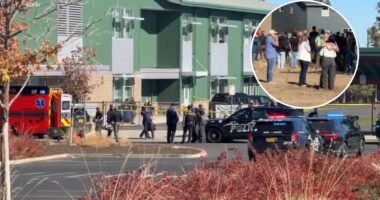
The comments came after two fatal ICE-related shootings in July. On July 7, an Immigration and Customs Enforcement officer in Houston shot and killed a Mexican national who had lived in the United States for decades. Several days later, an ICE officer shot and killed a Colombian man in Biddeford, Maine. In both incidents, the immigration officers involved were not equipped with body cameras.
Homan argued that outside footage can offer only part of the picture. “You can have a cellphone camera from a witness on the side, you can have, you know, city cameras or whatever,” he said Sunday. “But I want the American people to see what that officer sees when he makes the decision and takes an action.”
He emphasized that point again, saying, “I think the American people need to see what that officer sees and hears. I think it’s important.”
Homan has backed body cameras in the past, and the Department of Homeland Security moved last week to expand their use. DHS announced that every ICE arrest team will now include at least one officer wearing a camera. After the Houston shooting, the department said body cameras had already been rolled out to more than half of ICE field offices, with the rest expected to receive them within 60 days.
The push for body cameras has also been a flashpoint in Congress. Earlier this year, the issue surfaced during negotiations between Senate Democrats and Republicans amid a Department of Homeland Security shutdown. Democrats had withheld support for funding the department while pressing for changes to the administration’s immigration enforcement practices after two fatal shootings by federal agents in Minneapolis in January.
As those immigration enforcement talks unfolded, the Trump administration indicated it was willing to consider broader use of body cameras. The negotiations ultimately collapsed, but Democrats later agreed in April to approve funding for the rest of the department, including $20 million designated for body cameras. Republicans subsequently passed a roughly $70 billion package on their own to fund Immigration and Customs Enforcement and Border Patrol through the end of the Trump administration.
Homan on Sunday pointed to the DHS shutdown, claiming, “Everybody in ICE would have a camera now if the government wasn’t shut down by Democratic members of Congress.”
“There was money in that bill that they held up,” he said. “But because the government shut down, we’re behind on that.”
Democratic lawmakers have criticized DHS’s slow rollout of body cameras, given the funding approved in April, along with the “big, beautiful bill” passed last year. But Homan said the $20 million the department received earlier this year “wasn’t enough.”
“It didn’t fund everything, but now we have the funding after reconciliation,” Homan said, referring to the $70 billion package passed in June. “The cameras have been purchased, right now they’re training the trainer in deploying the cameras nationwide.”
The shootings in Texas and Maine have drawn renewed scrutiny on ICE’s practices. Homan said “we got to let the investigations play out,” but he noted that DHS Secretary Markwayne Mullin “took some action in concern of the safety of the agents and how we do operations” with a pause on vehicle stops. President Trump overturned that suspension on Wednesday. Both men were shot during attempted vehicle stops, and DHS has acknowledged that they were not the intended targets of the immigration operations.
Homan said more broadly, he’s concerned about rhetoric, pointing to statements, including from members of Congress, encouraging people to resist Immigration and Customs Enforcement. He said “I actually think that emboldens some people to say, ‘I’m not going to comply with ICE.'”
“And I think no matter what people think of ICE, no matter what you think of immigration law, you should always comply with law enforcement,” Homan said.
Homan said even unmarked law enforcement vehicles are equipped with emergency lights and sirens, along with an insignia worn by officers, that he argued would make clear that they’re law enforcement. In the Maine and Texas cases, Homan said he didn’t know whether those lights were used.
“I’m saying our vehicles are equipped with emergency lights,” Homan said. “If they didn’t activate the lights, then there’s an issue there.”