Share this @internewscast.com
On Saturday, President Trump called on allied nations to unite in ensuring the uninterrupted flow of oil through the Strait of Hormuz. This comes as Iran declared the strategic waterway off-limits to the United States and Israel.
“The United States has decisively beaten Iran on military and economic fronts, among others,” Trump stated in a post on Truth Social. “However, nations relying on oil through the Hormuz Strait must take responsibility for its security, and we will offer significant support!”
“We will collaborate with these countries to ensure operations are swift, smooth, and successful. This has always required a collective effort, and now it will be — fostering global harmony, security, and lasting peace!” Trump added.

Trump’s message followed a statement by Iranian Foreign Minister Abbas Araghchi on MS NOW, asserting that the Strait remains “open” to all except the US and Israel. This was perceived as an attempt to garner international backing after US strikes on military sites on Iran’s oil-critical Kharg Island.
“The passage is only restricted to vessels belonging to our adversaries and their allies. All others may proceed freely,” Araghchi clarified.
Amidst ongoing conflict, Tehran has targeted oil tankers and merchant ships traversing the strait, a vital corridor carrying approximately 20% of the world’s oil supply.
Sixteen ships operating in and around the Gulf and Strait have been attacked since the war started Feb. 28, according to UK Maritime Trade Operations.

The threat of Iranian attacks has brought shipping through the vital passageway to a halt â cutting off 27% of the world’s maritime oil and gas.
Earlier in the day, the president said that “many countries” will send war ships to patrol the vital waterway and keep it “open and safe” amid the ongoing conflict.
Follow The Post’s coverage of the United States’ airstrikes on Iran:
Trump has threatened to destroy Iranâs oil infrastructure on Kharg Island energy hub if it refuses to allow safe passage â but two Indian-flagged tankers carrying liquefied petroleum gas successfully crossed the Strait Saturday morning.
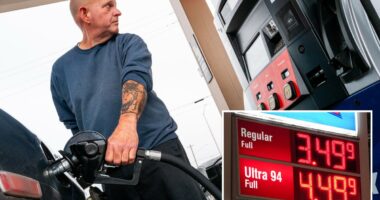
The conflict over the waterway has surged US pump prices up by at least 70 cents since the war began, bringing the national average to $3.68 on Saturday, according to AAA.
The day before the first strikes, a gallon of regular cost a comfortable $2.98.
Trump on Wednesday ordered the release of 172 million barrels from the US Strategic Petroleum Reserve, the biggest such release in American history.