
Share this @internewscast.com

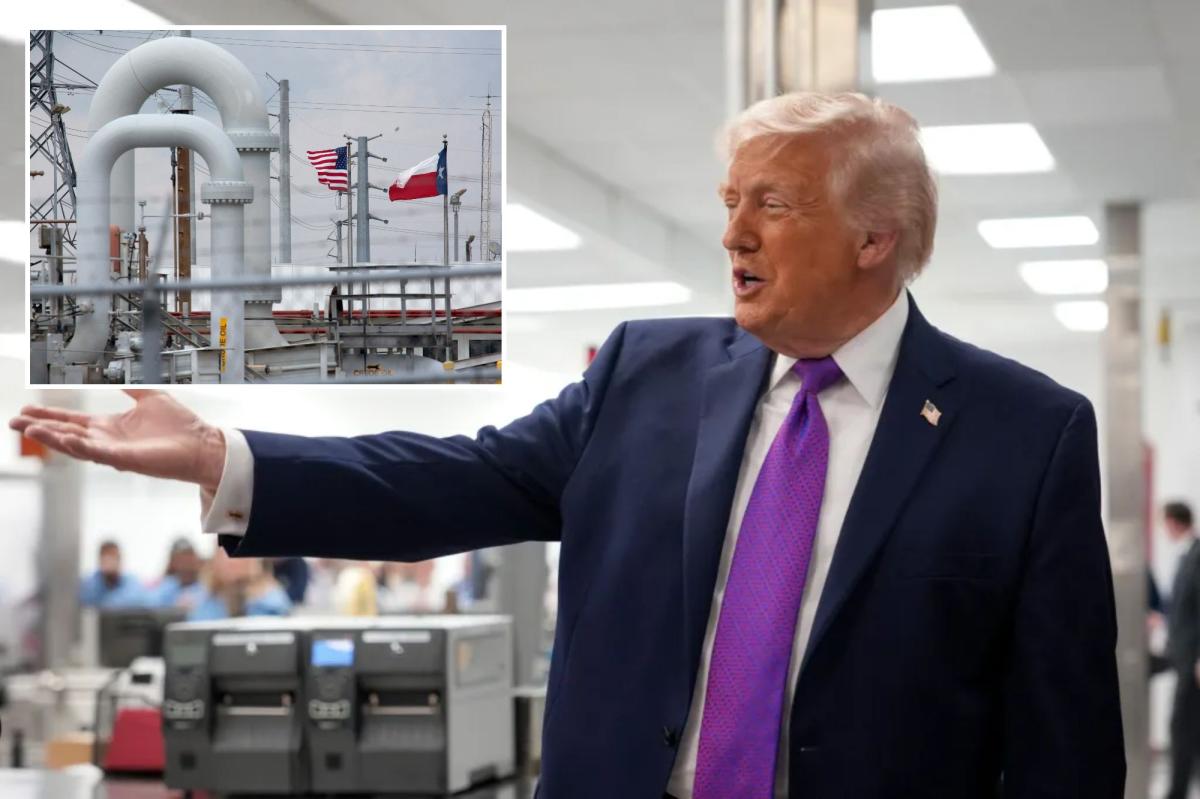
WASHINGTON — In a decisive move on Wednesday, President Trump announced the release of 172 million barrels from the U.S. Strategic Petroleum Reserve, aiming to alleviate the escalating gas prices.
“I filled it up once, and I’ll fill it up again, but for now, we’ll draw it down a bit to help lower prices,” Trump remarked during an interview with Local 12 in Kentucky.
Stay updated on the ongoing US-Israel conflict with Iran
This strategic decision aligns with the International Energy Agency’s plan, as it orchestrates the release of 400 million barrels of oil from global reserves.
The Department of Energy announced that the release from the U.S. reserve will commence next week. The entire process is expected to span approximately 120 days, based on scheduled discharge rates.
Given that the United States uses about 20 million barrels of petroleum daily, this release could potentially meet nearly nine days of national consumption, thereby exerting downward pressure on fuel prices.
The president praised the international actions as a stabilizing force in the markets due to the ongoing war in Iran. Dispersal from IEA will “substantially reduce the oil prices as we end this threat to America and this threat to the world,” Trump said.
Trump is trying to ease fears of high gas prices as the summer driving season is on the horizon.
He shrugged off rising gas prices as a “matter of war” earlier in the day and expressed confidence the market would settle soon.
“I figured we’d be hit a little bit. We were hit less than I thought and we’ll be back on track in a pretty short while,” he told reporters traveling with him to Ohio.
He also argued that gas “prices are coming down very substantially,” noting the increase is “just a matter or war. That happens. You can almost predict it.”
Prices of a barrel of oil rose to nearly $120 before dropping back down to around $90 a barrel. Gas prices in the US rose for the 11th day in a row. The national average is $3.58 a gallon, according to the AAA.
The optics are a concern for the White House in an election year when the administration is touting all it’s done to lower the cost of living for everyday Americans.
But a White House official expressed confidence to The Post the situation would stabilize soon, calling it a “short term spike” for a “long-term gain.” That message is being sent to allies on Capitol Hill as the administration tries to reassure GOP allies that the prices at the pump will soon plummet.
The long-term aim of White House is a secure and stable Middle East, which means taking out Iran’s ability to target its neighbors and infrastructure tied to the oil industry.
Iran, meanwhile, is threatening more pain.
Ebrahim Zolfaqari, a spokesman for Iran’s military, told Reuters Wednesday: “Get ready for oil to be $200 a barrel, because the oil price depends on regional security which you have destabilised.”
Oil prices spiked this week over worries about the Strait of Hormuz, a key waterway off Iran’s coast where a fifth of the world’s oil passes through on a typical day.
Follow The Post’s coverage of the United States’ airstrikes on Iran:
Operation Epic Fury and Iranian counterattacks have halted most shipping traffic in the strait, leading oil producers to slash output.
The Iranian regime has vowed to prevent oil tankers from passing through the strait and more than a dozen minelaying Iranian ships were taken out by the US military on Tuesday.
Trump’s announcement on the oil release comes after he spoke with G7 leaders Wednesday morning before his trip to Ohio and Kentucky.
After the call, led by French President Emmanuel Macron, the International Energy Agency said its 32 member countries would release 400 million barrels of oil from their strategic reserves.
“This sends a clear signal to the global markets to help lower oil prices,” a French official told The Post.
And it represents roughly 20 days of supply coming out of the strait, officials noted.
It’s the largest release since 2022, when Russia invaded Ukraine.