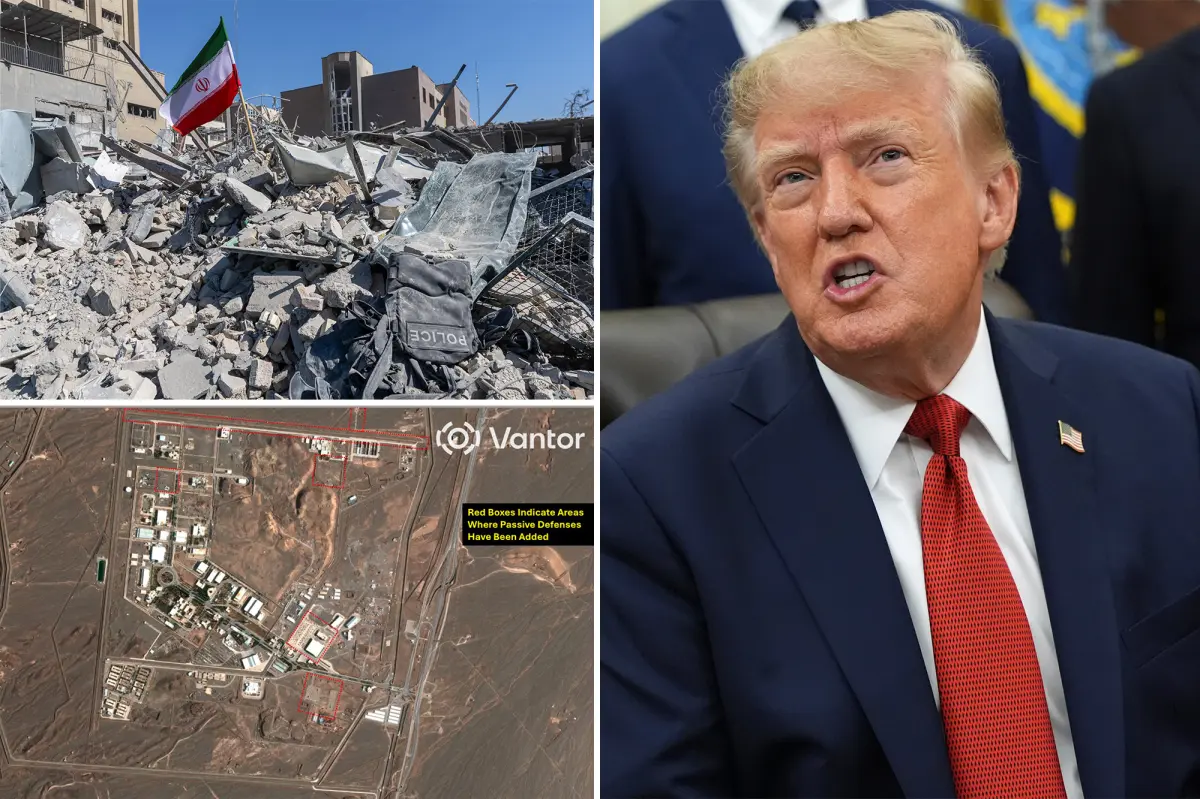
President Trump said Sunday that he was weighing whether to “blow up” Iran, warning that “very big things” could happen soon. He made the comments after leaving the Camp David retreat one day earlier than planned to return to the White House.
During a conversation with Fox News correspondent Trey Yingst, Trump described three possible outcomes for Iran: reaching an agreement with the United States, enduring prolonged economic pressure, or facing the destruction of its ruling regime.
Yingst said Trump told him he was in a “deciding mode” and that major developments were expected “in the not so distant future.”
According to Yingst, the president characterized the choices as “wiping Iran out,” allowing the country to “rot economically,” or negotiating a deal with Washington.
“My question is: If and when do I blow the entire nation up? They better behave,” Trump said.
The threat came as Iran’s government claimed it had received intelligence suggesting the United States was preparing another attack. Tehran warned that any such action could trigger retaliation against American bases and other US interests across the region.
The State Department issued its own security warning Saturday, citing the possibility of an unexpected escalation in the Middle East. Americans were urged to remain alert and prepare for potential flight disruptions, including cancellations and airspace closures.
Trump attempted to ease those concerns, telling Yingst that the weekend was “no different from any other weekend.”
The confrontation comes as Iranian officials are expected to travel to New York for the United Nations General Assembly this week, potentially creating an opportunity for renewed diplomatic talks.
Asked whether he would sit down with Iranian President Masoud Pezeshkian at the UN, Trump said he would “probably be open to it.”
In an interview with Axios last week, Trump said he faced a “big decision” over whether to “annihilate” Iran’s regime.
On Sunday, Trump accused Iranian officials of “hiding like rats” and claimed Tehran had not sent representatives with enough authority to negotiate an agreement with the United States.
The US naval blockade also remains in place, adding to the pressure on Iran’s already struggling economy.
US Central Command said Saturday that American forces had escorted more than 1 billion barrels of crude oil through the Strait of Hormuz in recent months. CENTCOM also said the military had protected more than 2,000 commercial vessel crossings and helped remove mines from shipping routes.
Iran rejected those claims, with a spokesman dismissing the US account as a “failed psychological operation.”
At the same time, tensions continued to spread elsewhere across the Middle East on Sunday.
Saudi authorities said Iran-backed Houthi forces fired a ballistic missile toward Riyadh. The launch followed attacks on Saudi Arabia’s vital oil infrastructure, including an incident that forced a major pipeline offline.
Trump also said the United States remained in “constant communication” with the Houthis, indicating that the group had agreed not to engage in hostilities with American forces.
The latest developments unfolded after Trump abruptly shortened his stay at Camp David, arriving back at the White House on Saturday night—24 hours ahead of schedule. The White House offered no explanation for the unexpected change in his plans.