

Last autumn, mountain runner Michelino Sunseri set a new record for climbing and descending Grand Teton, a feat that his sponsor, The North Face, celebrated as the realization of “an impossible dream.”
Not long after, Sunseri faced a legal challenge: He was charged by federal prosecutors with a misdemeanor that could lead to a jail sentence of up to six months. The charge was for using a trail that the National Park Service claimed was closed, despite their failure to adequately communicate this status to the public.
Unknowingly, Sunseri ran afoul of one of the countless federal regulations that carry criminal charges—a legal maze so extensive and unclear that no one is certain how many offenses are actually included in it.
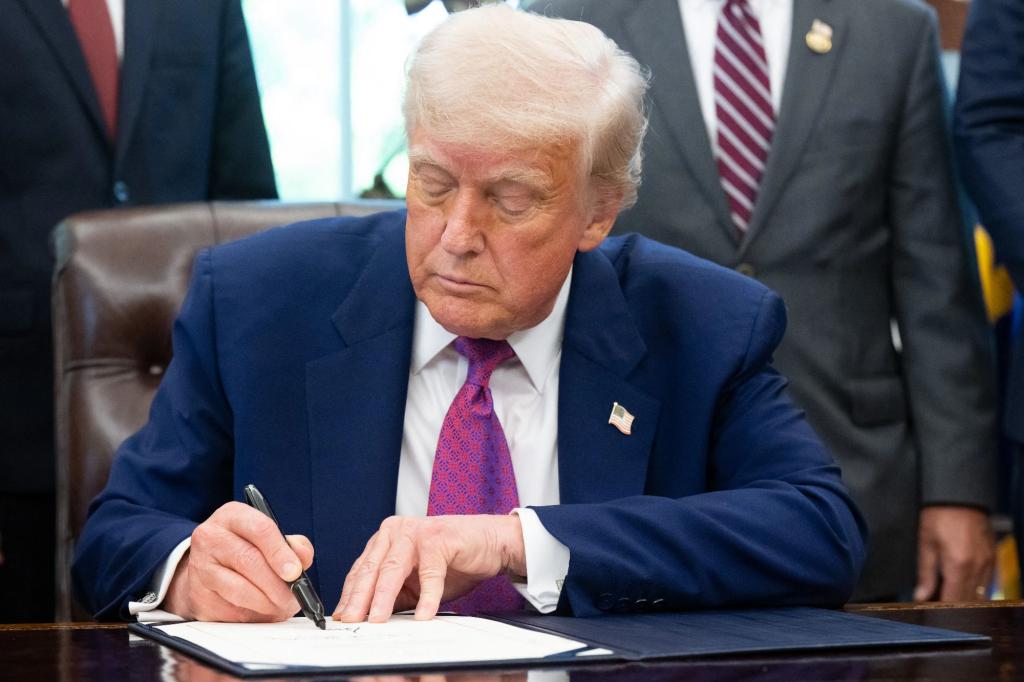
An executive order that President Donald Trump issued last week aims to ameliorate the injustices caused by the proliferation of such agency-defined crimes, which turn the rule of law into a cruel joke.
The Code of Federal Regulations “contains over 48,000 sections, stretching over 175,000 pages — far more than any citizen can possibly read, let alone fully understand,” Trump’s order notes.
“Worse, many [regulations] carry potential criminal penalties for violations.”
How many? As Supreme Court Justice Neil Gorsuch and co-author Janie Nitze note in their 2024 book on “the human toll of too much law,” even experts cannot say for sure, although “estimates suggest that at least 300,000 federal agency regulations carry criminal sanctions today.”
At the federal level, in other words, regulatory crimes outnumber statutory crimes — another uncertain tally — by a factor of roughly 60 to 1.
Since the latter category has exploded during the last century, that is no small feat, but it is what you might expect when unaccountable bureaucrats are free to invent crimes.
“Many of these regulatory crimes are ‘strict liability’ offenses, meaning that citizens need not have a guilty mental state to be convicted of a crime,” Trump notes.
“This status quo is absurd and unjust. It allows the executive branch to write the law, in addition to executing it.”
Trump said prosecutors generally should eschew criminal charges for regulatory violations based on strict liability and focus on cases where the evidence suggests the defendant knowingly broke the rules.
Trump also instructed federal agencies to “explicitly describe” conduct subject to criminal punishment under new regulations, and prepare lists of regulatory violations that already can be treated as crimes.
Given the enormous volume and range of federal regulations, that last requirement is a tall order.
But if the agencies that issue those regulations cannot specify all of the violations that can trigger criminal penalties, what hope does the average American have?
Those penalties may not be readily apparent, because “you need to consult at least two provisions of law to identify regulatory crimes,” GianCarlo Canaparo, a senior legal fellow at the Heritage Foundation, explained in Senate testimony this month.
A regulation that says “Swiss cheese must have holes throughout the cheese,” for example, says nothing about criminal prosecution, which is authorized by a separate provision of the US Code.
Canaparo noted other examples gathered by Mike Chase, author of the comical yet accurate book “How to Become a Federal Criminal.”
It is a federal crime, for instance, “to sell a tufted mattress unless you have burned 9 cigarettes on the tufted part of it,” “to submit a design to the Federal Duck Stamp contest if your design does not primarily feature ‘eligible waterfowl,’” and “to sell a small ball across state lines unless it is marked with a warning that says, ‘this toy is a small ball.’”
Getting a handle on this bewildering situation will require more than prosecutorial restraint, a matter of discretion that is subject to change at any time.
Canaparo argues that Congress should eliminate “excess federal crimes,” add mens rea (“guilty mind”) requirements to provisions that lack them, and recognize a defense for people who did not realize their conduct was unlawful.
As he notes, rampant overcriminalization makes a mockery of the old adage that “ignorance of the law is no excuse.”
Jacob Sullum is a senior editor at Reason magazine.