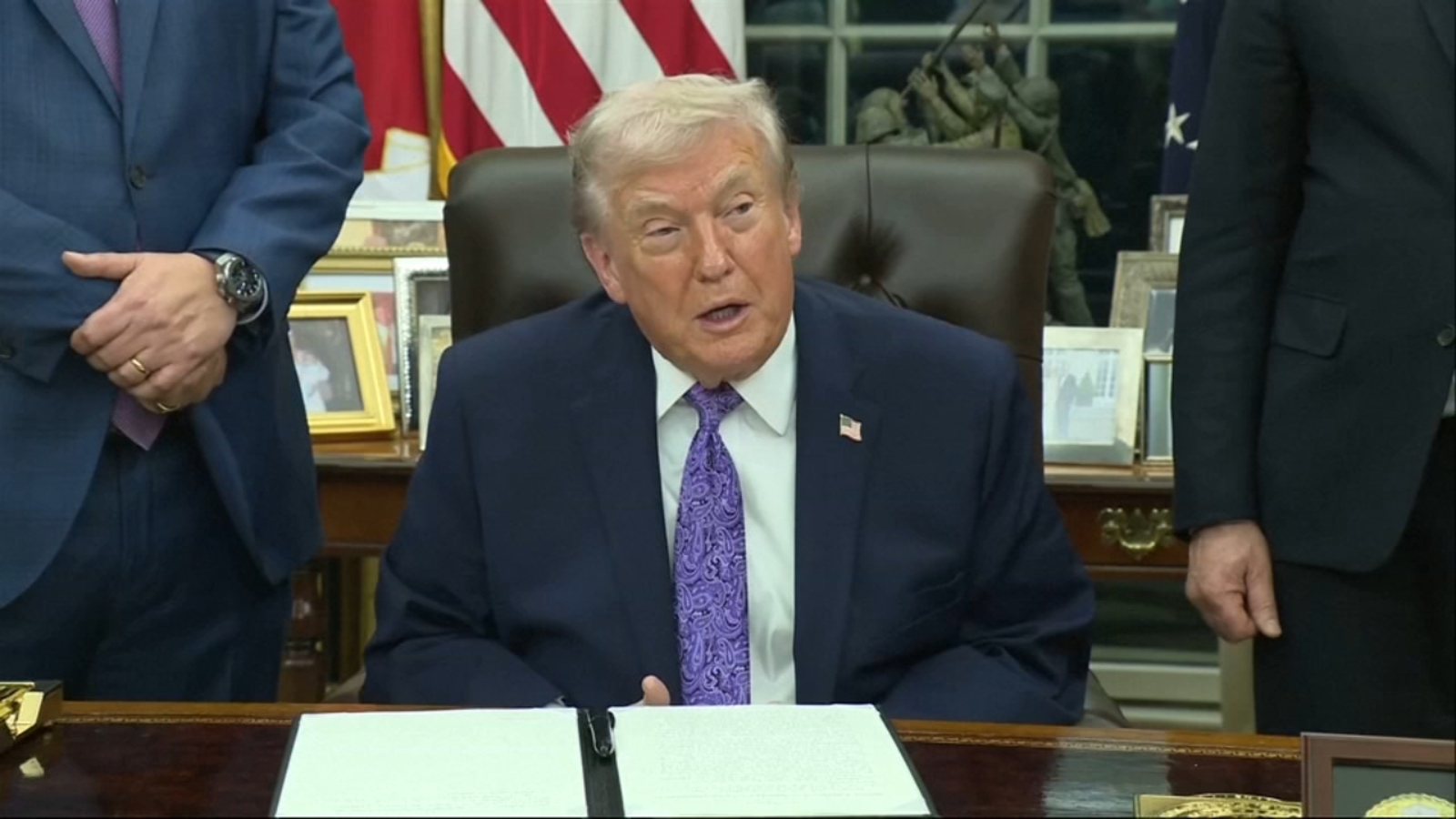

In a decisive move on Thursday, President Donald Trump signed an executive order designed to streamline artificial intelligence regulations across the United States. This directive aims to establish a “single national framework” for AI, effectively overriding state-level regulations that could hinder the industry’s progress.
White House aide Will Scharf elaborated on the order’s intent during a session in the Oval Office, emphasizing the administration’s commitment to ensuring AI development isn’t stifled by disparate state regulations. “This executive order mandates actions to ensure AI operates within a unified national structure, rather than being bogged down by state-level restrictions that might cripple the industry,” Scharf explained.
The implications of this order are significant, potentially boosting US efforts to lead in this burgeoning technological field. While AI has already become a crucial component of economic growth and the stock market, it remains a largely uncharted territory in many aspects.
During the signing ceremony, David Sacks, who oversees cryptocurrency and AI initiatives at the White House, announced that the administration would collaborate with Congress to develop a comprehensive federal framework for AI. “Meanwhile, this executive order equips the administration with the means to counteract the most burdensome state regulations,” Sacks noted. He further clarified that the administration would respect state-level regulations related to child safety and AI, stating in a social media post that the order does not imply a challenge to every state AI law.
Earlier this year, an attempt by Republicans to prevent states from regulating AI was thwarted by Congress. In a near-unanimous vote, the US Senate removed a proposal for a 10-year moratorium on state AI regulations from Trump’s extensive domestic policy bill before passing it. This executive order seeks to address these concerns, aiming for a cohesive national approach to AI governance.
Congress killed an earlier attempt by Republicans to prevent states from regulating AI in July. The US Senate voted nearly unanimously to remove a 10-year moratorium on the enforcement of state artificial intelligence regulations from Trump’s sweeping domestic policy bill before the bill passed.
Lawmakers also declined to add an AI moratorium to the National Defense Authorization Act, despite Trump’s suggestion that they do so.
Leaders in Silicon Valley, such as OpenAI CEO Sam Altman, have argued that navigating a patchwork of state regulations could slow down innovation and affect America’s competitiveness in the global AI race with China, which they say will have implications for the economy and national security.
Critics worry the deregulation push could allow AI companies to evade accountability should their tools harm consumers.
Artificial intelligence is already subject to little overall oversight as it extends into more areas of American life – from personal communications and relationships to health care and policing.
In the absence of broad federal legislation, some states have passed laws to address potentially risky and harmful uses of AI, such as the creation of misleading deepfakes and discrimination in hiring.
But the debate over how to regulate AI has caused schisms not only in the industry but also within the conservative movement and Republican party.
On one side are figures in the administration like Sacks and Vice President JD Vance, who push for a lighter touch regulatory framework. On the other are figures such as Florida Gov. Ron DeSantis and former White House chief strategist Steve Bannon, who have been vocal about suppoting state-level regulation, arguing those guardrails are needed for the fast-moving technology.
Brad Carson, president of Americans for Responsible Innovation and a leader of the pro-AI regulation super PAC Public First, said in a statement that the executive order will “hit a brick wall in the courts.”
Carson added that the order “directly attacks the state-passed safeguards that we’ve seen vocal public support for over the past year, all without any replacement at the federal level.”
In contrast, Collin McCune, head of government affairs at the venture capital firm Andreessen Horowitz, called the order an “incredibly important first step” but called on Congress to fill the regulatory vacuum.
“States have an important role in addressing harms and protecting people, but they can’t provide the long-term clarity or national direction that only Congress can deliver,” he wrote on X.