
CARACAS, Venezuela — President Donald Trump’s recent strategy to seize control of Venezuela’s oil industry and enlist American firms to rejuvenate it following the capture of President Nicolás Maduro is unlikely to cause an immediate shift in global oil prices.
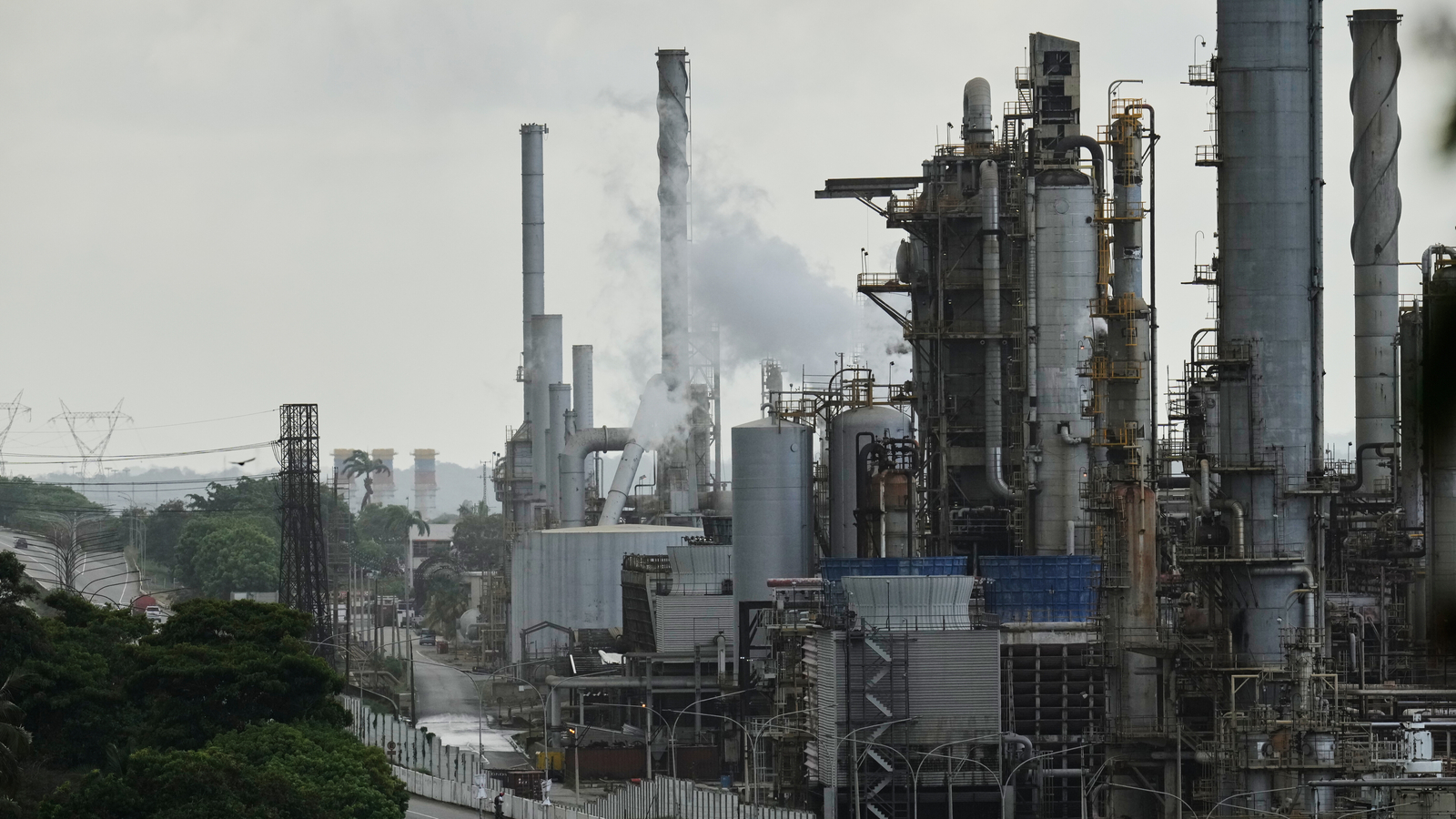
Venezuela’s oil sector is in a state of disrepair, having suffered from years of neglect and the weight of international sanctions. As a result, significant time and investment are necessary before any substantial boost in oil production can be realized. Despite this, some experts remain hopeful that the country could potentially double or even triple its current daily output of approximately 1.1 million barrels, thereby approaching its former high levels more swiftly than anticipated.
“Although reports indicate that Venezuela’s oil infrastructure emerged largely unscathed from U.S. military actions, it has been deteriorating over many years and will need time to be restored,” explained Patrick De Haan, head petroleum analyst at GasBuddy, a gasoline price tracking service.
U.S. oil companies are likely to demand a stable political environment before committing to substantial investments. The political climate, however, remains uncertain. President Trump has asserted U.S. control, while Venezuela’s vice president argues for Maduro’s reinstatement, even as the country’s high court has appointed her as interim president.
“If it appears that the U.S. can effectively govern the country over the next 24 hours, optimism may rise among U.S. energy companies about their ability to quickly revitalize Venezuela’s oil industry,” commented Phil Flynn, senior market analyst at Price Futures Group.
Should Venezuela succeed in becoming a major oil producer once more, Flynn suggests this development could lead to sustained lower oil prices and exert additional pressure on Russia.
Oil isn’t traded over the weekend, so there wasn’t an immediate impact on prices. But a major shift in prices isn’t expected when the market does reopen. Venezuela is a member of OPEC so its production is already accounted for there. And there is currently a surplus of oil on the global market.
Proven reserves
Venezuela is known to have the world’s largest proven crude oil reserves of approximately 303 billion barrels, according to the U.S. Energy Information Administration. That accounts for roughly 17% of all global oil reserves.
So international oil companies have reason to be interested in Venezuela. Leading companies, including Exxon Mobil and Chevron, didn’t immediately respond to requests for comment Saturday. ConocoPhillips spokesperson Dennis Nuss said by email that the company “is monitoring developments in Venezuela and their potential implications for global energy supply and stability. It would be premature to speculate on any future business activities or investments.”
Chevron is the only one with significant operations in Venezuela, where it produces about 250,000 barrels a day. Chevron, which first invested in Venezuela in the 1920s, does business in the country through joint ventures with the state-owned company Petróleos de Venezuela S.A., commonly known as PDVSA.
But even with those massive reserves, Venezuela has been producing less than 1% of the world’s crude oil supply. Corruption, mismanagement and U.S. economic sanctions saw production steadily decline from the 3.5 million barrels per day pumped in 1999 to today’s levels.
The problem isn’t finding the oil. It’s a question of the political environment and whether companies can count on the government to live up to their contracts. Back in 2007, then President Hugo Chávez nationalized much of the oil production and forced major players like ExxonMobil and ConocoPhillips out.
“The issue is not just that the infrastructure is in bad shape, but it’s mostly about how do you get foreign companies to start pouring money in before they have a clear perspective on the political stability, the contract situation and the like,” said Francisco Monaldi, who is the director of the Latin American energy program at Rice University.
But the infrastructure does need significant investment.
“The estimate is that in order for Venezuela to increase from one million barrels per day – that is what it produces today – to four million barrels, it will take about a decade and about a hundred billion dollars of investment,” Monaldi said.
Strong demand
Venezuela produces the kind of heavy crude oil that’s needed for diesel fuel, asphalt and other fuels for heavy equipment. Diesel is in short supply around the world because of the sanctions on oil from Venezuela and Russia and because America’s lighter crude oil can’t easily replace it.
Years ago, American refineries on the Gulf Coast were optimized to handle that kind of heavy crude at a time when U.S. oil production was falling and Venezuelan and Mexican crude was plentiful. So refineries would love to have more access to Venezuela’s crude because it would help them operate more efficiently, and it tends to be a little cheaper.
Boosting Venezuelan production could also make it easier to put pressure on Russia because Europe and the rest of the world could get more of the diesel and heavy oil they need from Venezuela and stop buying from Russia.
“There’s been a big benefit for Russia to see Venezuela’s oil industry collapse. And the reason is because they were a competitor on the global stage for that oil market,” Flynn said.
Complicated legal picture
But Matthew Waxman, a Columbia University law professor who was a national security official in the George W. Bush administration, said seizing control of Venezuela’s resources opens up additional legal issues.
“For example, a big issue will be who really owns Venezuela’s oil?” Waxman wrote in an email. “An occupying military power can’t enrich itself by taking another state’s resources, but the Trump administration will probably claim that the Venezuelan government never rightfully held them.”
But Waxman, who served in the State and Defense departments and on the National Security Council under Bush, noted that “we’ve seen the administration talk very dismissively about international law when it comes to Venezuela.”
___
Associated Press writers Matt O’Brien and Ben Finley contributed to this report.
Copyright © 2026 by The Associated Press. All Rights Reserved.