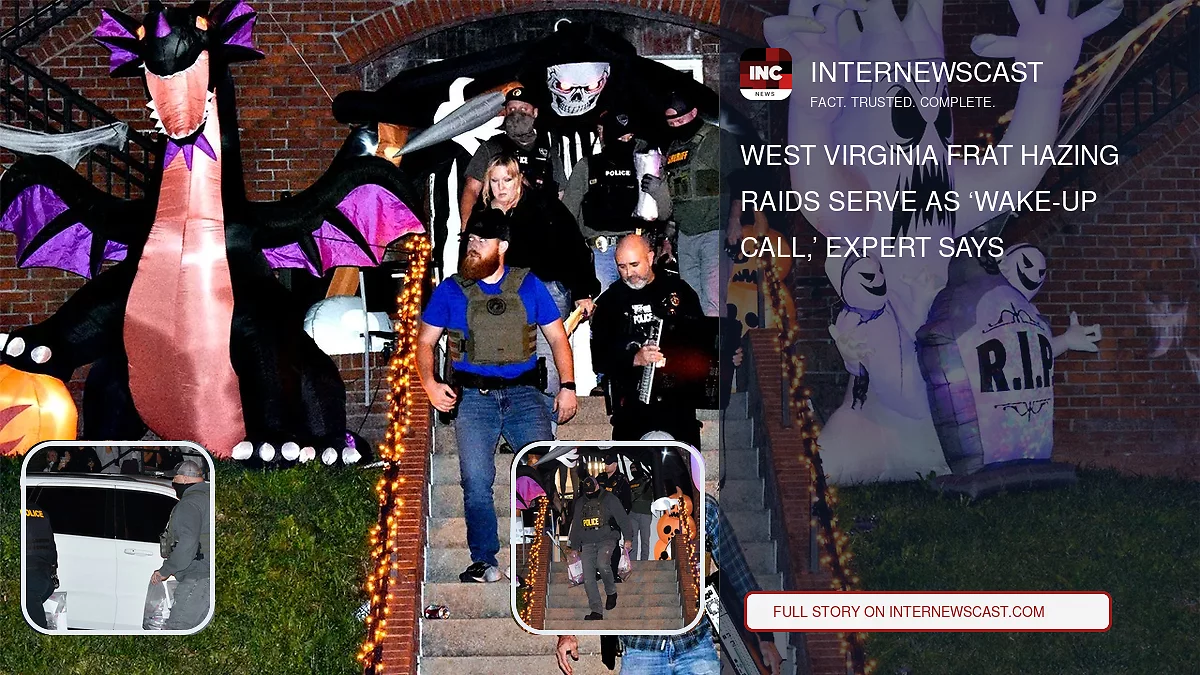

Authorities are reviewing evidence seized from the Lambda Chi Alpha house at West Virginia University as part of the latest wave of fraternity hazing investigations reported across the country.
On Oct. 26, loud music filled the area as hundreds of people gathered along the street and on nearby properties surrounding the multilevel brick fraternity house in Morgantown.
At the same time, officers from campus and local police departments, acting under a search warrant connected to hazing allegations, carried bags and cases from the building and placed them in police vehicles.
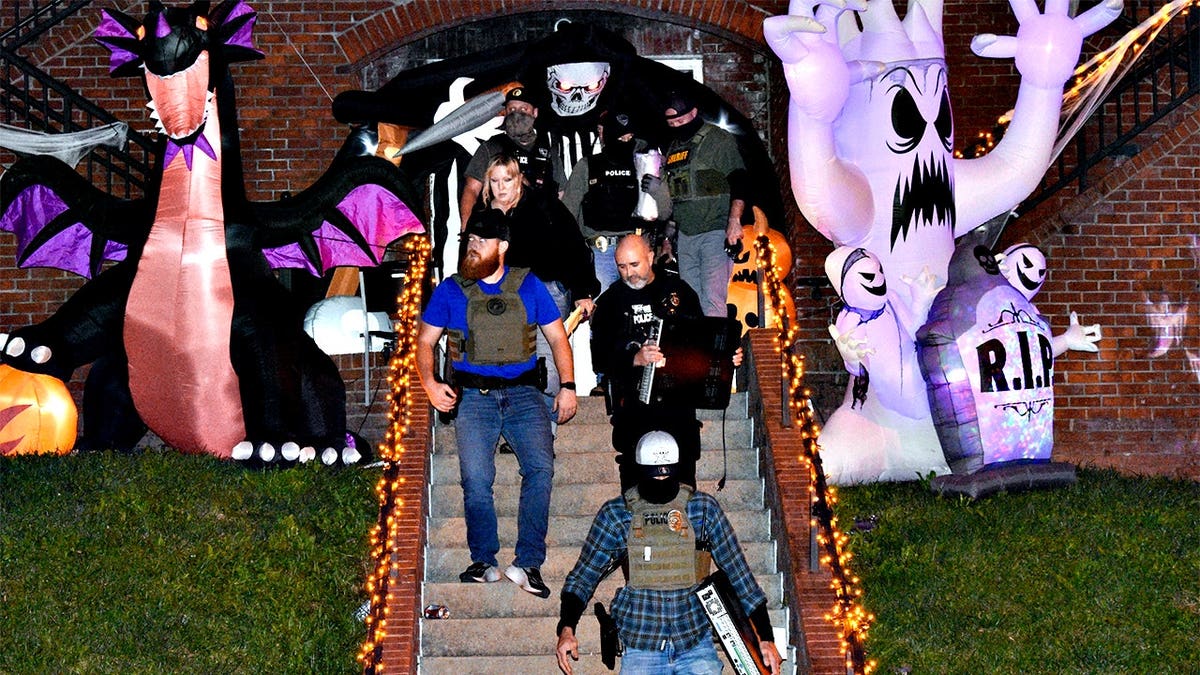
Police search a fraternity house at West Virginia University on Oct. 26, 2026. (Ryan Moncif/The Daily Athenaeum)
The university placed the Lambda Chi Alpha chapter on interim suspension Oct. 9, slightly more than two weeks before the search, after receiving “anonymous allegations of hazing,” a university spokeswoman told News Outlet.
Search warrants were also executed Oct. 26 at the West Virginia University house of Pi Kappa Alpha, according to posts from WVU Safety and Wellness on social media.
The organization, widely known as PIKE, is likewise being investigated over hazing allegations. At that point, however, the university had not suspended its PIKE chapter.
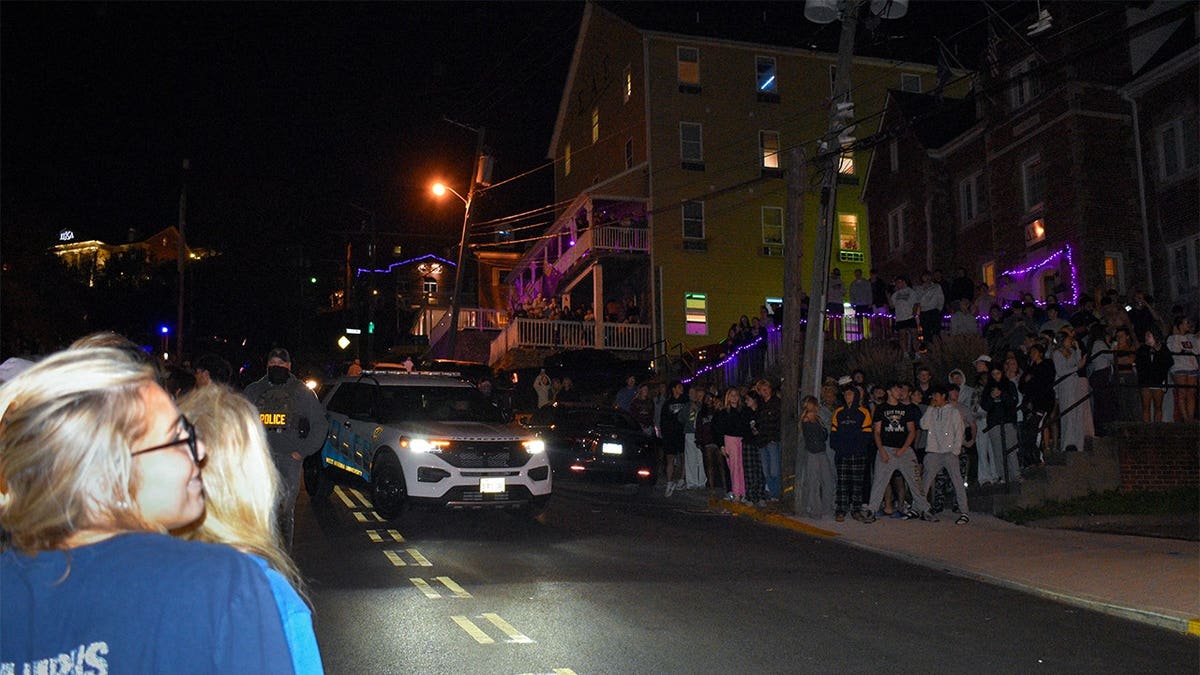
Onlookers watch police execute search warrants during alleged hazing investigations at West Virginia University on Oct. 26, 2026. (Ryan Moncif/The Daily Athenaeum)
Renewed focus on an entrenched tradition
The investigations involving the two West Virginia University chapters come as Greek organizations nationwide face a growing number of hazing inquiries.
Hazing can include forcing recruits or prospective members of military groups and college fraternities to endure strenuous, humiliating or dangerous activities.
The rise in police involvement does not necessarily mean hazing has become more common, said Michael Ayalon, a hazing-prevention specialist and CEO of Greek University.
Instead, the increase may reflect greater awareness, particularly following changes in federal law, Ayalon told News Outlet.
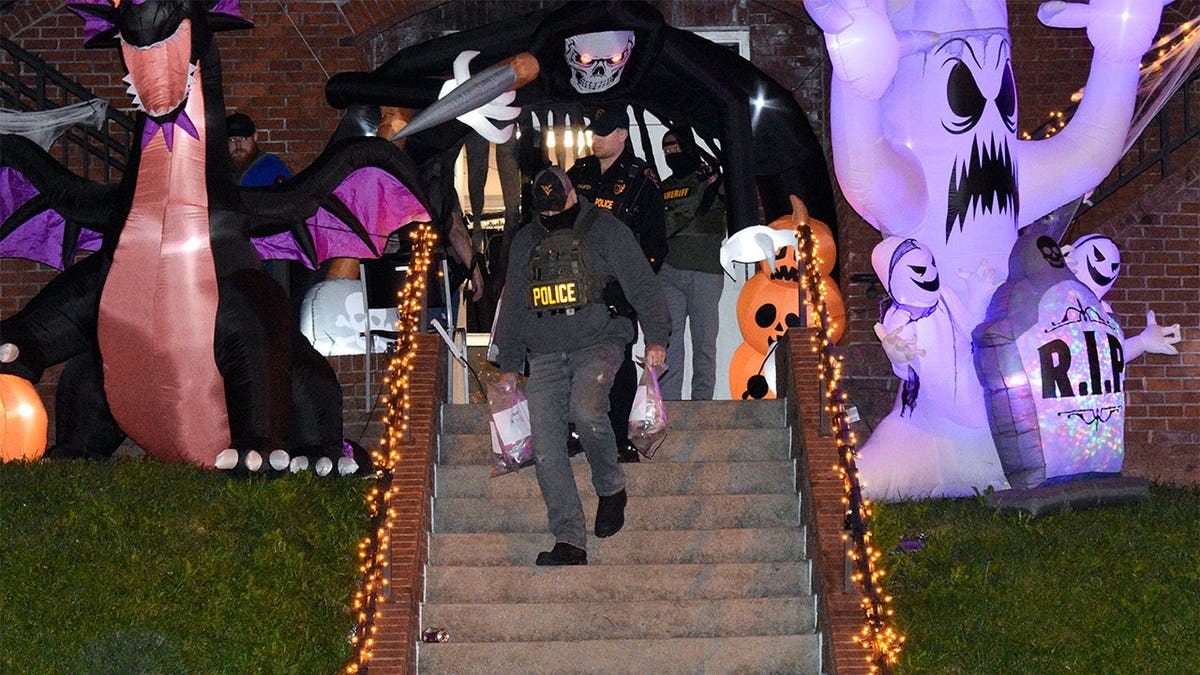
Police search a fraternity house at West Virginia University on Oct. 26, 2026. (Ryan Moncif/The Daily Athenaeum)
The Stop Campus Hazing Act, enacted with bipartisan congressional support in December 2024, requires greater transparency surrounding hazing allegations, Ayalon said.
“We certainly are seeing increased visibility and scrutiny of hazing on college campuses, particularly as universities face greater expectations for transparency and accountability.”
“With that transparency and accountability comes greater visibility.”

Police remove evidence from fraternity houses at West Virginia University on Oct. 26, 2026. (Ryan Moncif/The Daily Athenaeum)
Still, Ayalon cautioned that greater visibility should not be interpreted as proof that hazing is occurring more frequently.
Hazing has long been underreported, he said, in part because victims fear retaliation.
ALSO READ: 2 Dead, 2 Injured in Suspected Electrical Leak at Hotel Swimming Pool
‘A wake-up call’
The investigations should also prompt fraternity members to consider how allegations involving individual chapters influence public views of Greek life, Ayalon said.
“The positive contributions of thousands of fraternity members can get overshadowed by allegations involving a handful of chapters,” Ayalon said.
“So every hazing incident makes it harder for the good chapters to go out and recruit more new members, makes it harder for alumni to defend the fraternity experience, and it makes it harder for universities that are working with these organizations.”
“For students, I think this is a wake-up call.”
Even after decades of education about hazing’s dangers, policy changes and deaths linked to the practice, some chapters still view hazing as a requirement for membership, he said.
That belief is rooted in faulty logic, Ayalon said.
Members may rationalize abusive treatment by thinking, “I had to go through it, so you have to go through it, too.”
Some fraternity chapters also promote the notion that hazing strengthens brotherhood and fosters loyalty, he said.
“But there is a profound difference between working through a meaningful challenge as equals and being humiliated or controlled by people who hold power over you.”
Hazing practices have historically varied according to the type of fraternity or sorority involved, Ayalon said.
Traditionally white fraternities, often identified as IFC organizations, have been associated with forced alcohol consumption. Eighty-two percent of hazing deaths involve forced alcohol consumption, he said.
Hazing in historically white sororities often takes another form. Within Panhellenic organizations, it may involve psychological abuse, including exclusionary “mean-girl” behavior directed at new members.
In historically Black fraternities and sororities belonging to the National Pan-Hellenic Council, commonly known as the Divine Nine, abuse may be physical or psychological, Ayalon said.
Some recent, widely publicized hazing cases have also involved drugs, he said.
“West Virginia University takes seriously the safety and well-being of our students,” a university spokeswoman said.
“Due to the nature of the investigations, no other details will be released at this time. We will provide updates as they become available.”
News Outlet contacted Lambda Chi Alpha and Pi Kappa Alpha seeking comment.
n