
Share this @internewscast.com

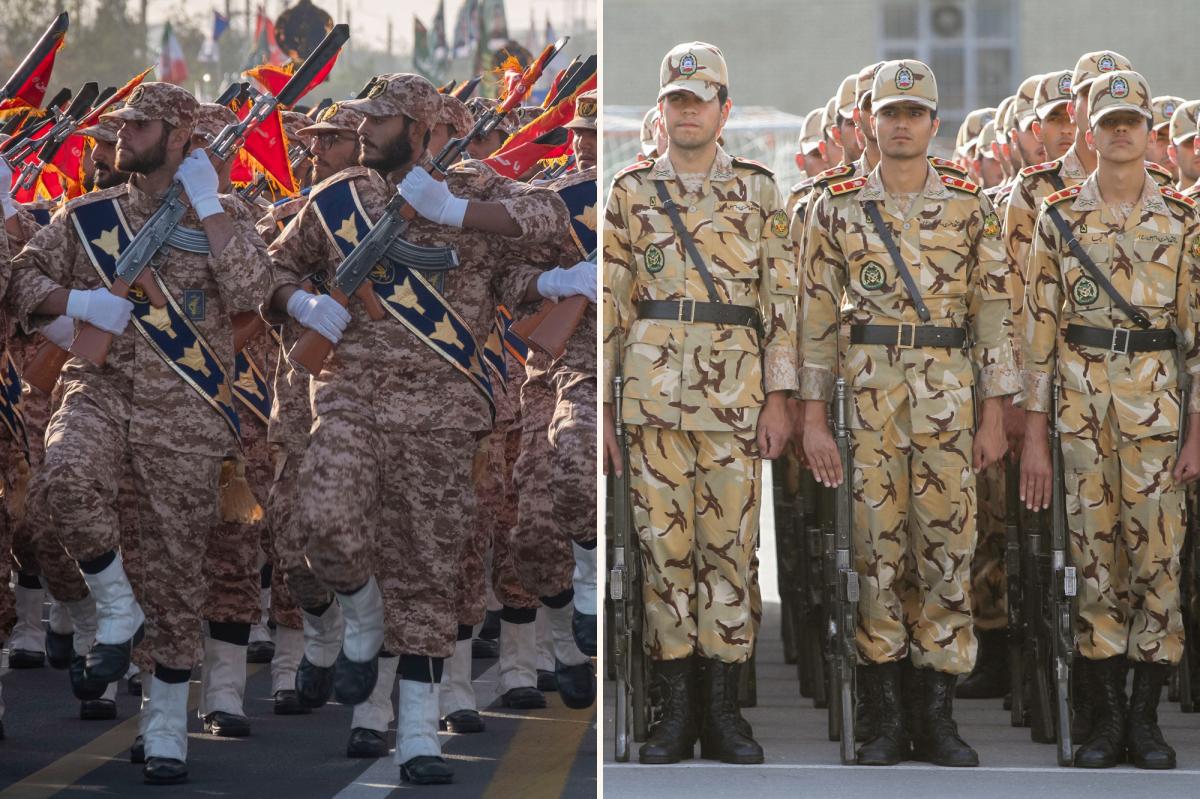
A stark contrast defines the two main branches of Iran’s military forces.
The first, the Islamic Revolutionary Guard Corps (IRGC), is a formidable unit comprising approximately 150,000 fiercely loyal members. Its primary mission is to protect Iran’s theocratic regime, and it has recently found itself in the crosshairs of U.S. and Israeli military actions.
In contrast, the second branch is the conventional Islamic Republic of Iran Army, known as the Artesh. This larger force, with about 350,000 personnel, is tasked with safeguarding Iran’s borders and ensuring the security of the nation. Following any cessation of hostilities, the Artesh could potentially emerge as an agent of change, aligning with U.S. interests.
Survival, however, remains their immediate challenge.
President Trump has subtly acknowledged the distinction between these two entities in his public addresses—a differentiation that is increasingly reflected in the strategic targeting choices of the U.S. Department of Defense.
“The danger in attacking the Iranian army lies in the possibility that some hope it might trigger a coup against the Revolutionary Guards, potentially leading to a new government,” cautioned Mark Cancian, a retired Marine colonel and expert at the Center for Strategic and International Studies.
He noted that if the regular army didn’t end up on the target list, it could signal that Trump would leave the force in place to counterbalance the IRGC.
“There is a whole set of civilian targets that have not been hit. For example, the lights are still on in Tehran,” he noted.
Increasing hardship on the population is a “risky strategy,” Cancian told The Post.
Some lawmakers who are now getting briefed by the administration on the Iran war are also issuing cautions.
“If you hit them so hard they can’t actually function as a nation, at the end of it, it doesn’t help,” said Sen. James Lankford (R-Oklahoma).
Lankford used Libya — a country left in shambles in 2011 after the killing of its strongman leader Muammar Gaddafi — as an example of what to avoid in Iran.
“Then it’s chaos there. Then it’s Libya,” he said, noting the goal in Iran is to stop the IRGC but not cause a “breakdown.”
Lankford, an Armed Services Committee member, said Iran is “going to have a functioning government.”
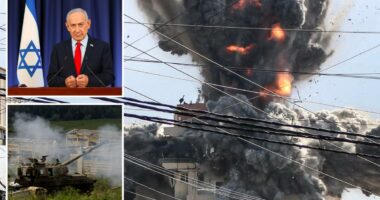
Warnings issued by the Department of War give a clue into the changing target lists across Iran as the US military pounds the country’s missile capability and rocket launchers.
US Central Command warned on March 8 that the regime “blatantly disregards the safety of innocent people” by conducting operations from populated areas.
It issued a similar warning about Iranian ports, after pounding Iran’s navy, some of which is operated by the IRGC. At the same time, Trump is monitoring possible “sleeper cells” at home.
Splits in Iran’s power structure can be seen in public, as when Iranian President Masoud Pezeshkian apologized for its attack on Gulf neighbors March 7, only to have missile and drone attacks resume within hours.
Whether an opposition force can emerge from what remains is one of the keys to ending the war, retired Gen. David Petraeus told New Hampshire public radio.
“And is there the emergence of serious opposition forces that might lead us to continue a bit longer to give them a chance? We don’t see it yet, but watch that space.”
Trump has repeatedly said the US is holding back from hitting certain targets in Iran even while deploying massive force. That is what he did Wednesday, when he ran through some of the devastation US attacks have brought on Iran — and notably did not mention its army.
“Right now, they’ve lost their navy. They’ve lost their air force. They have no anti-aircraft apparatus at all. They have no radar. Their leaders are gone. And we can do a lot worse. We’re leaving certain things that if we take them out, or we could take them out by this afternoon – in fact within an hour – they literally would never be able to build that country back.”
The most recent “types of targets” that Central Command put out on a fact sheet lists IRGC headquarters buildings, IRGC intelligence sites, air defenses, and navy ships — but failed to mention the army.
Trump mused last weekend about hitting the military more directly.
“We could hit their military itself very hard. But maybe we will maybe we won’t. We haven’t made that determination,” he said.