
The U.S. government is poised to execute a delicate operation to repatriate 17 American citizens from a cruise ship grappling with a severe hantavirus outbreak. This mission underscores the urgency and precision required in international health crises.
In a coordinated effort, the U.S. Centers for Disease Control and Prevention (CDC) and the Department of Health and Human Services are dispatching a plane for the evacuation. This initiative is in collaboration with Spanish authorities, as confirmed by the U.S. State Department.
Upon their return to American soil, the evacuees will be transported to the University of Nebraska Medical Center, renowned for its state-of-the-art biocontainment unit, according to statements from the university and a CDC representative.
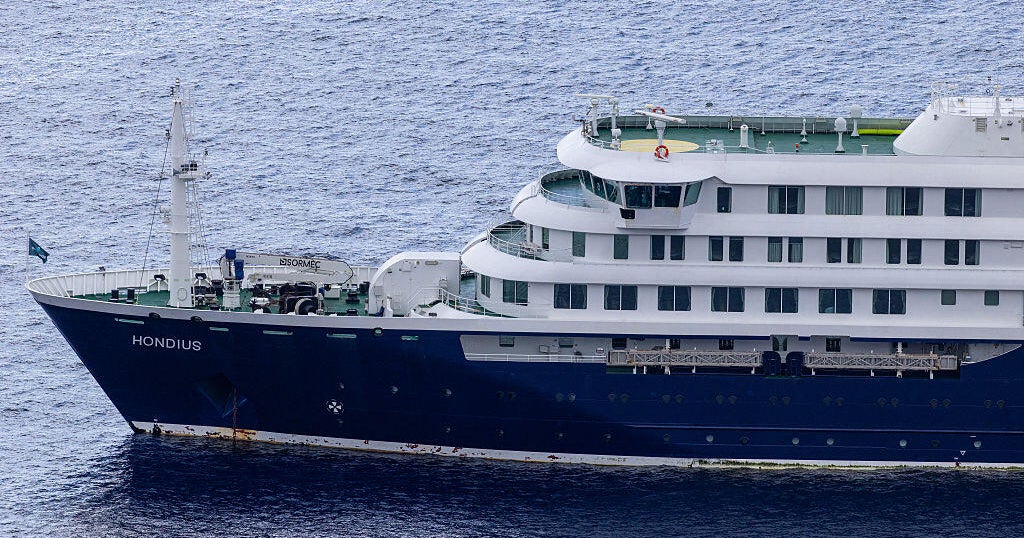
The MV Hondius, now under global scrutiny due to the rare virus outbreak, is currently journeying from Cape Verde towards the Canary Islands. The vessel is anticipated to reach the shores of Tenerife, the largest island in the Canaries, by early Sunday local time.
The disembarkation of passengers is planned meticulously between Sunday and Monday. This gradual process aims to mitigate any potential spread of the virus.
Despite the pressing nature of the situation, officials in the Canary Islands have denied the Hondius permission to dock in Tenerife, necessitating the ship to remain anchored offshore, where the evacuation will proceed.
The disembarkation will happen country by country, Spanish officials said at a press conference Friday. Once passengers are confirmed asymptomatic, they will disembark the Hondius in groups of five in small boats to take them to shore. They will then get on buses and go straight to the airport runway, where their nation’s plane will already be ready for takeoff, the Spanish officials said.
“I repeat one more day: All the areas they are going to travel through are going to be isolated,” Virginia Balcones, the secretary general of civil protection, said. “There will be no contact with civilian personnel.”
AFP via Getty Images 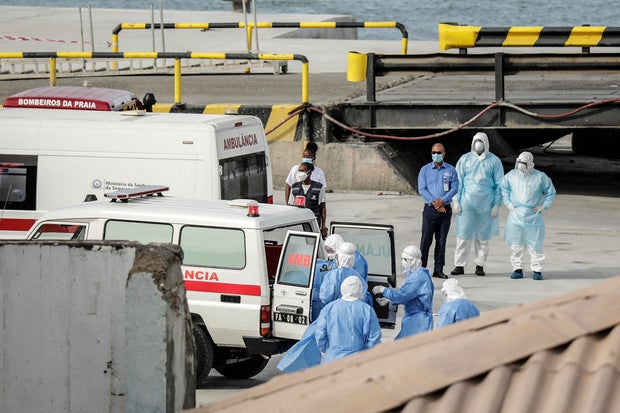
The World Health Organization is working to provide health checks for everyone on board and “assess what level of exposure” each person may have had to confirmed hantavirus cases, Anais Legand, a WHO technical officer, said Friday. This will help the WHO give guidance to the passengers on next steps, she said.
None of the 147 people on board was experiencing any symptoms of the disease on Friday, the WHO and Spanish officials said.
Medicalized planes will be on standby in case anyone develops symptoms but the working assumption is standard aircraft will be used, Balcones said.
The Honidus, a Dutch-flagged ship, will then depart the Canary Islands and head home to the Netherlands with a skeleton crew, according to Spanish health officials.
There are nine confirmed or suspected cases of hantavirus stemming from the cruise, including three deaths — a Dutch couple and another woman who died on the ship. The Dutch couple had spent months traveling around Argentina, Uruguay and Chile and spent time bird-watching in locations known to carry the Andes strain of the virus, the only strain that is transmissible from human to human.
More than a dozen countries, including the U.S., are already monitoring people who disembarked from the ship prior to hantavirus being confirmed among passengers on the cruise.
As health officials have been doing all along, Spain’s Secretary of State for Health Javier Padilla echoed that hantavirus — even the Andes strain — does not spread easily like COVID-19 and the risk for most people is low.
“We have already been saying this, the existing situation is of very low risk for the general population,” Padilla said.