
Share this @internewscast.com
In a dramatic diplomatic face-off, two West African countries have chosen to bar American citizens, responding to escalating tensions with the United States and Europe. This move coincides with Russia’s growing efforts to bolster its economic and geopolitical footprint in the region.
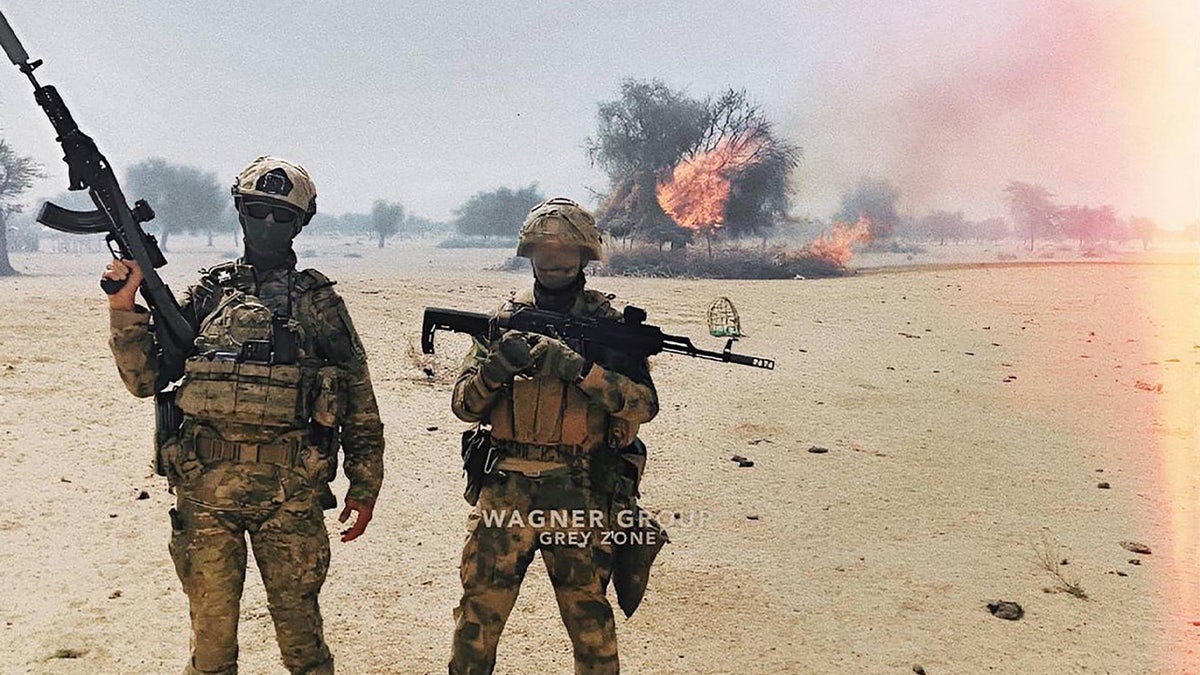
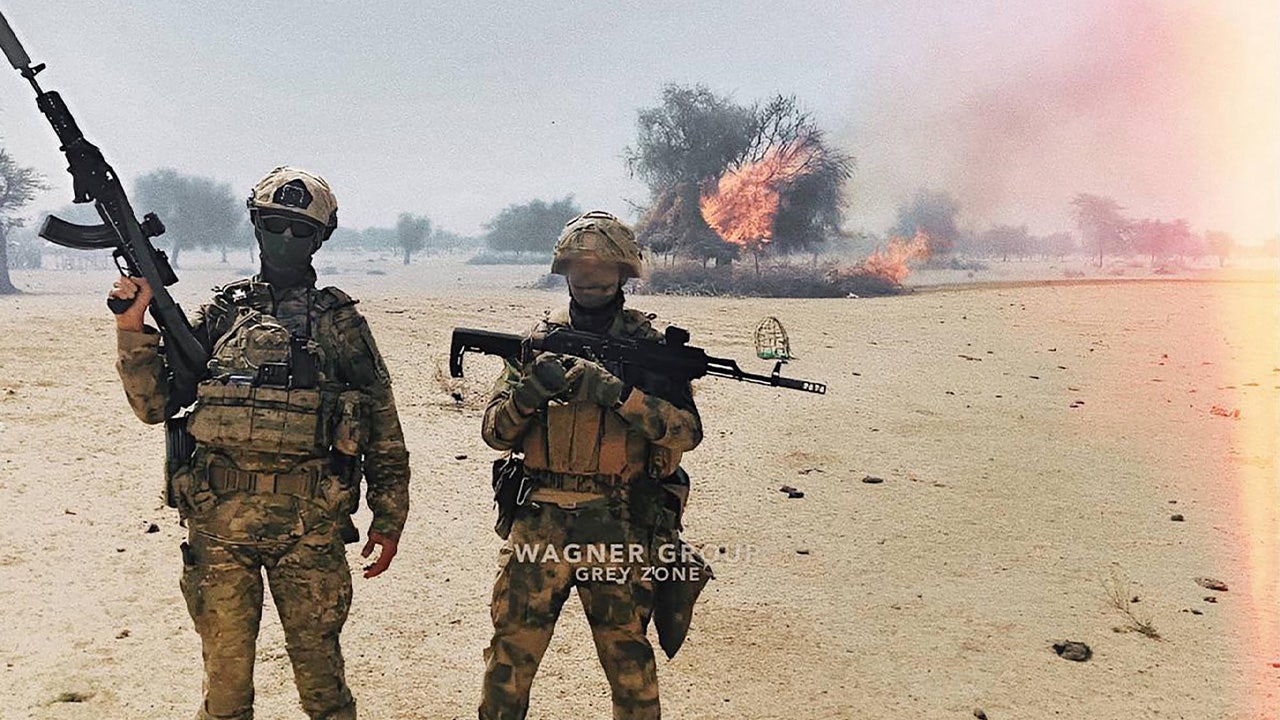
On July 27, 2024, a deadly ambush by Tuareg rebels in Mali led to the massacre of numerous Wagner forces.
Both Mali and Burkina Faso enacted these restrictions as a countermeasure to the Trump administration’s expanded travel bans announced on December 16. These new travel rules impacted over 20 nations, with a significant focus on Africa, including Chad, Equatorial Guinea, Eritrea, Libya, Niger, the Republic of the Congo, Sierra Leone, Somalia, South Sudan, and Sudan.
The U.S. administration justified its actions by pointing to ongoing violent attacks in these countries:
“As the Department of State reports, terrorist groups continue to plan and execute attacks across Burkina Faso. The Fiscal Year 2024 Department of Homeland Security (DHS) Entry/Exit Overstay Report notes a B-1/B-2 visa overstay rate of 9.16% and a student, vocational, and exchange visitor visa overstay rate of 22.95% in Burkina Faso. Furthermore, Burkina Faso has a history of not accepting back its citizens slated for removal.”
In the case of Mali, the U.S. explained its inclusion on the travel restriction list as follows:
“According to the Department of State, armed conflict between the Malian government and armed groups is common throughout the country. Terrorist organizations operate freely in certain areas of Mali.”
Burkina Faso and Mali are both currently ruled by military juntas that came to power amidst rising violence and instability, as both nations came under attack from Islamist terrorist groups.
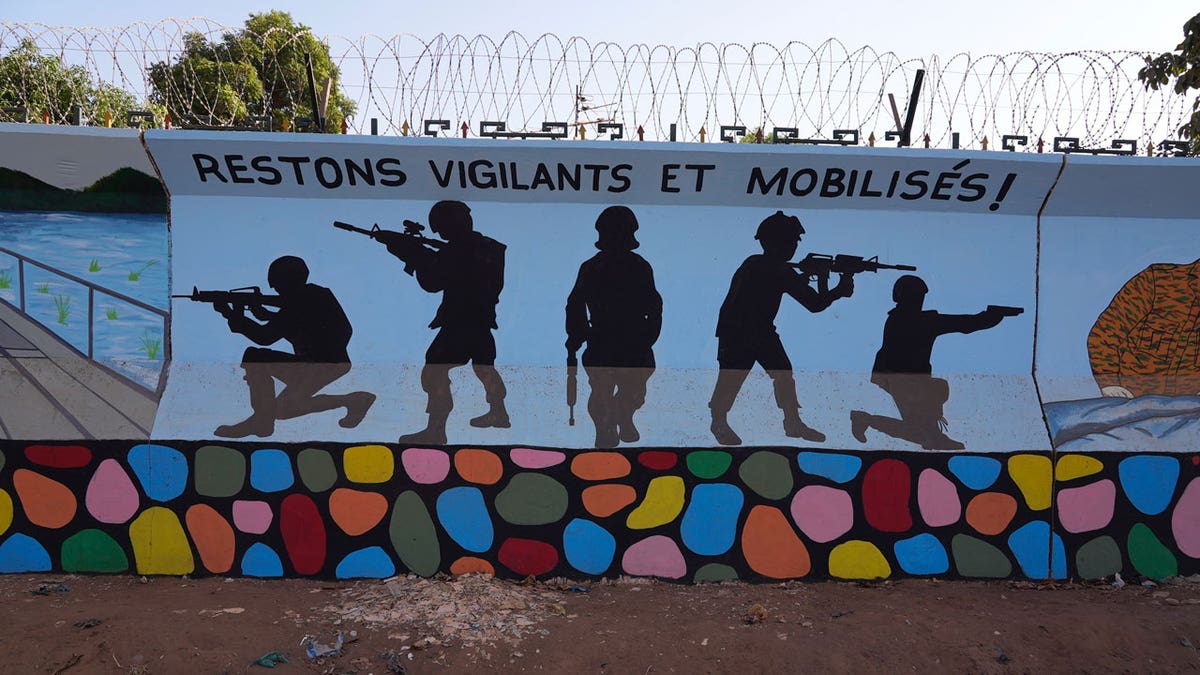
A mural is seen, March 1, 2023, in Ouagadougou, Burkina Faso. Military forces in Burkina Faso killed 223 civilians, including babies and many children, in attacks on two villages accused of cooperating with militants, Human Rights Watch said in a report published Thursday, April 24, 2024. (AP Photo, File)
Both nations have also seen a rise in anti-French sentiment, in conjunction with deepening relationships with Russia, which has pledged to offer assistance in fighting back the Islamist rebels battling the central governments for territorial control.
“In accordance with the principle of reciprocity, the Ministry of Foreign Affairs and International Cooperation informs the national and international community that, with immediate effect, the Government of the Republic of Mali will apply the same conditions and requirements to US nationals as those imposed on Malian citizens,” the Malian Ministry of Foreign Affairs stated.
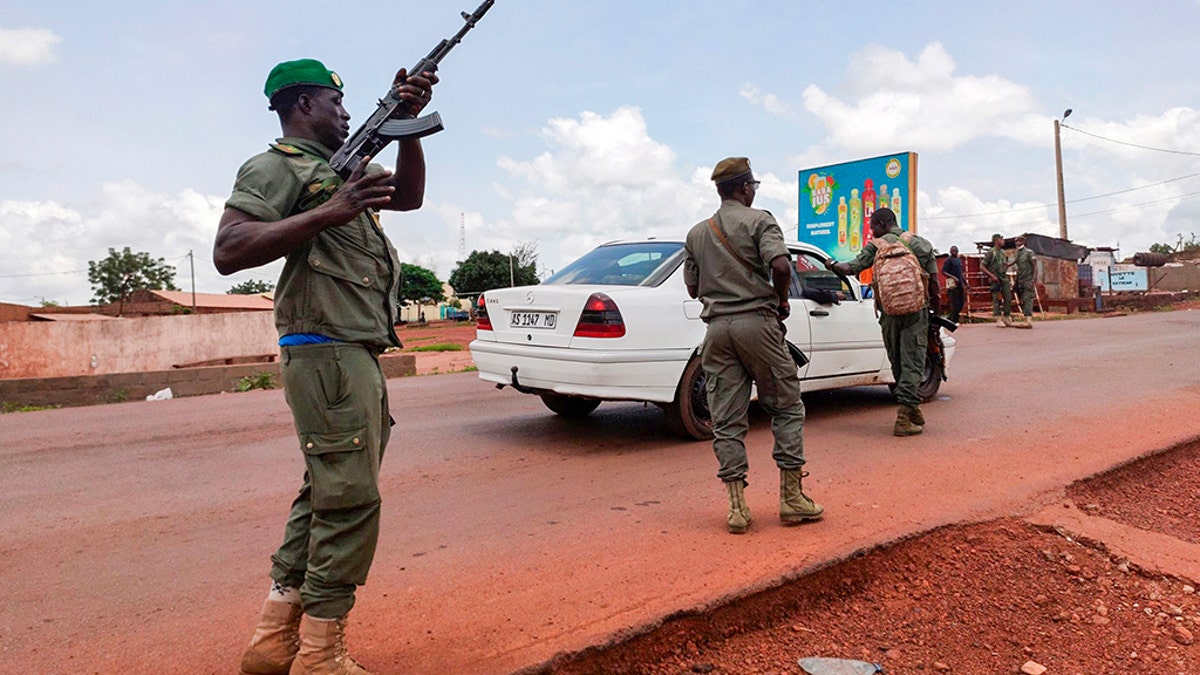
Malian soldiers check a vehicle in the garrison town of Kati, Mali, Tuesday Aug. 18, 2020. Malian soldiers took up arms and began detaining senior military officers in an apparent mutiny, raising fears of a potential coup after several months of anti-government demonstrations calling for the president’s resignation. (AP Photo/Mohamed Salaha)
Burkina Faso’s government cited a similar rationale for issuing its ban on American travelers.
Both nations, as well as neighboring Niger and Nigeria, have seen skyrocketing violence in recent years, as chronically underfunded governments struggle to retain control of rural, sparsely-populated desert regions.