Share this @internewscast.com
The chilling tales of alleged assassination plots involving Luigi Mangione and Tyler Robinson have put a spotlight on a perplexing issue within U.S. law. Both cases, prosecutors argue, were meticulously planned and carried out with political motives. However, they have hit an unexpected legal snag: American legislation lacks clear directives for imposing the harshest penalties in politically charged crimes unless the victims are part of a protected group.
Luigi Mangione, aged 27, is accused of fatally shooting UnitedHealthcare CEO Brian Thompson in Manhattan on December 4, 2024. Investigators claim that Mangione left behind shell casings inscribed with political messages at the crime scene, hinting at his motives.
In a strikingly similar incident months later, Tyler Robinson, 22, allegedly targeted Charlie Kirk, a prominent figure speaking at Utah Valley University in September. Echoing Mangione’s method, Robinson is said to have engraved messages on the shell casings left behind, suggesting a disturbing trend of politically motivated violence.
Both Thompson, 50, and Kirk, 31, were family men, each leaving behind a wife and two children. Despite the apparent political undercurrents in both murders, prosecutors have had to navigate complex legal waters to pursue the most severe penalties available. In New York, they aim for life imprisonment without parole, while in Utah, the death penalty is on the table.
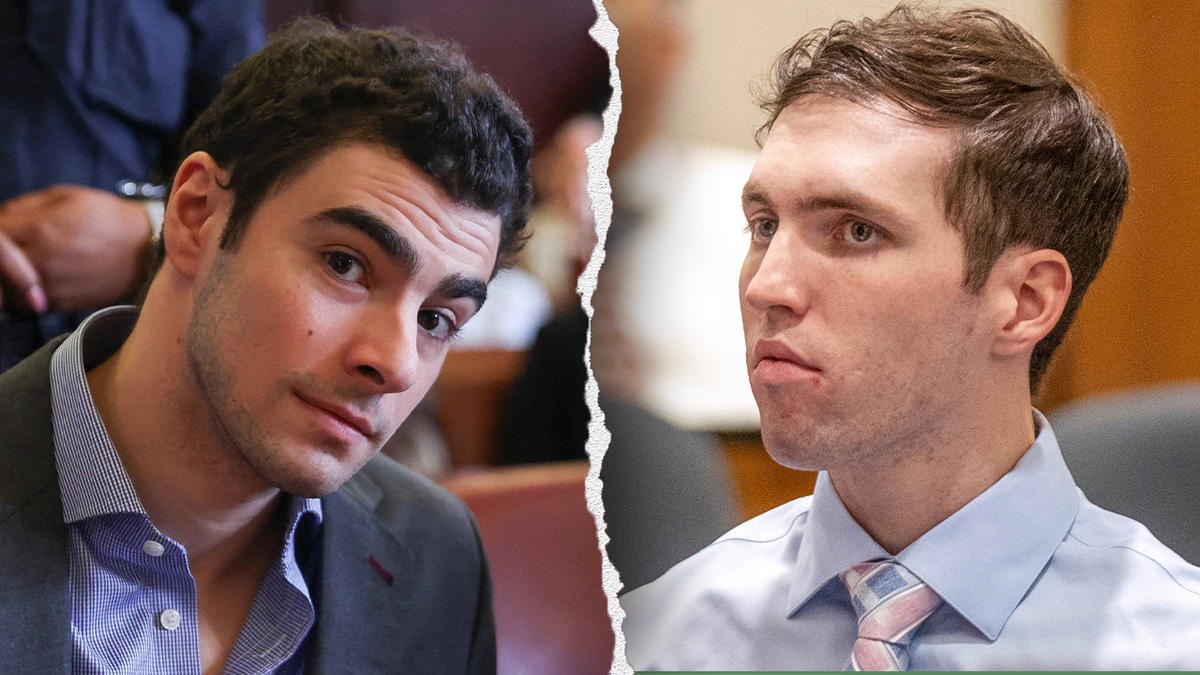
In an effort to enhance the charges against Mangione, Manhattan District Attorney Alvin Bragg’s office initially invoked terrorism enhancements. This was intended to secure a first-degree murder charge, which could lead to life without parole. However, the judge dismissed this enhancement, leaving Mangione to face a second-degree murder charge, which carries a maximum sentence of life with the possibility of parole.
Both cases highlight a significant gap in the legal framework for addressing politically motivated crimes, prompting a need for lawmakers to reconsider how justice is pursued in such complex scenarios.
While New York has a state-level terror charge, Utah doesn’t.
“Interestingly, had [Robinson] been charged in federal court, it would’ve been a terrorist act, committing an act of political terror — but in the state system they don’t have that same statute in charge, so they brought the murder case,” said Greg Rogers, a UVU professor and former FBI agent. “It wasn’t that they didn’t believe they could prove a terrorism case in that matter, it was just that it was gonna be charged in state court rather than federal.”
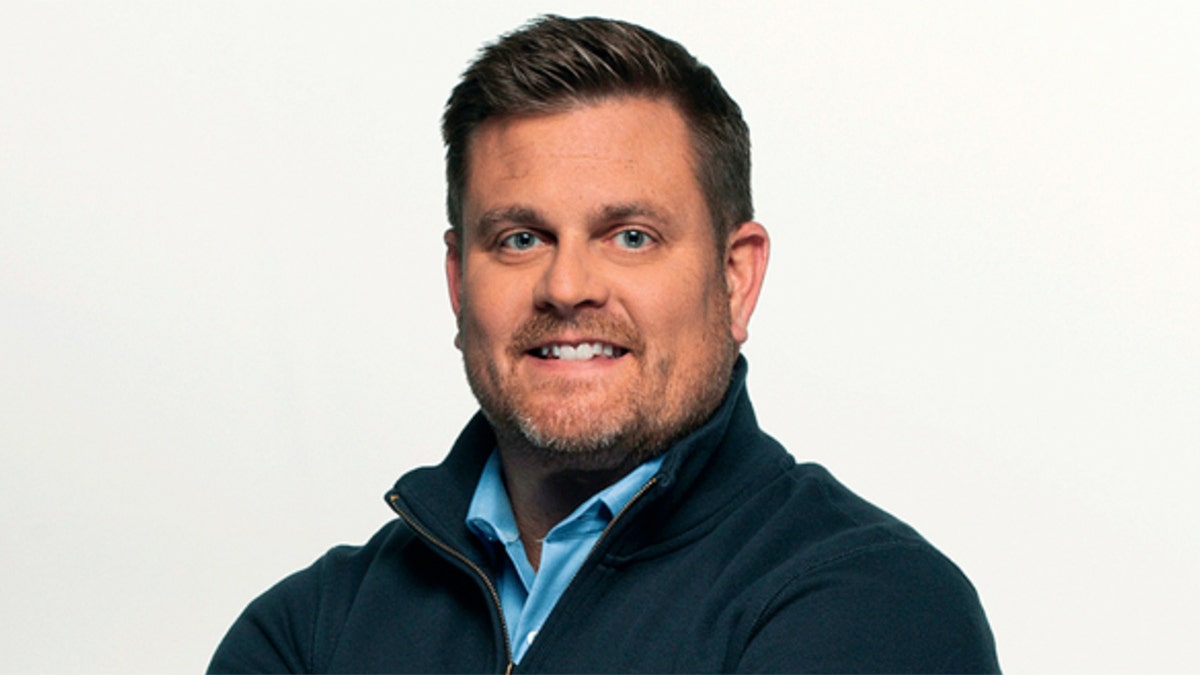
UnitedHealthcare CEO Brian Thompson was shot in the back outside a Manhattan hotel in December 2024, on the morning of a planned shareholder conference. (AP Photo/UnitedHealth Group via AP)
The New York judge overseeing Mangione’s case “made a grievous error,” he told Fox News Digital.
“They did charge terrorism, because they’re actually convinced they could prove it,” he said. “Terrorism statutes are, and this isn’t an oversimplification, if you commit a homicide in furtherance of a political motive, which he allegedly did, that satisfies that statute.”
“You essentially have a confession in the terrorism case, and in the homicide case you have it on video,” he said. “[But] tens of thousands of people not only aren’t even upset with him, they’re totally supportive.”
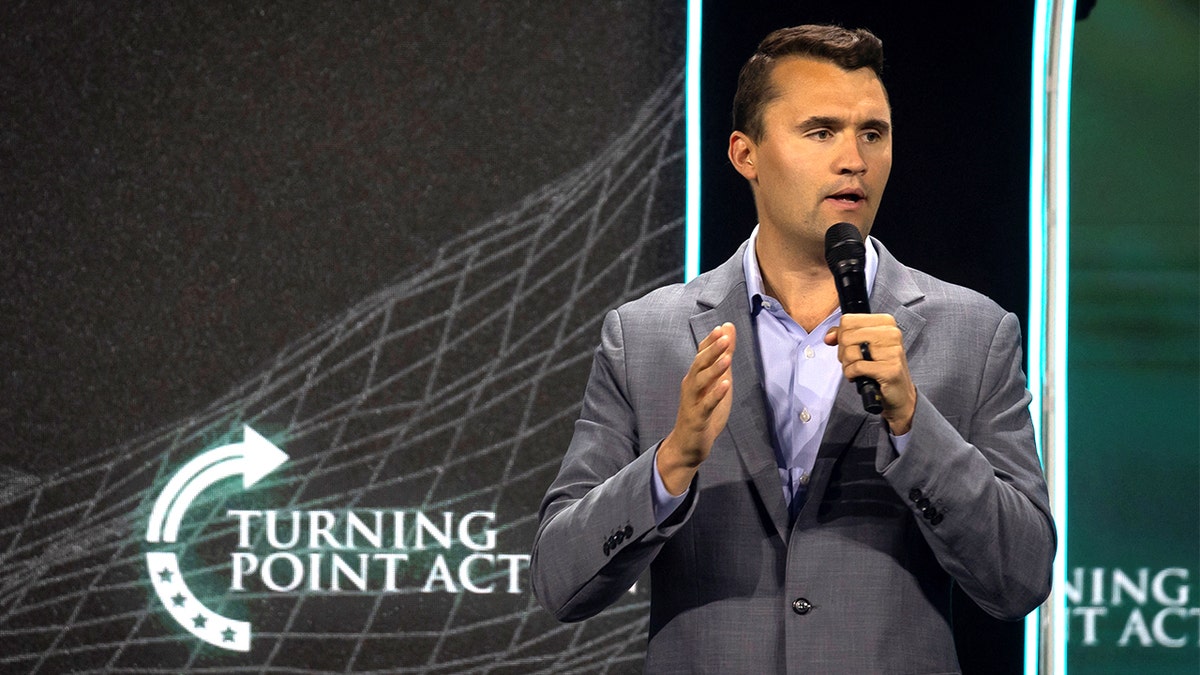
Turning Point USA founder Charlie Kirk speaks during Turning Point Action’s The Believers Summit 2024 ahead of Republican presidential nominee and former U.S. President Donald Trump’s presentation, in West Palm Beach, Florida, on July 26, 2024. A sniper shot him in the neck in September while he was speaking to a crowd at Utah Valley University in Orem, Utah. (REUTERS/Marco Bello)
He cited the alleged journals Mangione kept, which referenced the plot and a potential motive as a condemnation of the U.S. health insurance industry — and also Mangione’s fervent supporters, who have showed up to his court hearings dressed up in green as a reference to the Luigi character from “Super Mario Bros.”
“How did we get to where tens of thousands of our citizens think this is great?” he added.
In Utah, in order to seek the death penalty, Utah County Attorney Jeff Gray’s office charged Robinson with aggravated murder, alleging that he knowingly created a great risk of death to people in the crowd in addition to Kirk’s slaying. That’s an aggravating factor under Utah law.
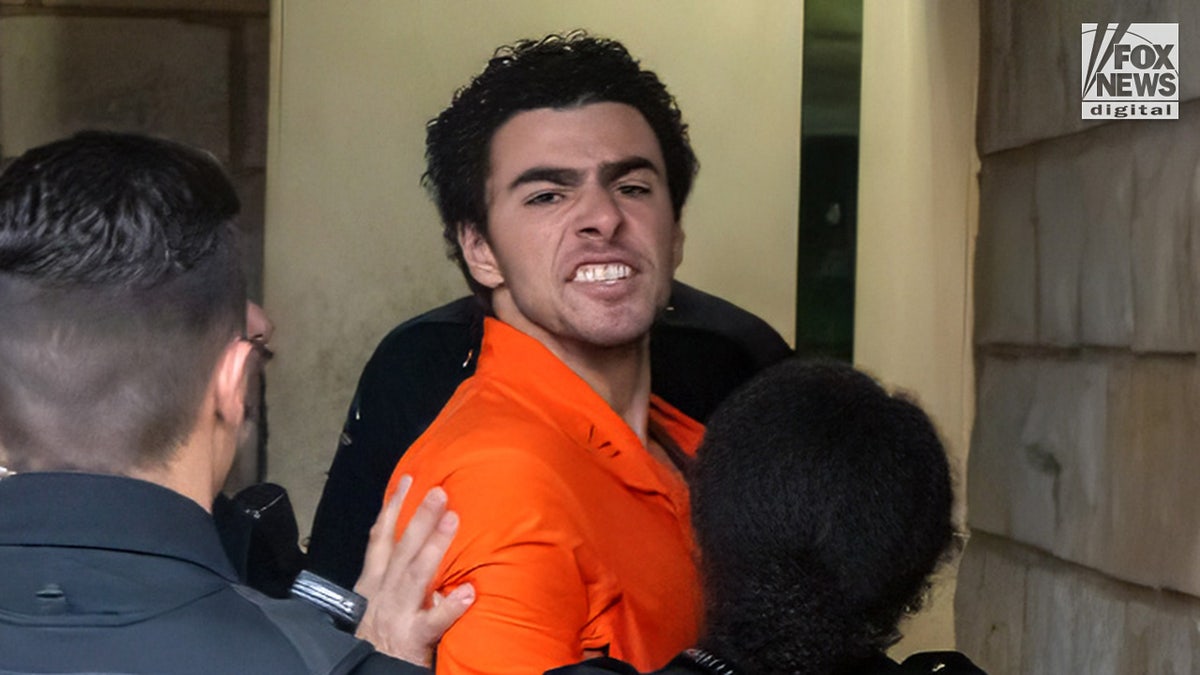
Luigi Mangione shouts while officers restrain him as he arrives for his extradition hearing at Blair County Courthouse in Hollidaysburg, Pennsylvania on Tuesday, Dec. 10, 2024. (David Dee Delgado for Fox News Digital)
But legal experts say that only a single shot was fired, which the defense is likely to use to challenge that aspect of the case.
“The death penalty was essentially outlawed back in 1972 when the Supreme Court thought that it was being applied arbitrarily,” said Matt Mangino, a former district attorney of Lawrence County in Pennsylvania who wrote a book on capital punishment, “The Executioner’s Toll, 2010.”
To do that, he said, states implemented “bifurcated trials,” where jurors decide on life or death after a conviction, and by creating the system of aggravating factors.
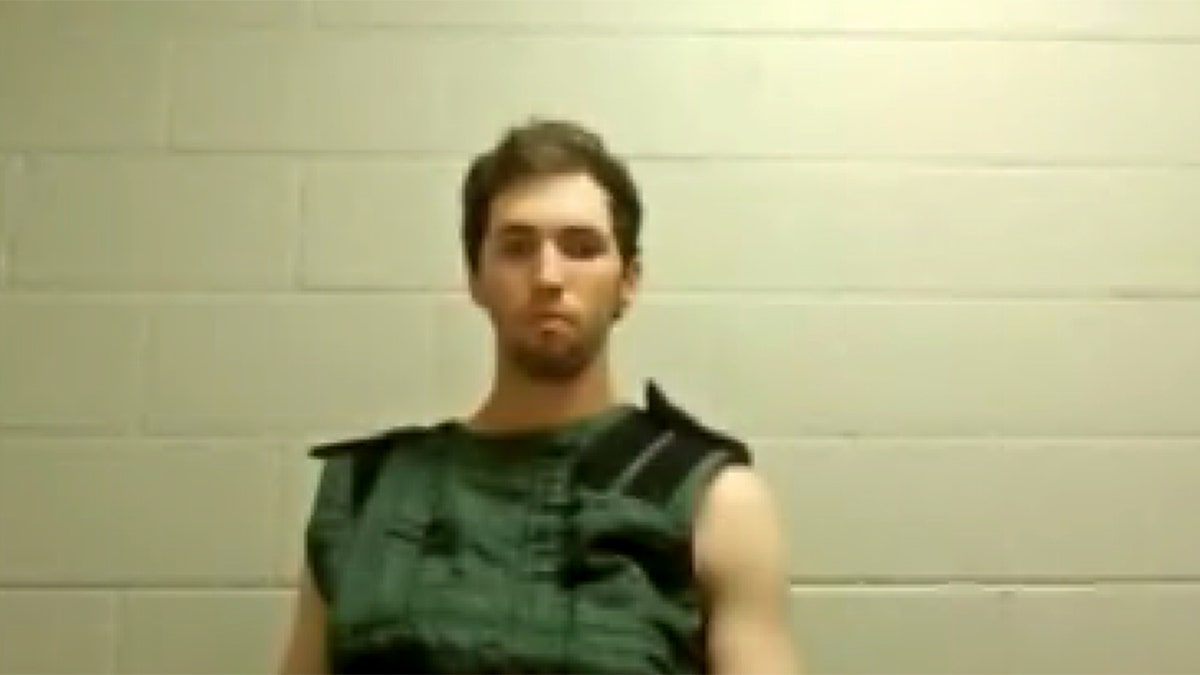
Tyler Robinson appears virtually in Utah court on Sept. 16, 2025, to face charges in the assassination of Charlie Kirk. (Handout/Utah 4th District Court)
While the laws vary between states, aggravators often include targeting police officers, politicians, witnesses or young children. In Idaho, the aggravator prosecutors wanted to use against Bryan Kohberger was that he killed multiple people — but he pleaded guilty to avoid the death penalty.
“It’s no longer just enough to have a planned premeditated murder to be subject to the death sentence,” Mangino told Fox News Digital. “There has to be something more.”
Business leaders, like Thompson, or political figures who aren’t office holders, like Kirk, don’t meet those criteria, even if there’s an alleged political motive, he said. And premeditated, cold-blooded murders are not uncommon.

People run after shots were fired during an appearance by Charlie Kirk at Utah Valley University on Sept. 10, 2025 in Orem, Utah. Kirk, founder of Turning Point USA, was speaking at his “American Comeback Tour” when he was shot in the neck and killed. (Trent Nelson/The Salt Lake Tribune/Getty Images)
“I think what we have to look at is, what does assassination mean? Does assassination mean that you’ve murdered somebody for some political purpose?” he said. “And that might be hard to really define in a way that it’s fair.”
Existing aggravators are easy to define, he said: a member of Congress, a young child, a witness expected to testify in an upcoming case.
“How do you define someone who doesn’t fit into those specific categories that is outspoken about LGBT issues or is outspoken about immigration, how do you evaluate that?” he said. “I mean how famous do you have to be?”
Kirk was famous as a media personality and political commentator who founded Turning Point USA. Thompson was not a household name before his murder.
Without a clear definition for the crime of assassination, he said, prosecutors are left stretching existing laws — and risking reversals.
“I think you also open the door to the defense coming after you and saying, wait a second, why is my guy getting the death penalty under the aggravated circumstances of assassination when other people who are killed because they’re politically motivated aren’t getting it?” he added. “It opens the door on both ends, both to victims’ families feeling as though they are not getting justice and defendants feeling as if they are being overcharged.”
Mangione could still face the potential death penalty if he is convicted of pending federal charges related to Thompson’s slaying.