
Share this @internewscast.com

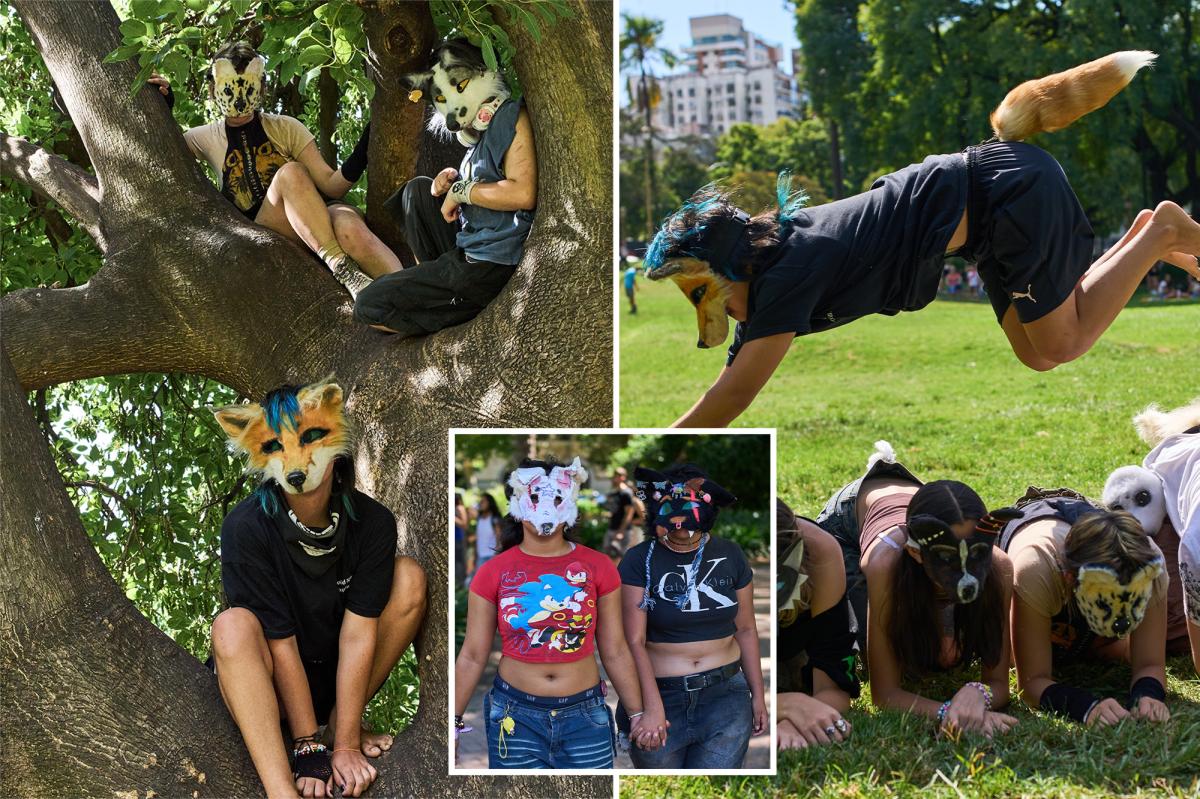
BUENOS AIRES — On a Sunday not too long ago, a plaza in Buenos Aires was transformed into an impromptu haven for an unconventional group of teenagers.
Among them was Sofía, who donned a realistic beagle mask and sprinted across the grass on all fours. Nearby, 15-year-old Aguara showcased agility by leaping through an obstacle course, mimicking the movements of a Belgian dog breed with impressive accuracy. Meanwhile, others, dressed as cats and foxes, found their perch in the trees, maintaining a cautious distance from curious passersby.
This event was the latest meetup of “therians,” individuals who feel a mental, spiritual, or psychological connection with non-human animals.
In recent months, this movement has captured the attention of Argentine social media, particularly on TikTok. The hashtag #therian has seen over 2 million posts, with Argentina leading the way in Latin American engagement.
The phenomenon has not gone unnoticed, drawing reactions ranging from amusement and confusion to outright hostility from influencers and media outlets.
As this trend continues to grow, psychologists are beginning to weigh in, exploring the implications and significance of this subculture within the broader social conversation.
Aguara, who claims to identify as a Belgian Malinois and counts her age as the equivalent of two years and two months in dog years, says she’s a lot like any other teenager.
“I wake up like a normal person and live my life like a normal person,” she said. “I simply have moments when I like being a dog.”
As the leader of what she calls her “pack,” Aguara — the name she identifies with — boasts more than 125,000 followers on TikTok and coordinates regular meetups around the Argentine capital.
Aru, a 16-year-old who wore a seal mask to the park meetup, said she considers herself part of the “otherpaw” branch of therians: individuals who wear masks and tails or move on all fours just for fun. “It’s not necessarily about identifying as an animal,” she said.
She reckons the therian trend took off in Argentina because of the country’s “fairly free” environment. For other young Argentines, the movement has provided a vital community where they can feel truly accepted.
Should parents be worried?
Débora Pedace, a psychologist and director of the Integral Therapeutic Center in Buenos Aires, acknowledged that the phenomenon generates a complex mix of confusion, laughter, and even anger.
“From a psychological standpoint, this is a symbolic identification with an animal,” Pedace said. “It becomes pathological or alarming only when it turns into a deeply rooted belief and the person fully assumes the role of an animal, potentially leading to self-harm or hurting others.”