
Share this @internewscast.com

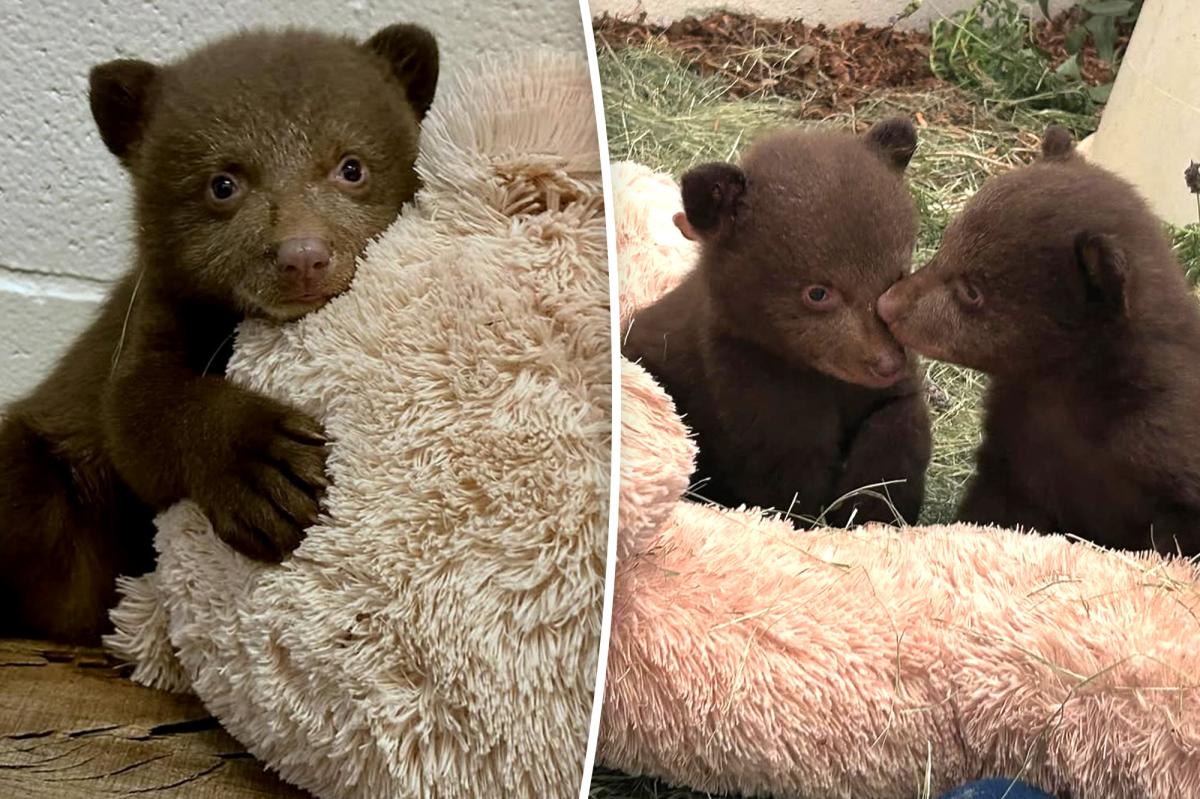
In an unexpected twist of nature’s resilience, two orphaned black bear cubs from Monrovia, California, are being granted a fresh lease on life, thanks to some creative human intervention.
At just three months old, these sibling cubs found a temporary home at the San Diego Humane Society’s Ramona Wildlife Center. Their mother had been put down due to repeated interactions with the public, prompting concerns for community safety, as reported by officials.
Rather than receiving typical human affection and care, these cubs are being nurtured by staff members who have adopted an unusual disguise. Donning bear masks, fur, and even using animal scents, the caregivers aim to maintain the cubs’ natural wild instincts.
To prevent the cubs from becoming accustomed to human presence, the team employs clever tactics to mask their identity, as highlighted by the Times of San Diego.
This innovative approach resembles a live-action bear cosplay, where humans temporarily transform into their bear alter egos to ensure the cubs continue to see themselves as part of the wild.
It’s basically a real-life bear cosplay operation.
The goal? Make sure these cubs don’t grow up thinking humans equal food — a deadly lesson that likely doomed their mom.
“Raising bear cubs from this young age requires an extraordinary amount of time, expertise and resources,” said Autumn Welch, wildlife operations manager at SDHS.
“We don’t want them to associate with humans in any way if they are going to have a chance to survive in their natural habitat.”
The cubs arrived at the facility on March 15 and are now under round-the-clock care, with handlers going to extreme lengths to keep interactions as natural — and anonymous — as possible.
“Situations like this underscore the importance of prevention and shared responsibility,” said Cort Klopping, an official with the California Department of Fish and Wildlife.
If all goes according to plan, the cubs will eventually be released back into the wild — hopefully with no clue that the “bears” who raised them ever walked on two legs.