
Share this @internewscast.com

California educators are being urged to swiftly revise or remove mentions of labor leader Cesar Chavez from educational materials, following accusations of child molestation against him. Chavez, long depicted as an exemplar of “honesty, courage, and determination” from as early as kindergarten, now faces a reevaluation of his legacy.
The California Department of Education is in the process of updating its extensive 800-page social studies and history curriculum to minimize references to Chavez. This comes after allegations surfaced accusing him of sexually assaulting two girls, starting when they were just 12 years old, and of assaulting Dolores Huerta, his longtime associate, as reported by Calmatters.
The Los Angeles Unified School District is also reconsidering its educational content and resources concerning Chavez in response to these serious allegations.
“The allegations are deeply concerning to all of us,” Acting Superintendent Andrés E. Chait stated in a press briefing on Thursday. “We are currently evaluating the repercussions these claims have on our educational programs.”
For years, California students have been taught about Chavez as an “American hero” who exemplified “respect for the rights of others,” with public schools utilizing materials such as “Harvesting Hope: The Story of Cesar Chavez” as early as kindergarten, according to the state’s official curriculum framework.
A lesson plan for kindergarten through second grade previously depicted him as “a good man who dedicated his life to helping others.”
“César dedicated the rest of his life to making the world a better place and to serving others. He continued to work to bring respect, dignity, justice, and fair treatment to the poor, to farm workers, and to people everywhere.”
The state education department maintains an extensive archive dedicated to Chavez’s life — including speeches and essays penned by the deceased activist and letters to him from admiring school children.
Lesson plans for March 31, California’s official Cesar Chavez state holiday, instruct youngsters to “orally state why he is an American hero” and describe his “world vision,” depending on the grade level.
“The civil rights struggle of farm workers and immigrant communities is larger than one person and continues to be highly relevant today,” Elizabeth Sanders, spokeswoman for the California Department of Education, told Calmatters. “We stand with survivors of violence, including and especially gender-based violence, which has no place in our society.”
“[Students] will learn about Chávez as a family man, as a husband, as a father and grandfather. They will learn about the role that religion played in Chávez’s life,” a second grade lesson reads.
A popular college-level textbook called “America: The Essential Learning Edition” bears Chavez’s likeness on the cover of one recent edition.
Roughly three dozen schools in California are named after Chavez, according to Gov. Gavin Newsom.
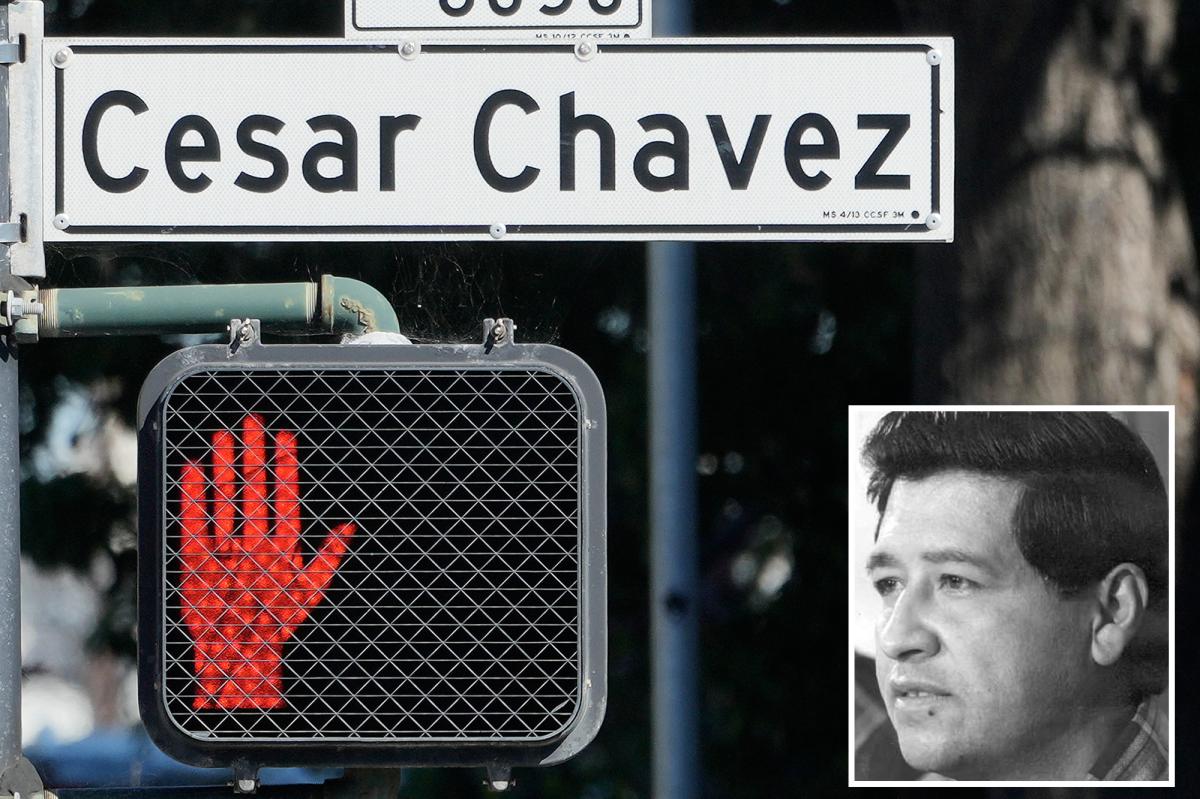
Top lawmakers said Thursday they will rename March 31 Farm Workers Day as officials across the state feverishly scrub Chavez’s name and image from public spaces.
Los Angeles County Supervisor Hilda Solis has called to rename all parks, streets, facilities and other public programs named after Chavez.
Likewise, the Congressional Hispanic Caucus and the California Latino Legislative Caucus said they will pursue name changes.