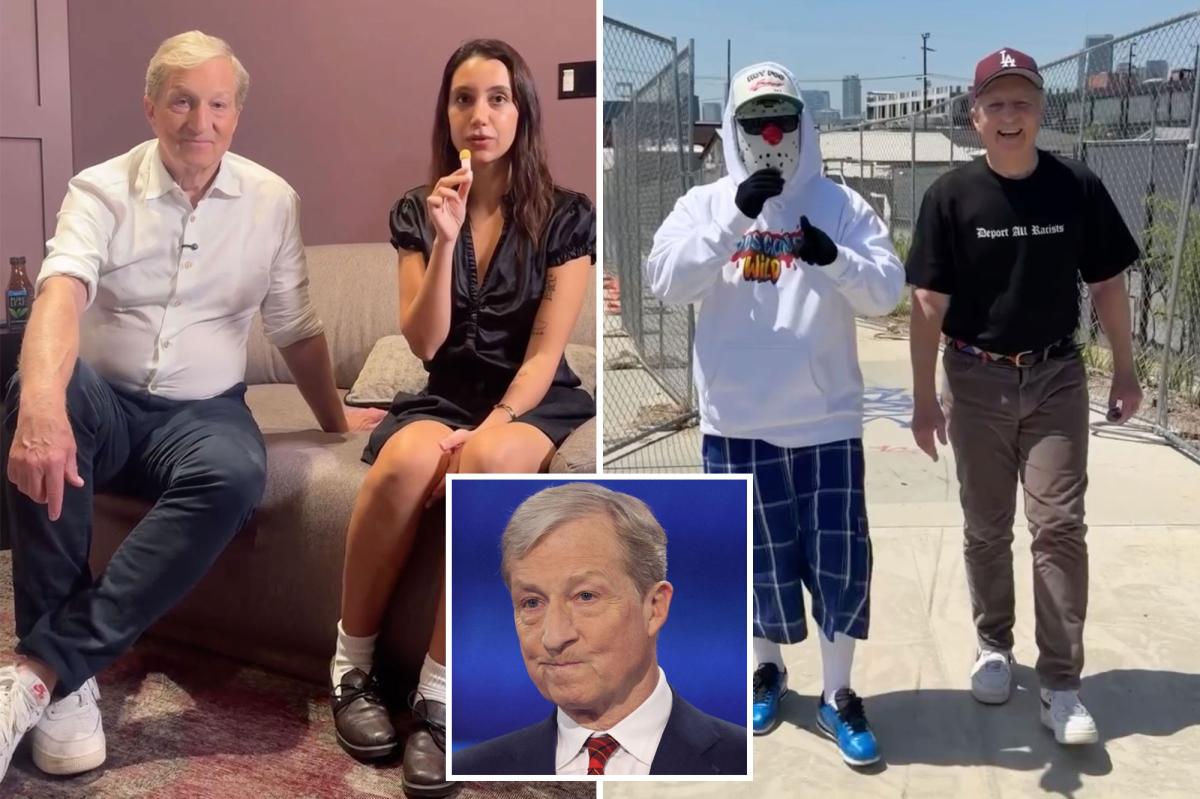


Billionaire and gubernatorial candidate Tom Steyer finds himself embroiled in controversy after campaign filings revealed he allegedly paid influencers and meme accounts to boost his popularity. Critics argue that the 68-year-old is attempting to mislead voters through these tactics.
The California Fair Political Practices Commission has initiated an investigation into Steyer’s significant financial outlay on a cadre of Gen Z content creators. Some of these creators didn’t disclose their financial ties to the hedge fund billionaire, later removing the misleading posts.
In his latest Form 460 filing, which covers expenditures up to April 18, Steyer’s campaign lists payments to seven influencers. His overall spending for the California governor’s race has exceeded $130 million, setting new records.
Reports suggest other discreet payments were funneled through agencies like Palette Media. This claim comes from California content creator Beatrice Gomberg, who filed a complaint with the FPPC against Steyer.
“I simply want Steyer, like everyone else, to comply with the law. It’s fundamentally about transparency,” Gomberg stated on Instagram.
Among the payments, Steyer reportedly gave $100,000 to Carlos Eduardo Espina, a Texas-based influencer with 22 million followers, according to the New York Times.
Steyer’s records show $5,000 to Palette Media, which works with Steyer — but the paid relationship isn’t disclosed to fans, Gomberg alleged.
Espina called told the NYTimes he didn’t need to disclose anything because he was “advising” the campaign.
Other influencers who were paid by Steyer include Isaiah Washington, who goes by @RelatableIsaiah, who netted $10,000 from Steyer’s campaign for “online communications” and later nuked his Instagram account.
Steyer paid an estimated $2,812.50 to Neesh Riaz, known online as @neesh__me, and $1,500 to Yegneh Mahfaher, also known as @littleyeg. Mahfaher, Iranian political commentator with 49,000 followers, interviewed Steyer about war and policy on Israel on March 14. Riaz appears to have deleted one Instagram reel he made three months ago about the Steyer campaign.
The campaign made the payments through Gusty Media, a contractor. Some creators appear to be represented by PeopleFirst, an influencer marketing firm that lists the Kamala Harris presidential campaign and Democratic Senate Majority PAC among its clients.
“I can’t speak to any specific clients, but People First asks creators to follow all FTC/FEC disclosure guidelines. We understand that some of our competitors don’t do this, and we know this puts their clients and creators at risk,” PeopleFirst’s CEO, Ryan Davis, told The Post in an email.
Other paid influencers included Elizabeth Weber, @ewebzz, who made an estimated $2,812.50; Jason Chu, @jasonchumusic, who made $2,000; Madeline Hart, @maddihart_soccer, who made $1,500, Francis Dominic, @francisdominiic, who made an estimated $2,812.50; and Javier Knight, @javierknight_, who earned an estimated $2,812.50, according to campaign filings.
Steyer’s team has approached additional content creators with offers of $10 per video plus promises of additional bonuses for “casual, relatable” content promoting the billionaire, The Sacramento Bee reported.
Instagram and TikTok lit up over the weekend with criticism of Steyer’s paid influencer campaign.
One creator, Jose Torres, questioned a chummy May 5 post from the the 3.3 million-follower, Los Angeles-based comedy account Foos Gone Wild.
In the post, which was liked 22,000 times, Steyer wears a shirt reading “deport all racists” and shows off his white tube socks with an anonymous Foos Gone Wild creator clad in a mask and clown nose.
Steyer slams mass incarceration and grabs lunch with the creator before doing a “sock check” inspecting the length of Steyer’s socks — a recurring theme on the account to test whether someone is “lame” or “down.”
A hashtag on the post indicates is was part of a partnership with Flighthouse Media, an agency “bridging the gap between brands and Gen Z.”
“Voters deserve to know when they’re watching campaign funded content,” Torres said in a post Saturday.
Gomberg’s complaint alleged that Steyer and Washington, who didn’t reveal the paid sponsorship in how now-deleted interview with Steyer, violated the advertisement disclaimer section of the Political Reform Act.
Kevin Liao, Steyer’s spokesperson, called the allegations baseless.
“Creators deserve to be fairly compensated for their work — just like any other professional. Unlike other campaigns, we’re fully transparent: every payment we make is publicly disclosed, as required by California law,” Liao told The Post in an email.
The FPPC is investigating the alleged violations.


