Share this @internewscast.com

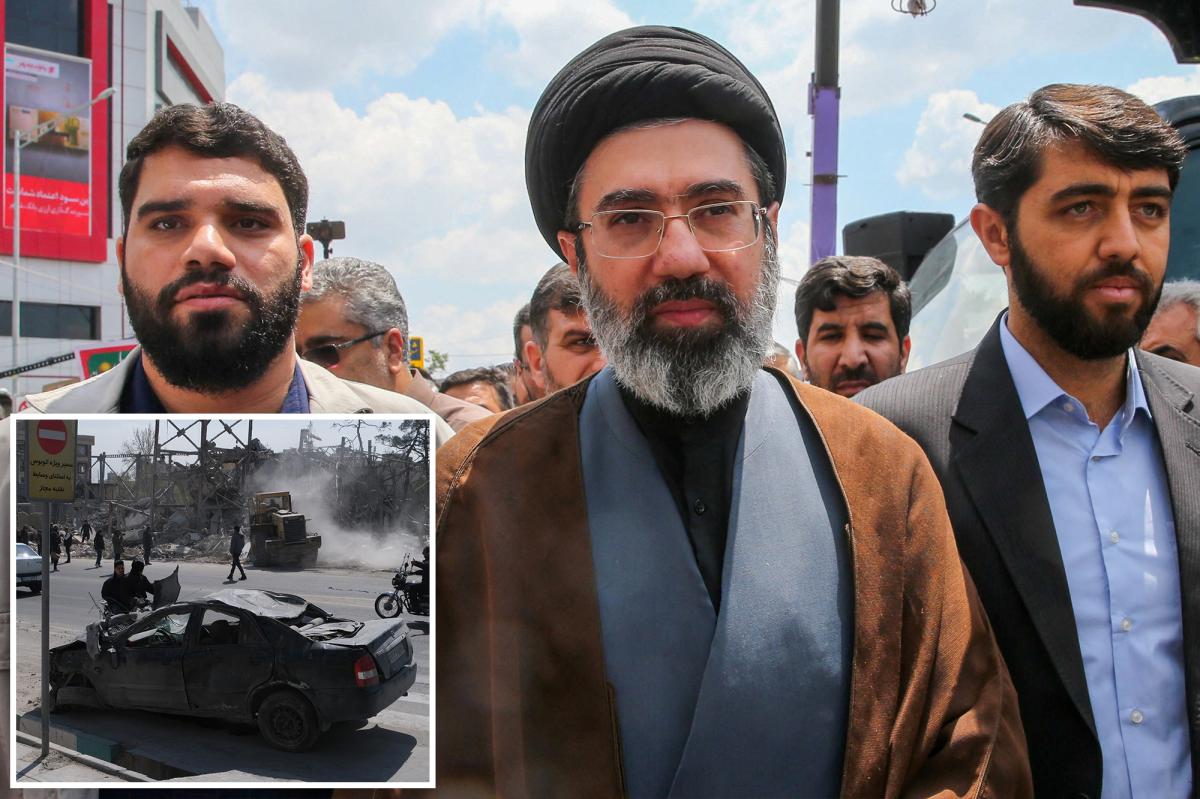
Iran’s newly appointed supreme leader, Mojtaba Khamenei, has remained out of sight since the February 28 attacks that led to his father’s demise, leaving U.S. and Israeli officials in a state of confusion about his location and whether he is truly at the helm of the Iranian government.
Following the strikes that killed Ayatollah Ali Khamenei, Mojtaba has only communicated through two written statements, and his voice has yet to be heard by the public.
This absence has fueled speculation among Iranians about his survival, earning him the nickname “the cardboard ayatollah” after a digitally created video showing supporters praising a cardboard version of him went viral.
Despite the uncertainty, intelligence from both the CIA and Israel’s Mossad indicates that Mojtaba is alive. Evidence, such as efforts by regime officials in Tehran to arrange face-to-face meetings with him, supports this claim.
However, his exact location and physical condition remain unknown. Reports suggest he was injured during the initial attacks that resulted in his father’s death, adding to the enigma of his current status.
The national security team at the White House is attempting to determine if Mojtaba Khamenei, now 56, is genuinely leading the country, or if someone else has assumed control in his absence, as reported by a U.S. official to Axios.
“We have no evidence that he is really the one giving orders,” a senior Israeli official told Axios.
“It’s beyond weird,” a US official added. “We don’t think the Iranians would have gone through all this trouble to choose a dead guy as the supreme leader, but at the same time, we have no proof that he is taking the helm.”
Khamenei was announced as the new supreme leader on March 9. His public response came three days letter in a written statement.
“We will not forgo avenging the blood of the martyrs,” the statement, read on Iranian state television, said.
“Every citizen killed by the enemy is a case for vengeance in itself.”
Trump administration officials took it as evidence he was badly wounded in the strike.
“Iran has plenty of cameras and voice recorders. Why a written statement? I think you know why,” Secretary of War Pete Hegseth told reporters at a briefing last week. “The new so-called not-so-supreme leader is wounded and likely disfigured.”
The speculation escalated Friday, when he didn’t appear in public for the Persian New Year, Nowruz, as is tradition — or even release a video address.
Again, a written statement was issued purported to be from the supreme leader, saying the US and Israel made a “gross miscalculation” by starting the war in Iran.
“This war took place with the illusion that if they martyred the head of the system and a number of influential military figures, it would create fear and despair in people, and in this way, it would realize the dream of dominating Iran and then disintegrating it,” he declared through a message read on Iranian television Friday.