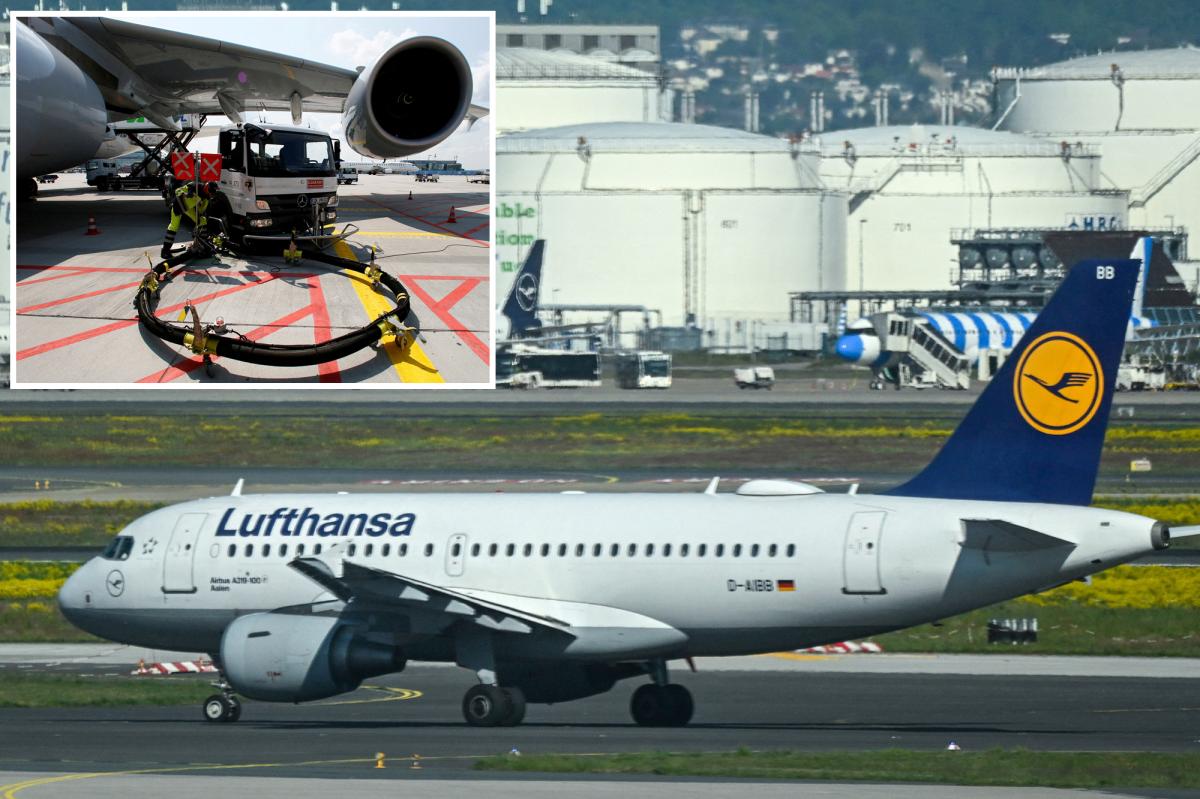


On Tuesday, the German conglomerate that owns Lufthansa Airlines and several other European carriers announced a significant reduction in its short-haul flight schedule. By October, the company plans to eliminate 20,000 flights. This decision is driven by the escalating costs of oil due to the ongoing conflict in Iran, which has heightened concerns over potential shortages of jet fuel in some regions.
Lufthansa Group, in an effort to mitigate these challenges, has focused on cutting less profitable routes, primarily those operating from its primary hubs located in Frankfurt and Munich. This strategic move is expected to conserve approximately 40,000 metric tons of jet fuel, a substantial saving given the current market conditions.
In a related cost-cutting measure, the group recently closed down CityLine, one of its regional subsidiaries. It is also undergoing a “planned consolidation” within its broader European network. This restructuring will affect several of its airlines, including Lufthansa Airlines, Austrian Airlines, Brussels Airlines, SWISS, and ITA Airways, with implications for major hubs in cities such as Brussels, Rome, Vienna, and Zurich.
Since late February, the cost of jet fuel has more than doubled in certain markets, following the onset of hostilities involving U.S. and Israeli forces in Iran. Given that fuel is one of the most significant operating costs for airlines, such price surges pose a serious threat to their financial stability.
For travelers, this situation translates into fewer available flights on certain routes and an uptick in travel costs. As the peak summer season approaches, many airlines are already responding by increasing checked baggage fees or imposing additional fuel surcharges.
The ongoing conflict near the Strait of Hormuz, a critical maritime passage off Iran’s coast where a substantial portion of the world’s oil is transported, has further exacerbated the volatility of fuel prices and supply chains globally.
The head of the International Energy Agency estimated on April 16 that Europe had about 6 weeks’ worth of jet fuel remaining and said airlines would start to cut routes from their schedules without more. The European Union’s top energy official is also warning that the energy crisis sparked by the war could impact prices for months “or maybe even years” to come.
“This is not a short-term, small increase in prices,” EU Energy Commissioner Dan Jørgensen said Wednesday.
Jørgensen said the war is costing Europe around 500 million euros ($600 million) each day.
“Even in a best-case scenario,” he said, “it’s still bad.”
Jørgensen also told reporters that EU governments “are very worried” about possible jet fuel shortages. He says the European Commission is doing what it can to help but that Europe is mostly in defensive mode.
Lufthansa, meanwhile, said it has secured enough jet fuel “for the coming weeks” and was “pursuing a range of measures” to keep its fuel supply stable for the summer, “including the physical procurement of jet fuel.”
Follow The Post’s coverage on the latest in the war with Iran:
All but one of the world’s 20 largest airlines have canceled scheduled May flights spanning every major region, according to aviation analytics firm Cirium. Besides Lufthansa, the carriers include Delta Air Lines, United Airlines, American Airlines, Air Canada, Emirates, Qatar Airways, Air China, British Airways and Air France-KLM, Cirium said.
Last week, Switzerland-based carrier Edelweiss Air announced it is dropping service to Denver and Seattle this summer and reducing flights to Las Vegas through the early autumn.
Air New Zealand is consolidating about 4% of its schedule in May and June.
“Like airlines globally, we’re experiencing jet fuel prices that are more than double what they would usually be,” the carrier said.
The global price of jet fuel increased from about $99 per barrel at the end of February to as high as $209 a barrel at the beginning of April.
In addition to cutting flights, some airlines are also slowing their plans to add more seats and routes as a way to keep costs under control. Delta, which kicked off the earnings season for U.S. airlines in early April, said it was scrapping plans to add more flights and seats in June, leaving about 3.5% fewer seats than originally planned.
As U.S. carriers continue to report their first-quarter earnings, the uncertainty around fuel costs is also showing up in their financial outlooks. Several carriers are either slashing their full-year forecasts or holding back on updating them.
Southwest Airlines said Wednesday it expects second-quarter earnings to come in below Wall Street estimates, citing the higher fuel prices, and it left its 2026 outlook unchanged. A day earlier, United Airlines reported it now expects full-year adjusted earnings of $7 to $11 per share, down from a previous forecast of $12 to $14.