
Share this @internewscast.com
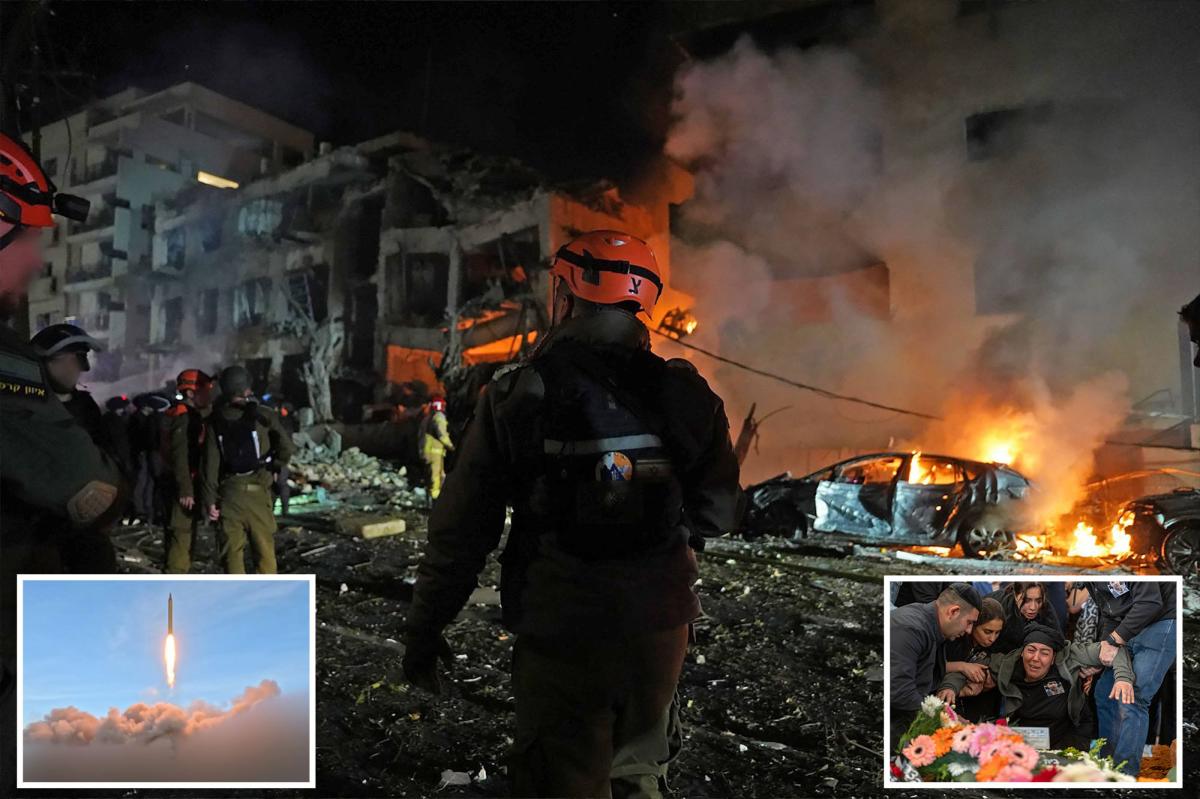
Iran’s frequency of retaliatory strikes against the United States and Israel has noticeably decelerated more than a week into the ongoing conflict. The majority of these attacks have been effectively intercepted by US-manufactured air defense systems, as indicated by recent statistics and expert analyses.
Initially, on February 28 and March 1, Iran launched close to 100 attacks on Israel. However, reports from the Tel Aviv-based Institute for National Security Studies (INSS) reveal a significant reduction in these strikes, now reduced to just a few each day.
Specifically, on the war’s first day, Iran unleashed 44 projectiles towards Israel, followed by 55 more on the second day, according to INSS data. By Thursday evening, the number of projectiles fired by Iran had dwindled to just five, slightly fewer than those launched by Hezbollah from Lebanon, marking a dramatic decrease of over 95% from the initial days.

Similarly, the United Arab Emirates, which initially faced over 100 drone strikes per day, has reported a reduction to only 35 strikes over March 9-10. The UAE’s defense ministry has noted there have been no cruise missile launches from Iran since March 1, and the number of ballistic missiles has decreased to between six and 12 daily, compared to 165 during the conflict’s onset, reflecting a decline of up to 96%.
Similarly, the United Arab Emirates went from fending off more than 100 drone strikes a day early in the conflict to just 35 over March 9-10.
The UAE’s defense ministry has recorded no cruise missile launches from Iran toward its territory since March 1, along with just six to 12 ballistic missiles per day after 165 were launched during the first two days of the war — a decline of up to 96%.
A similar drop was seen in Bahrain, where the military reports approximately six missile attacks per day compared to 45 on the first day of the war — a drop of nearly 87%.
War Secretary Pete Hegseth claimed earlier this week the dip was evidence that the US strikes against Tehran’s missile and launcher manufacturing facilities were working.
“Our strikes mean we’ve made significant progress in reducing the number of missile and drone attacks out of Iran,” Hegseth touted Tuesday.

“Ballistic missile attacks continue to trend down 90% from where they’ve started,” he added. “And one-way attack drones have decreased 83% since the beginning of the operation, a testament to our air defenders and our air-defense systems.”
US-made THAAD batteries have intercepted the vast majority of the missiles fired at the UAE since the war began, putting the air defense system on par with Israel’s much-lauded Iron Dome interceptors, according to the Washington-based Institute for the Study of War think tank.
“The UAE, which has received the most Iranian attacks since the war began, has intercepted 241 of 262 ballistic missiles as of March 10, which is an interception rate of 92[%],” the ISW wrote on X early Thursday.
“This interception rate is equivalent to the Israeli ballistic missile interception rates in April 2024, October 2024, June 2025, and during the current war.”
The ISW concluded that despite Tehran’s boasts of targeting American radars and depleting interceptor missile stockpiles in the Gulf, the attacks “have not achieved the regime’s objective of degrading air defenses enough to reliably penetrate them.”
Danny Citrinowicz, a senior fellow at the INSS, however, warned that Iran may be purposefully conserving its missiles for later use.
“They are prepared,” Citrinowicz told the New York Times, “and they are likely hunkering down for what could be a long war.”