
U.S. households reached a record median income of $87,460 in 2025, according to new Census Bureau data. But the milestone comes with an important caveat: the figure is only marginally higher than the previous record, set in 2019.
After accounting for inflation, the typical household has made little economic progress over the past six years, a period defined by the COVID-19 pandemic and a sharp increase in consumer prices. Median household income stood at $85,320 in 2019 and did not exceed that level until 2025, the Census Bureau said Tuesday.
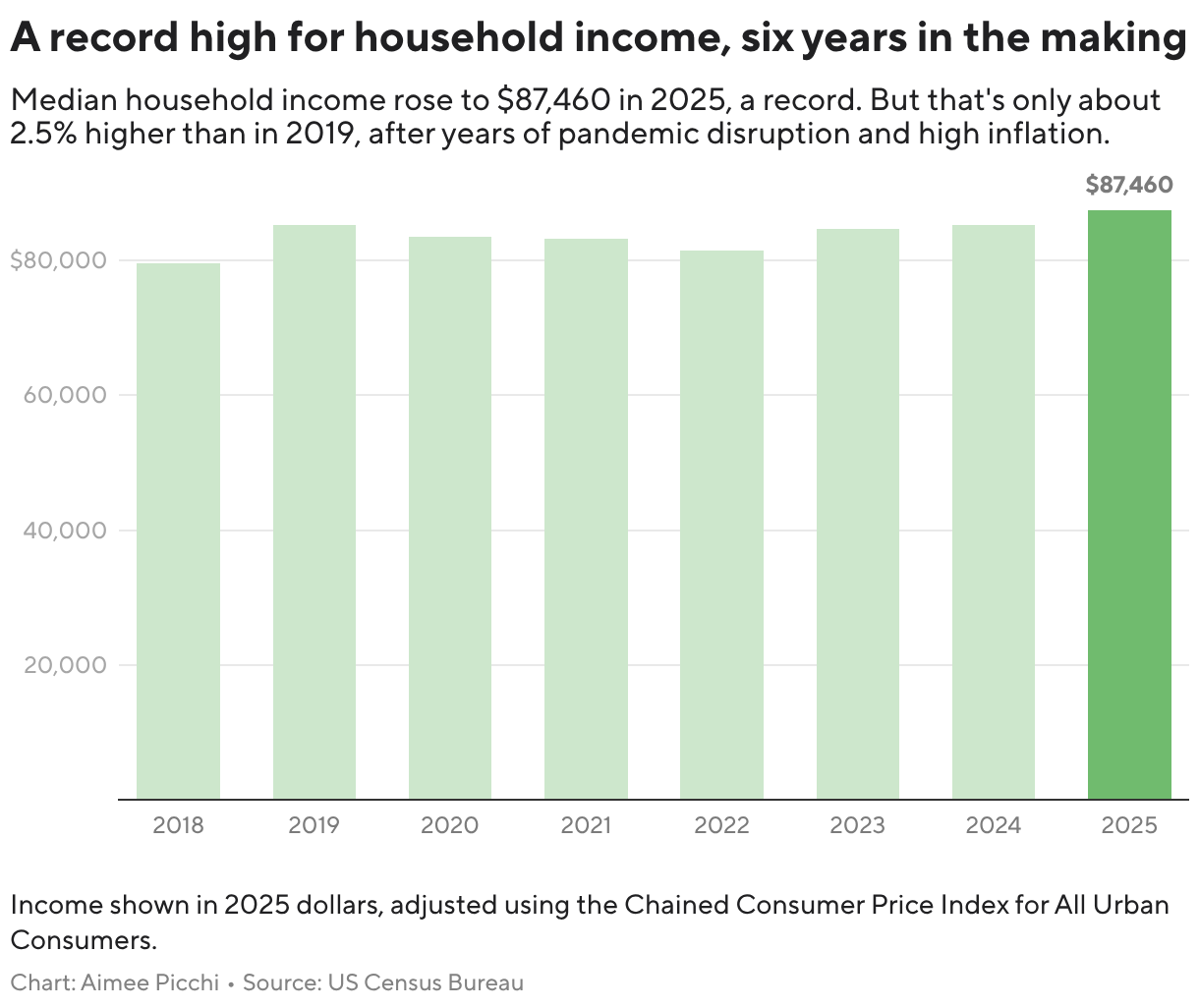
The latest figures show that household incomes continued to rise, but the gains were modest. Median income was about 2.5% higher in 2025 than in 2019. In the six years before the pandemic, by contrast, median household income rose 19%, from 2013 through 2019.
Women’s earnings increased 3.2% last year, while men’s pay edged down, according to the report. The stronger growth for women helped narrow the gender pay gap, although a substantial disparity remains: women earned nearly 84 cents for every dollar earned by men, compared with less than 81 cents in 2024.
Declining poverty rate
The Census figures may also include the effects of tax changes enacted through the “One Big Beautiful Bill” Act, or OBBBA, which President Trump signed into law in July 2025. Tax experts said high-income households and corporations were among the biggest beneficiaries of the legislation’s tax cuts.
Income for the top 10% of earners rose 1.7% last year, reaching $261,300. At the other end of the distribution, the bottom 10% saw a slight decline, with earnings falling to just over $20,000, Census data showed.
“It’s notable that the median income for the top earners is increasing, while income for the lowest earners is stagnant,” Kristin Seefeldt, an associate professor of social work and public policy at the University of Michigan, said in an email. “The tax code has been revised to lower marginal tax rates for everybody, and we see the top earners benefiting from that.”
The official U.S. poverty rate declined by 0.5 percentage points last year, falling to 10.2%. However, some public policy experts warned that the effects of OBBBA cuts to social safety-net programs may not become clear until the Census Bureau releases its data on 2026 income and poverty rates in 2027.
OBBBA introduced new restrictions on Medicaid and food stamps. Enrollment in the food assistance program dropped sharply in 2026.
“The poverty numbers look pretty good — especially child poverty — but these numbers do not reflect cuts in benefits that started to take effect at the start of 2026,” said Amanda Nothaft, director of data and analysis at the University of Michigan’s Poverty Solutions.


