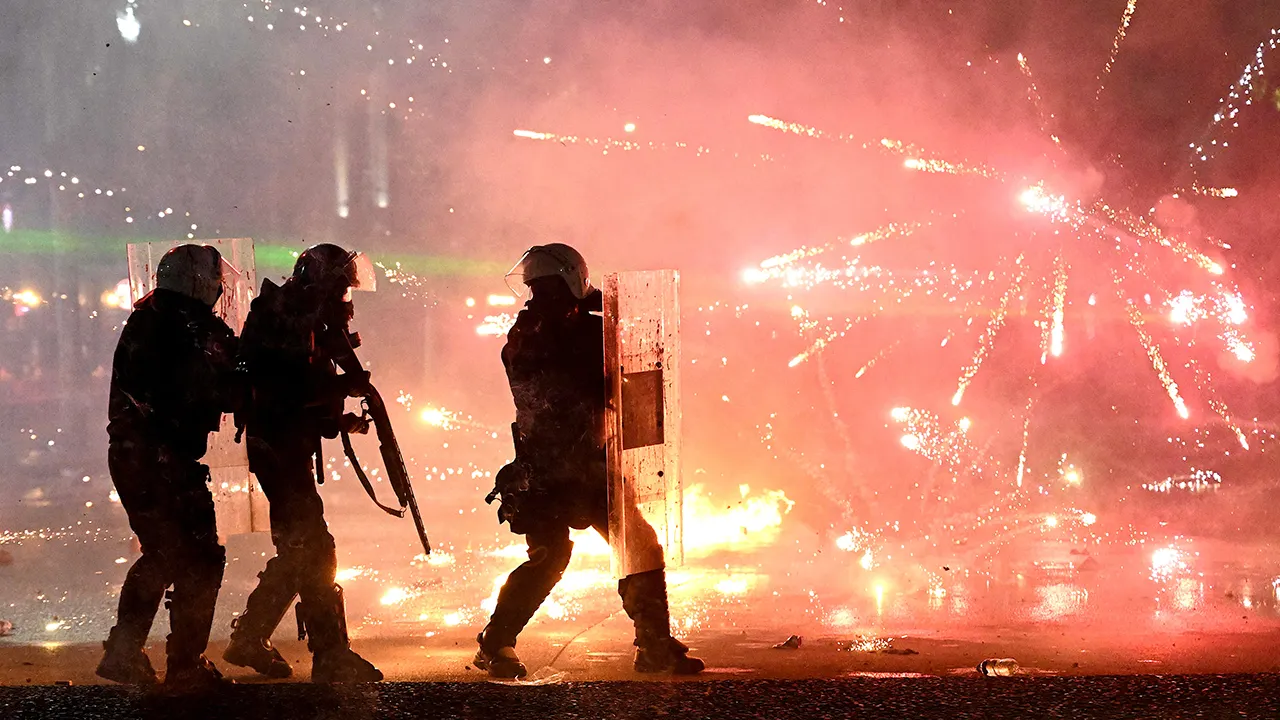

U.S. lawmakers are voicing concern over the escalating unrest in Albania, a small NATO member where police have clashed with protesters in the capital, Tirana.
The violence entered its sixth consecutive day on Sunday, prompting several lawmakers to issue warnings to Albanian authorities on social media.
“The Albanian people deserve freedom, rule of law, and institutional accountability. The government must refrain from all violence against protestors. Young people deserve a voice in the future of their country,” Republican South Carolina Representative Joe Wilson wrote on X.
Albanian police said 388 people had been charged with criminal offenses during the demonstrations. An unspecified number of protesters and officers have also been injured, Reuters reported.
The U.S. Embassy in Albania urged demonstrators to exercise their right to protest peacefully and reject violent rioting. It called for restraint and calm from all sides.
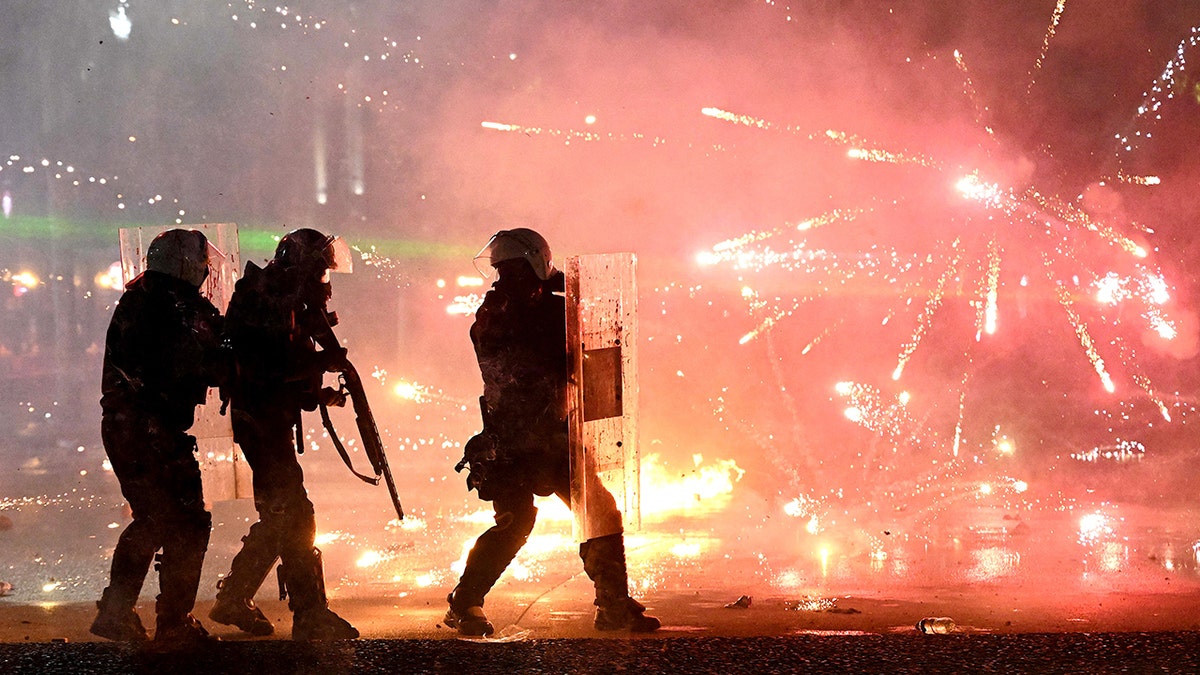
Riot police officers take cover as protesters throw Molotov cocktails during an anti-government demonstration in central Tirana on October 18, 2026, as protests continued for a sixth consecutive day over university conditions and demands for the resignation of Albania’s Prime Minister. (Armend Nimani / AFP via Getty Images)
Tens of thousands of people have taken part in protests fueled by allegations of government corruption, poor educational conditions, unemployment and limited opportunities. The nationwide movement, led largely by students and other citizens, is also demanding greater accountability, an end to corruption and what demonstrators describe as the restoration of democratic institutions and the rule of law.
The student-led protests that began in Tirana and later turned violent have spread rapidly to other parts of Albania. Demonstrators have thrown rocks at police, set government buildings on fire, broken shop windows and damaged private property. Protesters are calling for Prime Minister Edi Rama to resign, while police have responded with a heavy presence that has included rubber bullets, water cannons and tear gas.
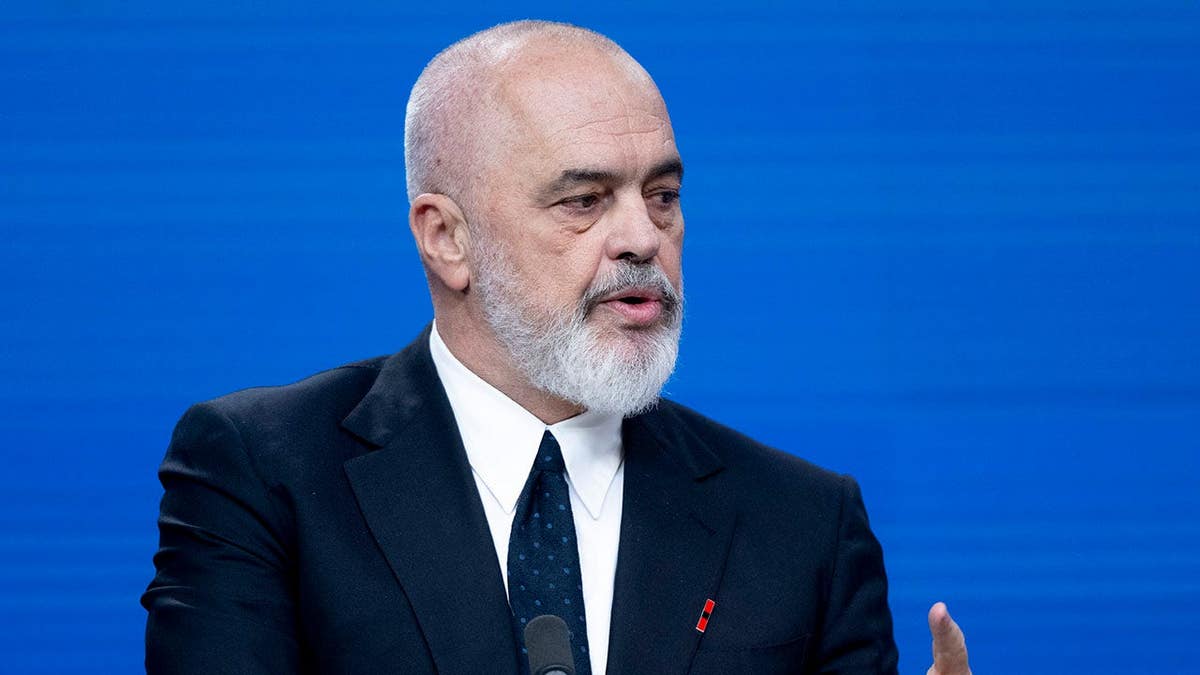
Albanian Prime Minister Edi Rama speaks during a press conference following the EU-Albania Intergovernmental Conference in Brussels, Belgium, on May 26, 2026. (Daniel Gnap/NurPhoto)
Rama has cast the demonstrations as a threat to Albania’s European future, as the country continues its uncertain pursuit of European Union membership.
On Monday, Rama blamed outside forces for the unrest, according to Reuters. “They are young men and women who have been ideologized and radicalized under the pressure or inspiration of that dark and new force that has emerged in Europe and the United States, which the President of the United States has designated a terrorist organization: ANTIFA.”
IN CASE YOU MISSED IT: Senate Hopeful James Talarico’s Relationship Spotlight: Meet His Vegan Partner
In a Facebook post translated by Reuters on Friday, Rama wrote: “These are also foreign hands that do not wish for Albania to be at peace; they do not want Albania to see clearly, to move forward, or to focus daily on addressing its own challenges for the sake of improvement. They do not want Albania to be part of the united European family — a place where it could finally, once and for all, escape these hands and the yoke of a forced choice.”
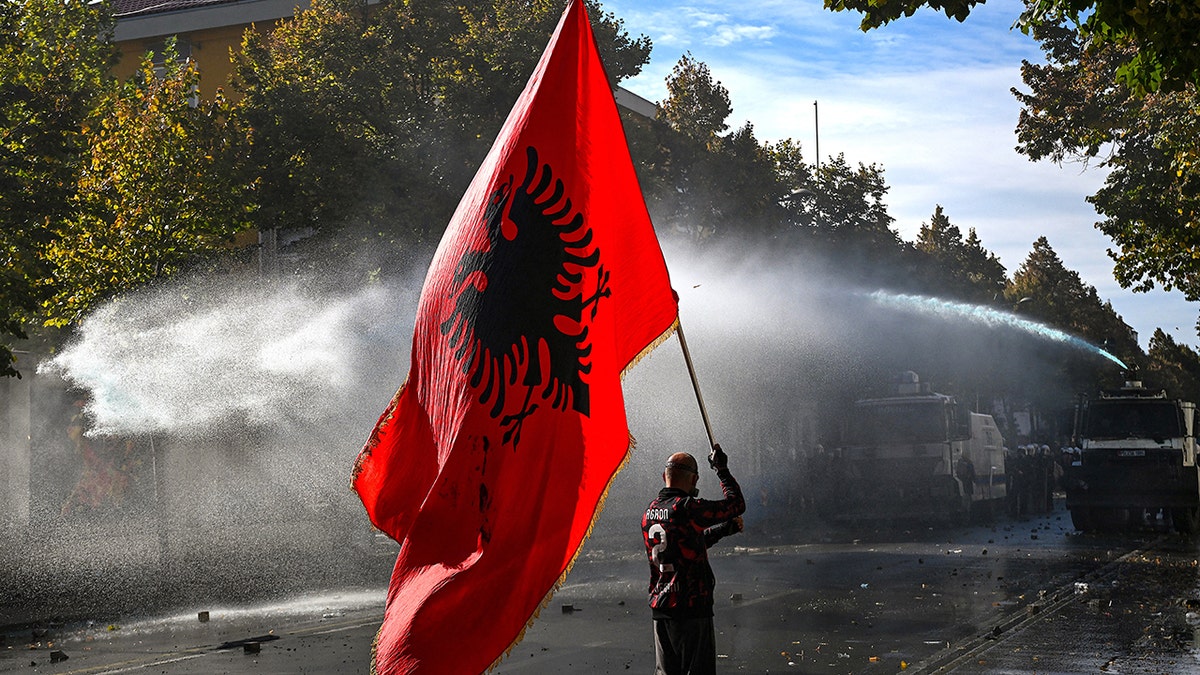
A protester holds an Albanian flag as he faces off with police water canon vehicles during an anti-government demonstration in central Tirana on Oct. 17, 2026, as protests continued for a fifth consecutive day over university conditions and demands for the resignation of the Albanian prime minister. (Armend Nimani/AFP via Getty Images)
“Rama’s attempt to equate the unrest in Albania with the protests taking place in France, Italy and elsewhere in Europe overlooks the specific political grievances driving Albania’s demonstrations,” Agim Nesho, a former Albanian ambassador to the United States and the United Nations, told News Outlet.
Nesho said Albania’s path toward Europe should not be conflated with the political survival of Rama or any individual government.
“European integration is supposed to reinforce democracy, judicial independence, transparent governance, and fundamental freedoms — not provide political protection from public accountability. Brussels has a responsibility to examine allegations of police abuses independently, uphold the rights of peaceful demonstrators, and take seriously the grievances behind this national movement,” Nesho said.
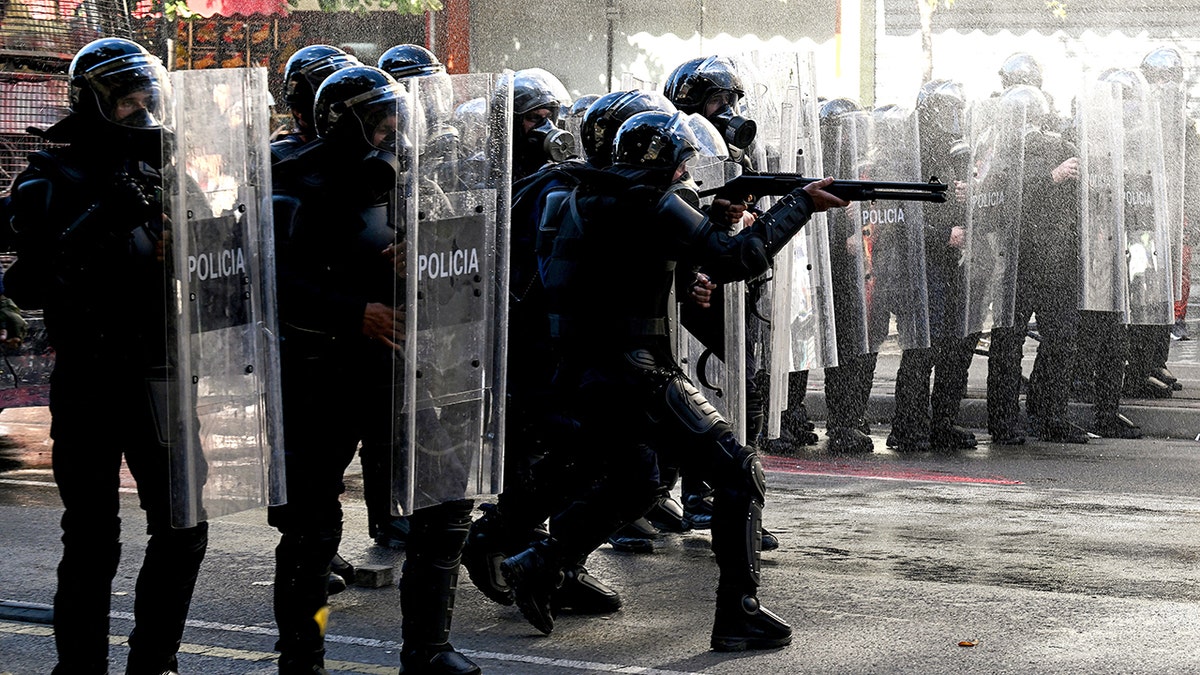
Albanian police officers in riot gear operate during an anti-government demonstration in central Tirana on Oct. 18, 2026, as protests continued for a sixth consecutive day over university conditions and demands for the resignation of Albania’s prime minister. (Armend Nimani/AFP via Getty Images)
The European Commission’s Directorate-General for Enlargement and Eastern Neighborhood condemned the violence reported in Albania.
“We condemn the use of violence in Tirana and other cities in Albania, including arson, attacks on State institutions and the destruction of public and private property. Violence has no place in a democratic society, and the response to it must remain within the law and proportionate,” the Commission said.
The Commission also highlighted Albania’s progress toward EU membership and said grievances should be addressed through constructive dialogue and peaceful means.
The turmoil in Albania comes as the country has long sought European Union membership, which began in 2014 when it became an official candidate for accession. While the 2025 annual European Commission report stated that Albania made significant strides in judicial reforms and combating organized crime, the continued allegations of corruption in the Rama government and the current violence taking place will complicate its path to EU membership.