
Share this @internewscast.com

WASHINGTON — As President Trump intensifies his stance against Iran, the Pentagon is discreetly preparing an array of military strategies, potentially leading to the deployment of U.S. forces in a significant conflict for the first time in nearly five years.
Presently, Trump is employing a dual approach: exerting immense military pressure while simultaneously leaving the possibility of negotiation open. He even extended a Friday deadline for Iran to comply with U.S. demands, emphasizing his willingness to engage diplomatically.
In the meantime, thousands of U.S. troops, including units from the distinguished 82nd Airborne Division, are being deployed to the region. They are joined by Air Force, Navy, and Marine resources in a formidable display intended to compel Tehran to enter negotiations while also preparing for any potential conflict escalation.
Furthermore, the Pentagon is reportedly contemplating a plan to deploy an additional 10,000 troops to the Middle East amidst the ongoing tensions with Iran, as noted by the Wall Street Journal.
The core of this confrontation lies in the Strait of Hormuz, the world’s most vital oil transit chokepoint. Iran, asserting its control over the Strait, has disrupted its operations, causing a surge in global oil prices. President Trump has pledged to ensure the waterway remains open and secure for international use, by force if necessary.
While the decision to use force remains undecided and diplomatic solutions are still possible, the Department of Defense is prepared for various courses of action. Experts and former military strategists suggest these could range from sustained airstrikes and covert operations to the bold capture of strategic islands within the Persian Gulf.
Hereâs how a conflict could unfold â and whatâs on the table:
Boots on the ground
The more aggressive options under discussion â placing US troops at the most potential risk â involve American boots on Iranian soil.
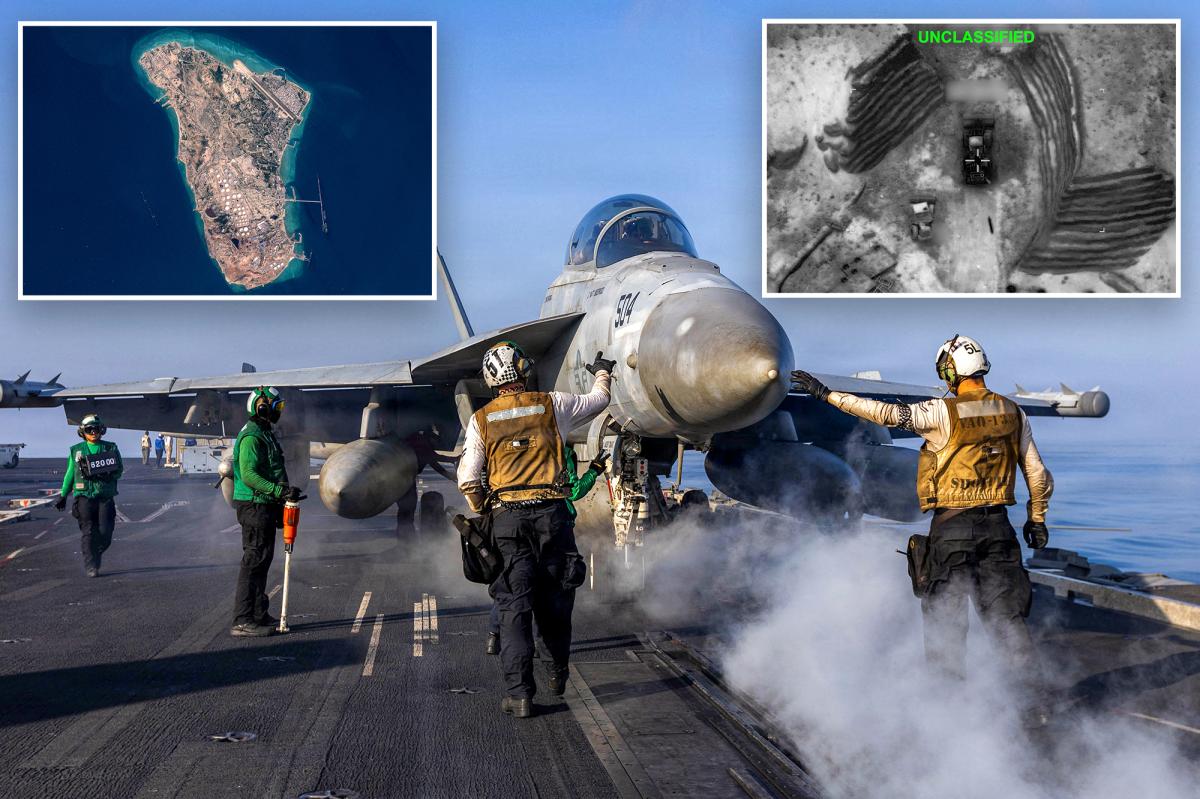
Those options vary, but are largely centered around seizing key Iranian-controlled or disputed islands like Abu Musa and Larak, which sit astride the shipping lanes.
Former Pentagon official and Atlantic Council fellow Alex Plitsas said taking those positions would strip Iran of crucial launch points.
âThat would deny those as strategic platforms to strike ships in the area,â he said.
Even more consequential: Kharg Island, Iranâs primary oil export hub. Putting troops there serves a dual purpose â stopping Iran’s ability to make money off oil and putting troops in a location Tehran would be loathe to target, lest they destroy their own critical infrastructure, Plitsas said.
âItâs like taking a chess piece off Iranâs board and putting another bargaining chip in your pocket,â he said.
Still, any move on the ground would come with steep risks. Holding territory would expose US forces to sustained attack and stretch military resources, Foundation for Defending Democracies senior fellow and retired Rear Adm. Mark Montgomery warned.
âIf you try to seize and hold this area, the risk to the force will become so high,â he said.
Getting troops in wouldnât be easy either.
A naval landing would require running the gauntlet through the strait, while an airborne assault sending in troops via helicopters and parachutes would leave forces exposed to missiles and drones during insertion.
âYouâd have to transit the strait with ships in order to get in there⦠and we canât do that,â Plitsas said, noting that such a move would sacrifice surprise and expose US forces to attack.
âIf they come in by air, youâd be vulnerable to shoulder-fired missiles up to 12,000 feet,” he added.
But the US military also has options to secure the vital waterway and ensure oil keeps flowing â without necessarily putting boots on the ground, Montgomery said.
“Opening the straight is not a factor of securing the islands; it’s a factor of reducing the military risk to a convoy,” he said. “The military risk to a convoy comes from missiles, mines, drones and fast attack craft. So you have to reduce each one of those to a manageable risk level, and each one of them has kind of a different [air and naval asset] that can take care of them.”
The retired admiral said the US could reopen the strait by stacking a layered air-and-sea defense in a no-ground-war playbook to keep the critical shipping lane open.
Navy destroyers already in region could knock down incoming missiles, while F-16s, F-15s and F/A-18 fighter jets could hunt drones overhead with low-cost rockets â leaving pricey standard missiles as a last resort if anything slips through, he said.
Meanwhile, Iranian fast-attack boats would be taken out by A-10 aircraft and armed helicopters, and mines would be prevented where possible and cleared by US littoral combat ships with mine-sweeping gear.
Targeting nuclear capabilities
Another path: going after Iranâs nuclear capabilities.
That could mean covert operations to seize highly enriched uranium stockpiles buried deep underground â though experts say a large-scale ground invasion could be challenging to pull off.
âFor a soft team insertion and removal, yes,â Montgomery said. âFor something like the 82nd Airborne, that would be pretty challenging.â
Instead, special forces could slip in and out quickly â hitting targets without trying to hold ground.
âI would keep it Special Forces â an insertion, no holding, do your business, get out,â he said.
Or the US could rely entirely on sustained airstrikes aimed at degrading Iranâs nuclear infrastructure over time.
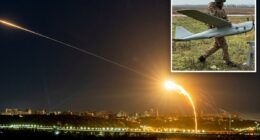
Even then, Iran would still have ways to hit back â including swarms of explosive boats, drones and missile attacks targeting US forces or commercial shipping.
Regardless, the message from Washington is clear: negotiate â or face a widening menu of military force.