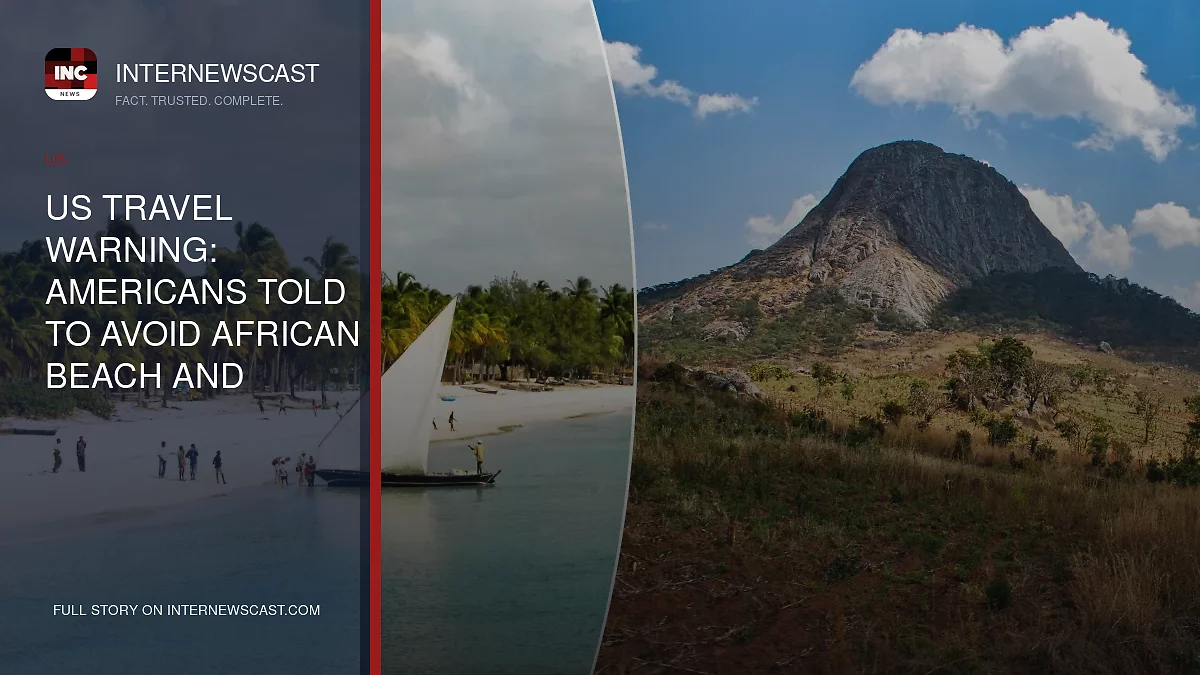

U.S. travelers are being urged to steer clear of certain areas in Mozambique, an African safari destination where extremist violence has affected high-end lodges visited by international big-game hunters.
The U.S. State Department updated its travel guidance for Mozambique on Aug. 21, keeping the southeastern African nation — located across the Mozambique Channel from Madagascar — under a “Level 2: Exercise Increased Caution” advisory.
At the same time, several locations within the country have been placed under the more serious “Level 4: Do Not Travel” warning because of increased terrorism concerns.
Mozambique, which shares borders with Tanzania, Malawi, Zambia, Zimbabwe, South Africa and Eswatini, is widely recognized for its long Indian Ocean shoreline, scenic beaches and protected wildlife areas.
While it is not among Africa’s busiest tourist hubs, Mozambique remains a draw for safari travelers and nature-focused visitors. Government figures show the country received more than 757,400 international arrivals in 2024.
One of the areas singled out in the “Do Not Travel” warning is Cabo Delgado Province, a northern region that includes safari and wildlife attractions such as Quirimbas National Park.
According to the State Department, terrorist organizations remain active in northern Mozambique, where the threat of violent attacks continues to pose a serious security risk.
“Attackers may strike public areas and tourist destinations with little or no warning, sometimes taking hostages,” the advisory says.
Alex Perry, an England-based author and veteran foreign correspondent who previously served as a TIME bureau chief, told Fox News Digital the terrorist presence in northern Mozambique is relatively small but particularly brutal.
“Mozambique has one of the smaller ISIS groups in the world,” Perry said, estimating it has roughly 500 members. “They are spectacularly nasty.”
Perry, author of the book “Blood Will Flow” about the deadly Islamist insurgency in Mozambique, said militants in Cabo Delgado have carried out mass beheadings, and that the region’s tourism industry has suffered as a result of the insurgency.
Cabo Delgado has historically attracted a more exclusive clientele, with smaller numbers of wealthy visitors paying high prices for hunting safaris compared with Africa’s major mass-market safari destinations, he also said.
“This is almost exclusively hunting safaris — people going to shoot animals,” Perry said. “That tends to be much smaller numbers of people paying a much higher price.”
The State Department says Americans who opt to travel to Mozambique are encouraged to enroll in the Smart Traveler Enrollment Program (STEP).
Those who must travel to affected areas of Cabo Delgado, Niassa and Nampula provinces are also advised to consider hiring a security firm.
“Avoid all but emergency travel between sunset and sunrise,” the advisory says, adding that Americans should “keep a low profile.”
“Have evacuation plans that do not rely on U.S. government assistance. Have travel documents up to date and easily accessible.”
Perry said that, although the advisory highlights serious risks, much of Mozambique remains a beautiful destination for travelers.
“On the whole, it’s a pretty safe and secure and, as I say, beautiful and enjoyable place to visit,” Perry said. “The far north is a dramatic exception.”
Fox News Digital reached out to the U.S. State Department for further insights.
The warning is one of several travel advisories issued or updated by the State Department in recent months, as officials continue flagging safety concerns for Americans traveling abroad.
This month, the State Department issued a Level 2 travel advisory for Ecuador, warning Americans to exercise increased caution due to violent crime, terrorism and kidnapping.
Earlier this summer, the U.S. renewed a Level 2 “Exercise Increased Caution” advisory for the Bahamas.


