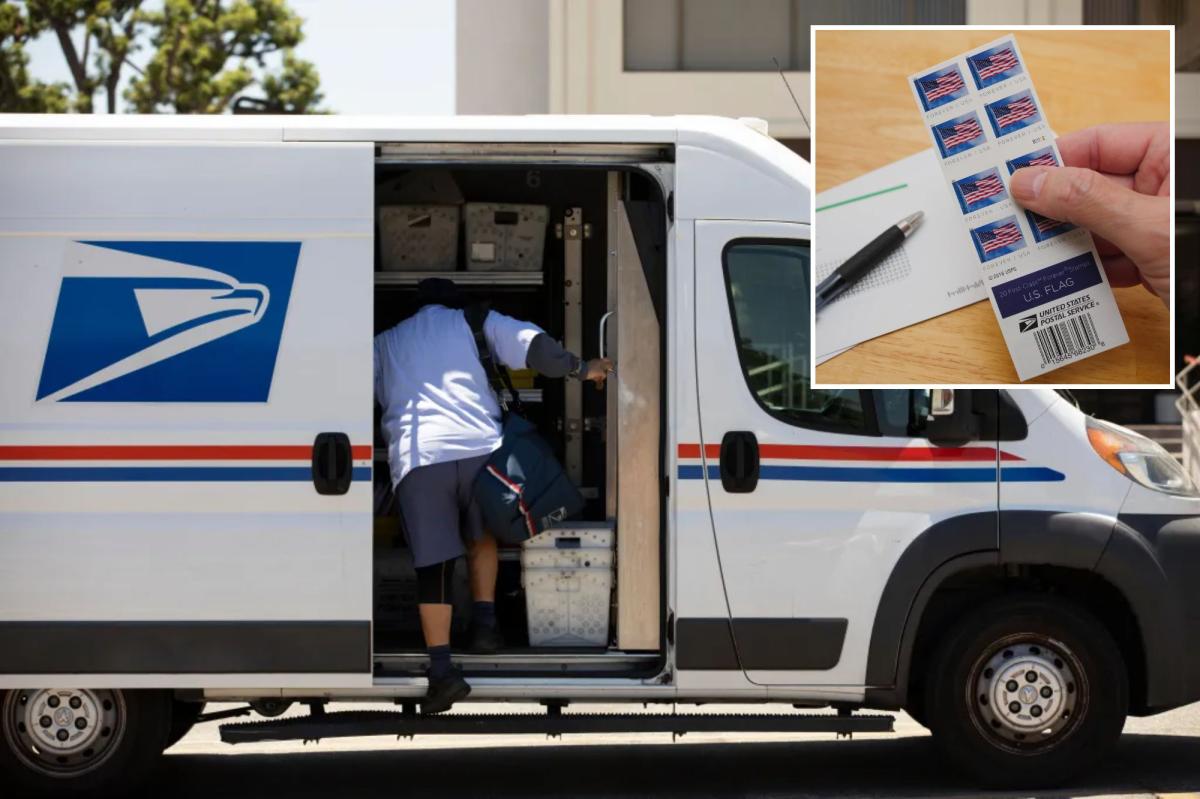


On Thursday, the U.S. Postal Service announced it has notified federal budget officials of its decision to temporarily halt employer contributions to the Federal Employees Retirement System annuities. This measure is aimed at ensuring the Postal Service can continue its operations, such as meeting payroll, paying suppliers, and delivering mail.
In addition to this, the Postal Service is seeking approval to raise postage rates. Among the proposed changes is an increase in the cost of a First-Class Mail Forever stamp, which would rise from 78 cents to 82 cents.
The USPS submitted a notice on Friday to regulators, who must review and approve the proposed rate adjustments.
The Postal Board of Governors has decided to suspend pension payments in an effort to conserve cash and maintain liquidity amid what it describes as an “ongoing, severe financial crisis,” according to an internal message from Postal Service Chief Financial Officer Luke Grossmann.
USPS officials have cautioned that the agency could potentially run out of cash by February 2027 if current financial challenges persist.
Despite the suspension, Luke Grossmann assured employees that there would be no immediate effect on current and future retirees as a result of the halted employer contributions, which went into effect on Friday.
“The risk to the Postal Service and the American public from insufficient liquidity for postal operations dramatically outweighs any longer-term risk to the pension funds from not making the currently due payments,” he said in the statement.
USPS deferred payments in 2011 during another financial crisis.
The Postal Service said it will continue transmitting employees’ retirement contributions to the federal Office of Personnel Management, along with Thrift Savings Plan contributions, including employer automatic and matching funds, and will also maintain its employer contributions to Social Security.
Brian Renfroe, president of the National Association of Letter Carriers, said the temporary suspension of annuity payments is “not ideal” but it doesn’t immediately impact his members, who he said understand the Postal Service’s financial challenges.
“Given a menu of options, none of which are overall positive, they would certainly prefer the Postal Service making a move like this as opposed to something that immediately impacts them or immediately impacts in a negative way the service that we provide to the American people,” Renfroe said.
Ninety-nine percent of career USPS employees are covered by the Federal Employees Retirement System.
In a related matter, the Postal Regulatory Commission on Thursday granted the Postal Service a temporary, multi-year waiver allowing it to redirect billions of dollars in revenue previously earmarked for retiree benefits, providing “some breathing room and flexibility” to execute contingency plans and avoid running out of cash.
Last month, Postmaster General David Steiner told The Associated Press and later a congressional committee that the 250-year-old service needs to have a decades-old $15 billion cap on borrowing raised to $34.5 billion so the independent agency can have access to more cash.
“That will buy us the time to make the fixes we need to make, and we can sail on down the road,” he told the AP.
Steiner has called for other changes as well, including greater flexibility in how retirement funds are invested, changes to pension obligation methodology and the authority for USPS to raise postage prices high enough to cover losses.
Renfroe said this latest move to pause employer contributions is the “direct result of continued inaction by Congress” to fix such “legislative restraints” placed on the Postal Service.
Keep Us Posted, an advocacy group representing consumers, catalogs, greeting card publishers and others, has urged Congress to ensure any rate increases would be limited to once a year.
The group also wants to ensure six-day-a-week mail service remains and that USPS regulators have greater control over any service changes.
USPS said the proposed price increases requested Thursday, which also affect postcards and international letters, will still make rates among the most affordable in the world.
The Postal Service relies mostly on the sale of postage, products and services to finance its operations.
The Postal Service has seen annual volume plummet from about 220 billion pieces in 2006 to about 110 billion today as more people pay bills and communicate online.
USPS’s net losses for the 2025 fiscal year totaled $9 billion, even though total operating revenue increased by $916 million or 1.2%, due largely to its Ground Advantage shipping service.
Net losses in fiscal year 2024 were $9.5 billion