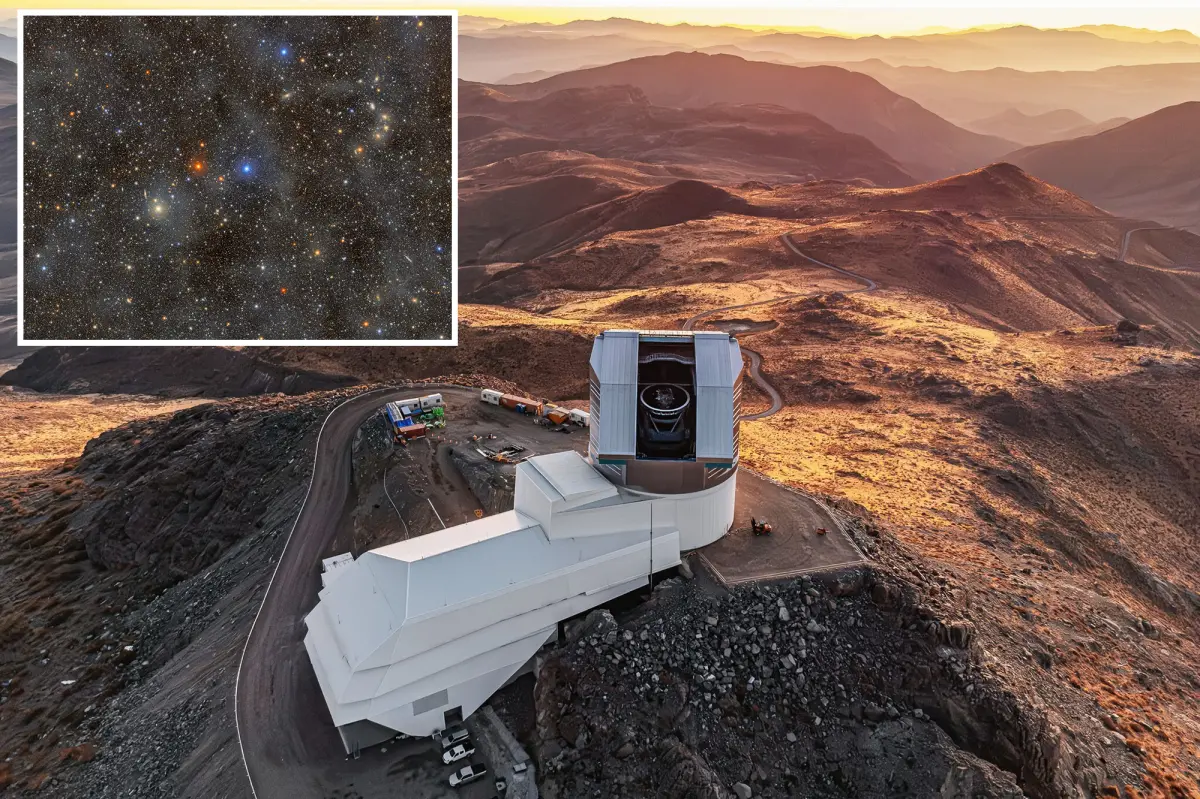

NEW YORK — The largest digital camera ever constructed is beginning to reveal parts of the universe that have long remained out of sight.
The Vera C. Rubin Observatory has formally launched its sweeping survey of the cosmos, designed to photograph broad stretches of the sky with unprecedented depth and clarity. From its perch atop a mountain in Chile, the telescope will spend the next decade scanning the southern sky, collecting hundreds of images each night.
Scientists say Rubin’s observations could provide a far more complete inventory of the universe, charting billions of stars within the Milky Way along with billions of distant galaxies beyond it.
Because the telescope can capture images rapidly and return to the same regions of the sky again and again, researchers will be able to spot dimmer objects that earlier surveys could not detect.
“We’re going to see large numbers of scientists across the world working with this data set, studying the universe in a way that they haven’t been able to before,” said Phil Marshall, the observatory’s deputy director of operations.
Rubin shared its first images last year, among them vivid views of the Trifid and Lagoon nebulas, which lie thousands of light-years away from Earth.
READ MORE: New Jersey Psychotherapist and Mother Found Dead in Affluent Neighborhood
One light-year equals almost 6 trillion miles, or about 9.7 trillion kilometers.
In the months since, researchers have fine-tuned the observatory’s instruments to ensure they can deliver the precision and depth needed for the 10-year survey.
The images may help scientists discern how galaxies form and cluster over billions of years, and how the universe came to be.

Funded by the U.S. National Science Foundation and U.S. Department of Energy, the observatory is named after astronomer Vera Rubin, who offered the first tantalizing evidence that a mysterious material called dark matter might be lurking in the universe.
Researchers hope the effort may yield clues about dark matter as well as an equally puzzling force known as dark energy.