
At first glance, Creedence Clearwater Revival and Weezer seem like two rock bands separated by far more than time. Creedence emerged from the late-1960s San Francisco Bay Area, though its sound had little in common with the city’s psychedelic wave. Instead, the group built its identity on lean, swampy, Deep South-inspired rock and roll. Weezer, by contrast, arrived in the 1990s with a very different kind of unease, becoming reluctant avatars of anxious, self-aware nerd rock — never quite comfortable in the city, the suburbs, or anywhere in between. Still, for all their differences, both bands share a crucial gift: the ability to fuse rock’s drive and grit with pop hooks sharp enough to sing along to after one listen.
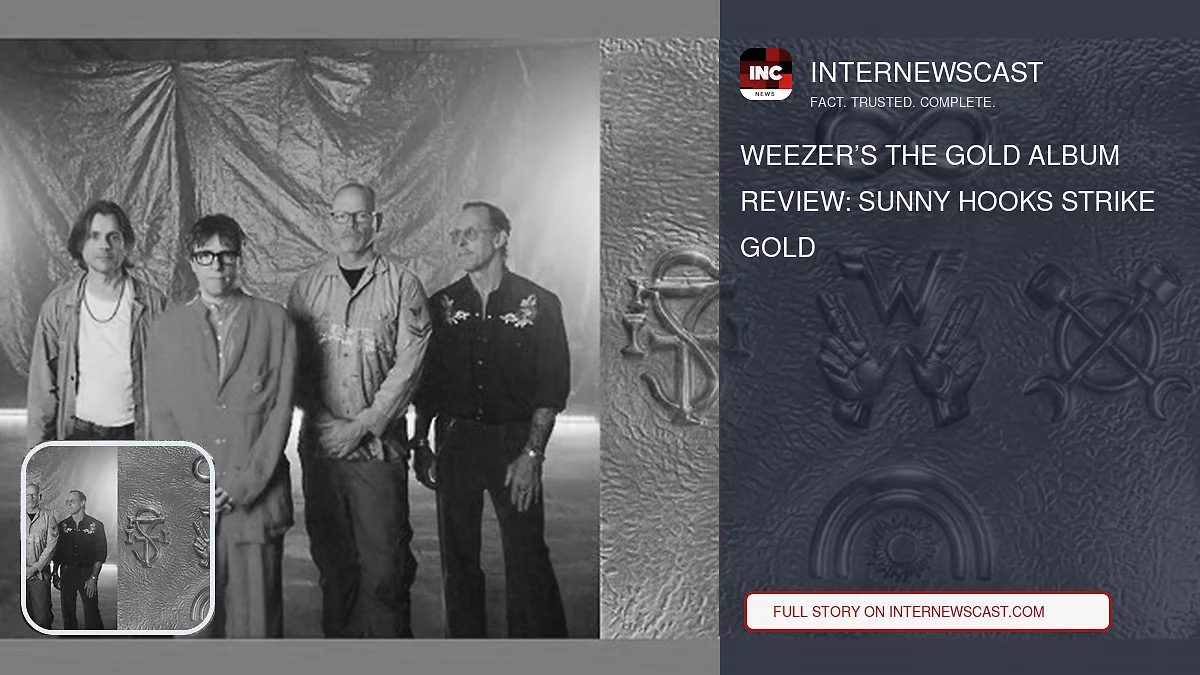
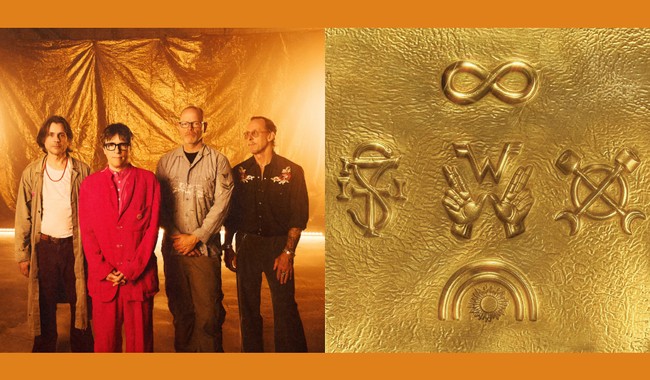
That unlikely connection feels especially relevant with Weezer’s newest release, which arrived on record store shelves — or what remains of them — on August 21, 2026. The album invites comparison to Creedence Clearwater Revival’s final studio effort, “Mardi Gras,” released in 1971. On that record, John Fogerty, who was essentially the songwriting and vocal force of CCR, finally split those duties evenly with his two remaining bandmates. His brother Tom had already left in 1971, frustrated by John’s reluctance to share the spotlight. The experiment did not go well; “Mardi Gras” quickly made the case that Fogerty’s control had been central to the band’s success. Weezer’s seventh self-titled album — destined, by fan tradition, to be known as “The Gold Album” because of its cover color — takes a comparable creative turn, with frontman, lead guitarist and primary songwriter Rivers Cuomo stepping back to let drummer Patrick Wilson, guitarist/keyboardist Brian Bell, and bassist/keyboardist Scott Shriner contribute fully to the songwriting. Fortunately, this is where the comparison ends. Unlike “Mardi Gras,” which effectively closed the book on Creedence, “The Gold Album” lives up to its gleaming title.
Sonically, “The Gold Album” leans into what many listeners would recognize as classic Weezer: the collision of grunge weight and power-pop sweetness that defined “The Blue Album” and “Pinkerton.” Cuomo’s familiar, often vulnerable vocals float over guitars that move effortlessly from bright, clean shimmer to dense walls of distortion, while Wilson and Shriner keep the songs grounded with a forceful rhythmic punch. The connection to the band’s 1994 debut — home to staples like “Buddy Holly” and “Undone (The Sweater Song)” — comes through clearly on tracks such as “Shine Again.”
Elsewhere, the moodier, more bruised spirit of “Pinkerton” surfaces, particularly on songs like “We Might as Well Be Strangers.”
Still, “The Gold Album” is not simply a nostalgia exercise designed to hand longtime fans another batch of familiar riffs. Weezer has always been, at its core, an exceptional power-pop band willing to complicate its own melodies with strange detours and unexpected textures. That instinct has appeared in many forms: the breezy “Island in the Sun,” from 2001’s “The Green Album,” shifting from sunny ease to bursts of heavy power chords; the tongue-in-cheek 1980s hard-rock homage of 2021’s “Van Weezer”; and the lush orchestral ambition of “OK Human,” also released in 2021. Now, with every member past the age of 50, Weezer continues to sound unmistakably like itself while still finding ways to surprise. The signature is immediate, but the payoff feels newly earned.
On “Say Yes,” the first song on “The Gold Album,” Cuomo sings:
I only get one weird life I get to live
And I only get one chance to show you who I am
Make the most of it
Cuomo and his Weezer compatriots are the antithesis to 1970s rockers striking poses as too tough to handle street-fighting men, or the 1980s days of glam pop metal. Yet they do rock, surprisingly hard at times, without once failing to let the listener know that they also think rock’s excesses are silly but still love the music. “The Gold Album” by Weezer is a welcome reminder of how much fun rock’n’roll can be when performed by professionals.


