
At the Lexington Ave.-59th St. subway station, commuters encounter a vibrant piece by Elizabeth Murray featuring a quote from W.B. Yeats: “In dreams begin responsibility.” This sentiment seems a fitting motto for New York’s transit network, a system built on grand aspirations yet constrained by an organization — the Metropolitan Transportation Authority — structured to shield politicians from accountability.
For years, mayors have distanced themselves from the MTA. The rationale is straightforward: the authority isn’t within their direct jurisdiction. Instead, it relies significantly on state funds, which means it operates under the influence of the governor.
Mayor Mamdani aims to change this dynamic.
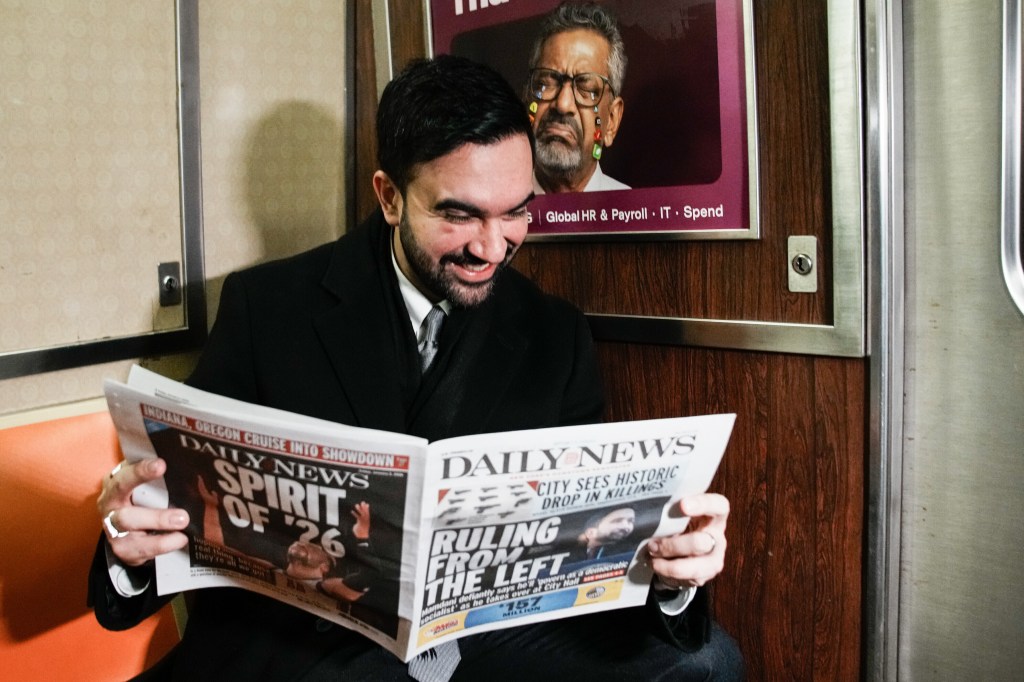
He campaigned on the promise to make bus services free and more efficient, advocating that public transportation should alleviate economic stress rather than exacerbate it. This vision resonated with voters, arguably contributing to his electoral success, underscored by his symbolic choice to take the oath of office in the deserted subway station beneath City Hall.
Now, the pressing issue is whether City Hall will truly take on the responsibility of making this vision a reality.
To clarify, as a past MTA chair, I do not concur with Mamdani’s plan to offer free bus services. However, some iteration of this idea is likely to advance, and I hope he achieves what I could not — transforming New York’s bus system into a reliable service for the millions who depend on it daily.
Mamdani should start by doing something no mayor has done: nominate himself to serve as one of the city’s representatives on the MTA Board.
Unlike the below-ground oath of office, this would not be a symbolic gesture. Sitting on the board would signal that the city’s transit system is a core mayoral responsibility.
There is precedent for this kind of leadership. Twenty-five years ago, London faced a similar dilemma. The British government funded and managed London’s declining transport system with little local control. That changed in 2000, when Ken Livingstone became London’s first directly elected mayor and assumed the role of chair of Transport for London.
I worked at TfL during that period and witnessed Livingstone treat transportation as a defining responsibility of city leadership. He campaigned on expanding what the system could deliver and accepted political ownership for the consequences.
That ownership imposed discipline. It forced difficult trade-offs, including support for fare increases he had long opposed, resulting in reinvestment in the Underground, a transformed bus network and safer streets.
New York should learn from London’s success. Clear political ownership matters. Having Mamdani himself on the MTA Board would move the region closer to a model where the city’s top elected official owns and champions public transit.
Critics may worry that a mayor serving on the MTA Board would politicize the agency or blur lines of authority. But the MTA already operates within a political framework shaped by state and regional appointments.
Mamdani’s direct participation at the MTA Board table would help reassure the public that his free-fare proposal is achievable within the authority’s broader financial reality and that its effects on the overall transit network are being taken seriously. In any case, free fares are the easier part of his bus agenda.
Speeding up buses is far harder. We know what works: dedicated lanes, signal priority, enforced curb rules, route redesigns and faster boarding. The success of the 14th St. Busway proves the point. Select Bus Service should continue to expand, but it cannot be the backbone of a citywide solution when only 20 of more than 300 bus routes benefit from it.
The real obstacle to faster buses is our collective tolerance for behavior that paralyzes the streets: double-parking “just for a minute,” blocking bus stops and rushing intersections. These actions feel normal, even harmless — but multiplied thousands of times a day, they bring the city to a standstill.
Here, the mayor can shape street design, traffic enforcement, parking policy and interagency coordination to get buses moving. The mayor can elevate bus speed as a top-tier priority in an authority historically dominated by subway concerns. That shift would really matter — especially for the most vulnerable riders most reliant on our bus system.
Accountability cannot stop at buses. Subway safety, including policing and social services, also depends heavily on decisions made at City Hall. The mayor’s focus on buses should reinforce, not distract from, the city’s broader responsibility for the entire transit system.
The artwork at 59th St. offers a quiet reminder. Dreams are easy. Responsibility is harder. By taking a seat on the MTA Board, the mayor can show New Yorkers that he is a leader willing to accept both.
Walder is a former chairman and chief executive of the Metropolitan Transportation Authority and a former senior leader at Transport for London.