
The conviction tied to Tupac Shakur’s 1996 killing has renewed public scrutiny of another defining unsolved case in hip-hop history: the murder of The Notorious B.I.G.
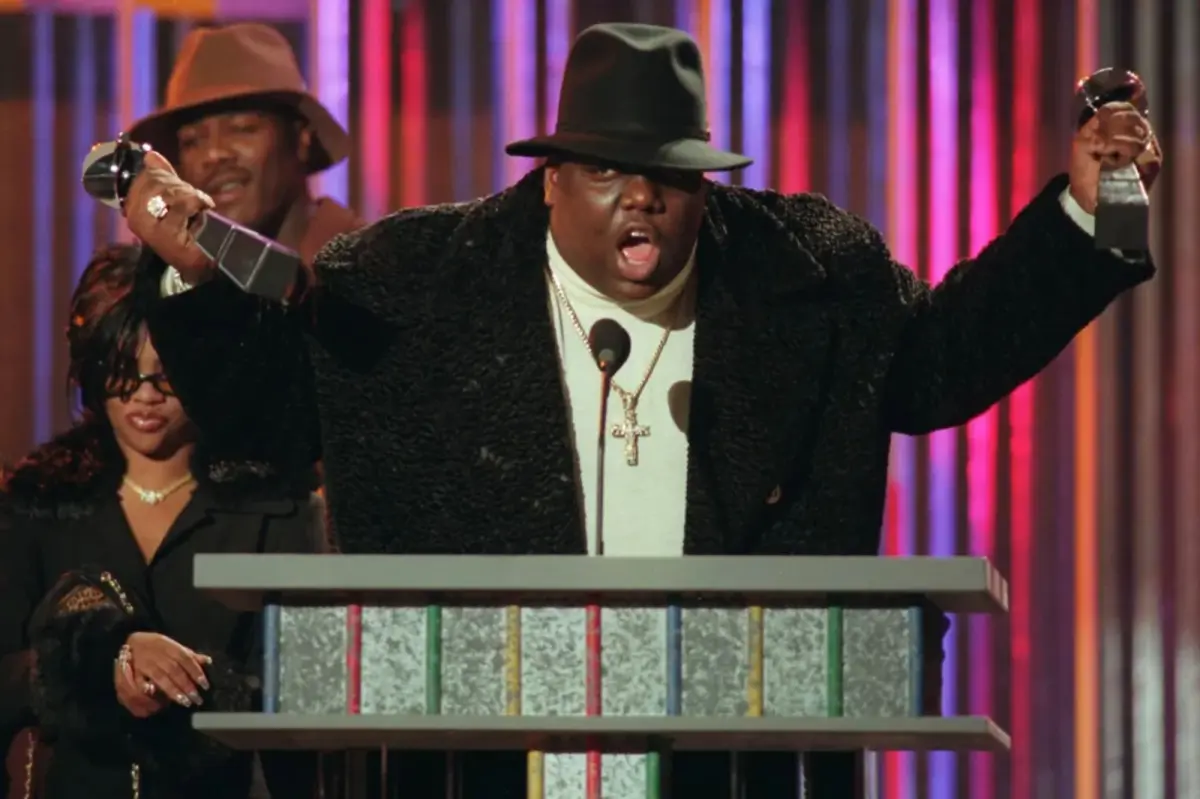
Christopher Wallace, the Brooklyn-born rapper known worldwide as Biggie, was fatally shot in a drive-by attack in Los Angeles on March 9, 1997. His killing has long been viewed by many as retaliation for Shakur’s death months earlier.
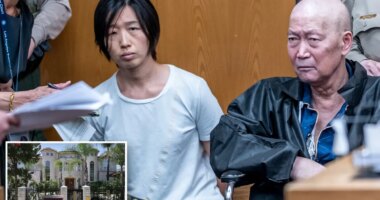
The Shakur case reached a major turning point last week in Las Vegas, where Duane “Keefe D” Davis was found guilty of murder for ordering his cousin, Orlando Lane, to kill the rapper and then handing him the gun.
“The Tupac verdict doesn’t necessarily help solve Biggie’s murder, but it inevitably puts it under an intense microscope,” Justin Tinsley, author of “Biggie and the World that Made Him,” told The Post.
The two killings have long been discussed through the lens of gang rivalries. Shakur was associated with the Bloods, while Biggie’s manager, Sean “Diddy” Combs, has been alleged to have had ties to their rivals, the Crips.
Over the years, theories about Wallace’s killer have ranged widely, including claims involving off-duty LAPD officers and speculation about an associate of Shakur’s manager, Suge Knight, known by a colorful nickname.
But the code of silence around gangland cases has remained difficult to break. Unlike Davis, who described himself as the “shot caller” in Shakur’s murder in a book, few people are likely to publicly implicate themselves. Nearly three decades after Biggie was killed, no one has been charged.
“What separates the two cases is that Biggie does not have a central figure who put himself inside the story [like] Keefe D,” Tinsley said. “The police need somebody to corroborate evidence. Biggie needs his Keefe D moment.”
Somewhat ironically, Davis — who was a leader in the Crips — had his first brush with law enforcement when he was hauled in by the LAPD and questioned about Wallace’s shooting.
That drive-by took place outside the Petersen Automotive Museum on Wilshire Boulevard where Wallace had just attended a party. A Chevrolet pulled up alongside the GMC Suburban he was riding in and opened fire. Like Shakur, he was hit with four bullets.
Former LAPD detective Greg Kading, who investigated both the murders of Wallace and Shakur said he and others from the LAPD interviewed a woman, who was given the pseudonym “Theresa Swan.”
She told law enforcers about receiving orders to get an associate named Wardell “Poochie” Fouse to kill Biggie, who was traveling in a three-car caravan and had security with him when he was shot, after receiving threats warning him not to come to Los Angeles.
“Theresa goes and meets with Poochie,” Kading, who authored the book “Murder Rap,” told The Post. “They agreed on the amount of money Poochie was expecting; money was gotten to the girl and she paid him. Then the lone gunman, driving a green Impala, pulled up alongside Biggie and shot him.”
But that’s just one of many accounts. Randall Sullivan, in his books “Labyrinth” and the follow-up “Dead Wrong,” made a case that members of the LAPD — some of whom were alleged to be on the payroll of Knight’s Death Row Records label — had a hand in it.
“The most likely theory, which has not been proven to an absolute certainty … is that police officers working for Suge Knight coordinated the murder, with the actual assassin being a [hired] hit man – who had spent many years in prison for armed robbery,” Sullivan told The Post.
“It was made known that Combs was wanted dead, and Biggie was his biggest star. The hitman couldn’t get Diddy [who was in one of the other cars], so he got Biggie.”
Knight has never been officially named a suspect or implicated in Wallace’s murder, despite prosecutors suggesting he was, during the Shakur trial. He is presently in prison for an unrelated manslaughter.
In 2002, the year Sullivan’s book was published, members of Wallace’s family sued the city of Los Angeles and members of the LAPD. “It was going to be a billion-dollar wrongful death lawsuit,” he said of the legal action, which charged not enough was done to prevent Biggie’s death.
Perry R. Sanders, Jr., who represented Wallace’s late mother, Voletta Wallace, told The Post their suit against the LAPD went to court, but did not reach completion.
“Evidence was found in the lead detective’s desk drawer that indeed implicated police involvement,” Sanders told The Post, speaking of Biggie’s murder. “The judge ended up declaring a mistrial, making them pay seven figures in attorney fees.”
In 2007, another suit was filed which contended former police officers were involved in the shooting, but that case was dismissed.
Alleged gunman Poochie — also killed in a drive-by in 2003 — may not be a household name for most, but in Compton’s gang scene he was a well-known figure.
Recalling seeing him in the recording studio, singer Danny Boy said: “It was kind of eerie when Poochie came around.
“Do I believe that man was a killer? Hell, yeah. He was definitely a killer. He looked like it. He felt like it. You felt it when he came into the room,” he said on “The Art of Dialogue” YouTube series.
Kading, Tinsley and Sullivan agree that it is unlikely the murder of Wallace was a one-man operation.
“To kill somebody like Biggie [who had Crips bodyguards] you would need what is called a spotter,” said Tinsley. “Someone to tell you where he is, which car he’s in, what street they are turning down. I don’t think there’s any way you can pull off something like that without it being a joint effort.”
Tantalizingly, this means that, even if the gunslinger himself is no longer alive, there can be someone walking around who knows the particulars of Wallace’s killing — and maybe took part in it.
Some of the more conspiratorial thinking about the murder has even suggested Diddy, whose car was right in front of the one transporting Biggie, knows more than he’s let on.
In “Diddy: The Making of a Bad Boy,” Gene Deal, a former bodyguard to Diddy, addressed rumors about his boss. “Did he directly have something to do with it? He could have … The week [in] which Biggie was murdered he was acting real anxious and trying to get Big at this party,” Deal said in the documentary.
“And [what] was crazy was, Big was telling people he had to be in London. But Puff was telling people, ‘He ain’t going to London’ that whole week.’”
However, Deal didn’t offer any explanation as to why Diddy would have any reason to be involved in the death of his most famous and profitable star, who was also one of his closest friends. Diddy has explicitly denied any involvement, issuing a statement saying: “I was not involved in the murder of Christopher Wallace [Biggie Smalls].”
Diddy is currently in prison on prostitution-related charges, his team did not respond to a request for comment from The Post.
Kading hopes there will be a death-bed confession, or a resetting of someone’s conscience, or maybe a criminal arrested who realizes his knowledge of an old case is more valuable than he thought.
“There’s going to have to be some rock-hard evidence brought forward,” said Tinsley. “But the encouraging thing about the Tupac verdict is that it proves these cases are never too old to pursue.
“I don’t know how it’s going to happen; I don’t know when it’s going to happen; but I think there is somebody out there who’s going to talk. Then the dominoes will fall.”