Share this @internewscast.com
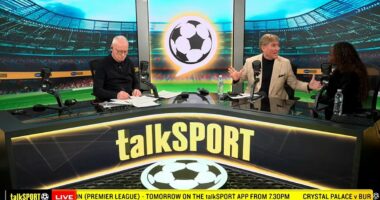
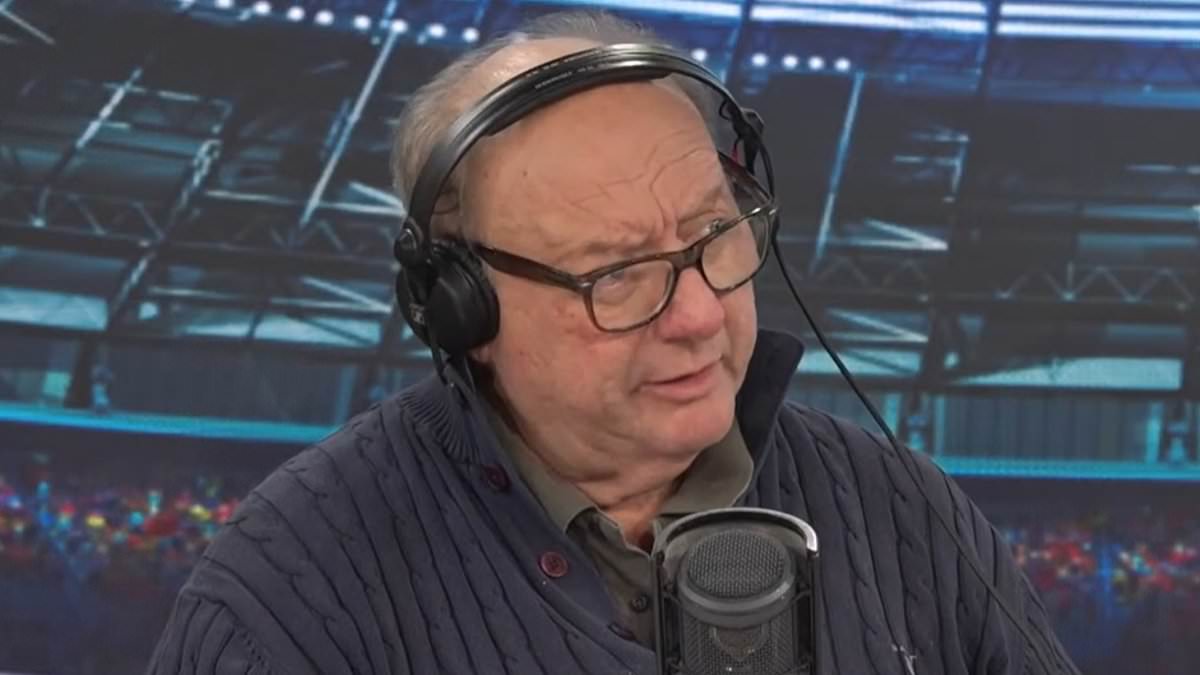
Alan Brazil, a beloved voice on talkSPORT, will be absent from his upcoming show due to ongoing health issues, as confirmed by the radio station.
The 66-year-old broadcaster, who has been a fixture on the airwaves, had to unexpectedly leave his breakfast show last Thursday. He was co-hosting with Gabriel Agbonlahor when he began to feel unwell during the live broadcast.
Agbonlahor, a former Aston Villa forward, noted that Brazil was “feeling a bit poorly” when he started their early morning show at 6am. As a result, Katie Shanahan stepped in to finish the program.
In an update, talkSPORT revealed that Brazil, a former Manchester United and Scotland player, continues to experience health issues and remains unable to return to his duties. Steve Bruce will temporarily fill his role on Wednesday while Brazil recuperates.
Last week, Brazil shared that he suspects an “ear infection” might be the source of his discomfort, though one of his daughters speculated it could be a severe migraine. Despite his health concerns, Brazil maintained his humor, joking, “It’s funny as it’s often when Gabby is on with me!” He assured listeners he would return to the breakfast show next week, with just six weeks left until Cheltenham.

Alan Brazil will miss his talkSPORT show on Wednesday morning because he still feels unwell

Brazil was replaced mid-broadcast by Katie Shanahan last week and has not been on air since
‘It’s funny as it’s often when Gabby is on with me!’ he quipped. ‘I will be back on Breakfast next week. Just six weeks to go until Cheltenham!’
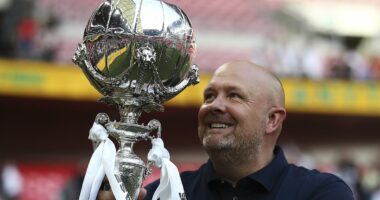
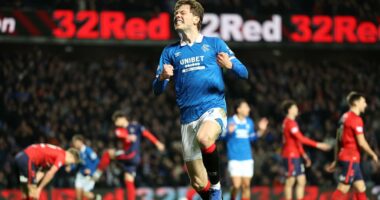
United legend Bruce, will be joined by Ally McCoist on Wednesday morning. Rangers legend McCoist will then be on the breakfast show with Agbonlahor on Thursday, while Ray Parlour and Aherne will be on Friday’s slot.
Aherne and Parlour gave listeners an update on Brazil’s condition last Thursday.
Opening the programme, Aherne said: ‘Poor Al, he took the dizzies yesterday,’ to which Parlour joked: ‘Too many bourbons, I heard!’
Aherne replied: ‘Yeah, too much sugar! Is it true that he spent the rest of the show – while Katie did the show – lying on the couch? Apparently he did.’
Former England international Parlour added: ‘I hope he’s alright, Alan. He was getting dizzy last week when I was here. The lights are making him go dizzy, so if we go dizzy later and say “oh we don’t feel too good” then turn the lights down for God’s sake.’
Aherne then reassured listeners Brazil was recovering, saying: ‘We are sending our love to Al, he is absolutely fine, he’s doing well.’
Brazil has presented the Breakfast show since the radio station launched in 2000, cutting back his hours in 2020.

The former Scotland player has presented the Breakfast show since the radio station launched
In 2004 he was famously dismissed from the station after failing to turn up for his show following a day out at the Cheltenham Festival, but was back on air soon after.
Five years ago he was forced to take a break while he had a heart operation and said before his return: ‘I had a little problem, whether it was Covid related or, I don’t know, fast living catching up with me, but I ended up in a couple of hospitals. I had a little sort out in the old ticker but I’m pleased to say I’m on the mend.’
In 2024 he laughed off suggestions that overindulging at the Cheltenham Festival had caused him to miss another show, saying: ‘There was no massive drinks bender. I was just tired after coming down here on Sunday. It’s been a long week.
‘Also my knee is playing up after a lot of walking about. There’s a lot of walking about needs done here with so many people to meet.
‘It’s not Covid or anything. I just meet so many people in this job – especially here at Cheltenham. So I just got a bug that’s all and it just wears you down for this which is a long week.
‘So the bottom line is that I am fine – I’m really good. Tales that I was drinking too much yesterday are just a load of nonsense, a load of nonsense, a load of nonsense. It’s got nothing to do with booze. I just had a few pints of Guinness yesterday with some great company. I’m fine, apart from this limp.
‘It’s not bad publicity. I missed a day and it is my fault. I don’t have to say sorry to the bosses. I’m not saying I’m too big for that (saying sorry). I’m not too big to say sorry to the bosses.’
Later that year he had to make an early exit from a special live broadcast of the show in Suffolk on his birthday due to what a talkSPORT colleague described as a ’48hr virus’.
The former forward started his football career at Ipswich Town in 1976 and later had spells at Tottenham and Man United in the 1980s. He won 13 caps for Scotland – representing them at the 1982 World Cup in Spain – but struggled with back issues towards the end of his career.