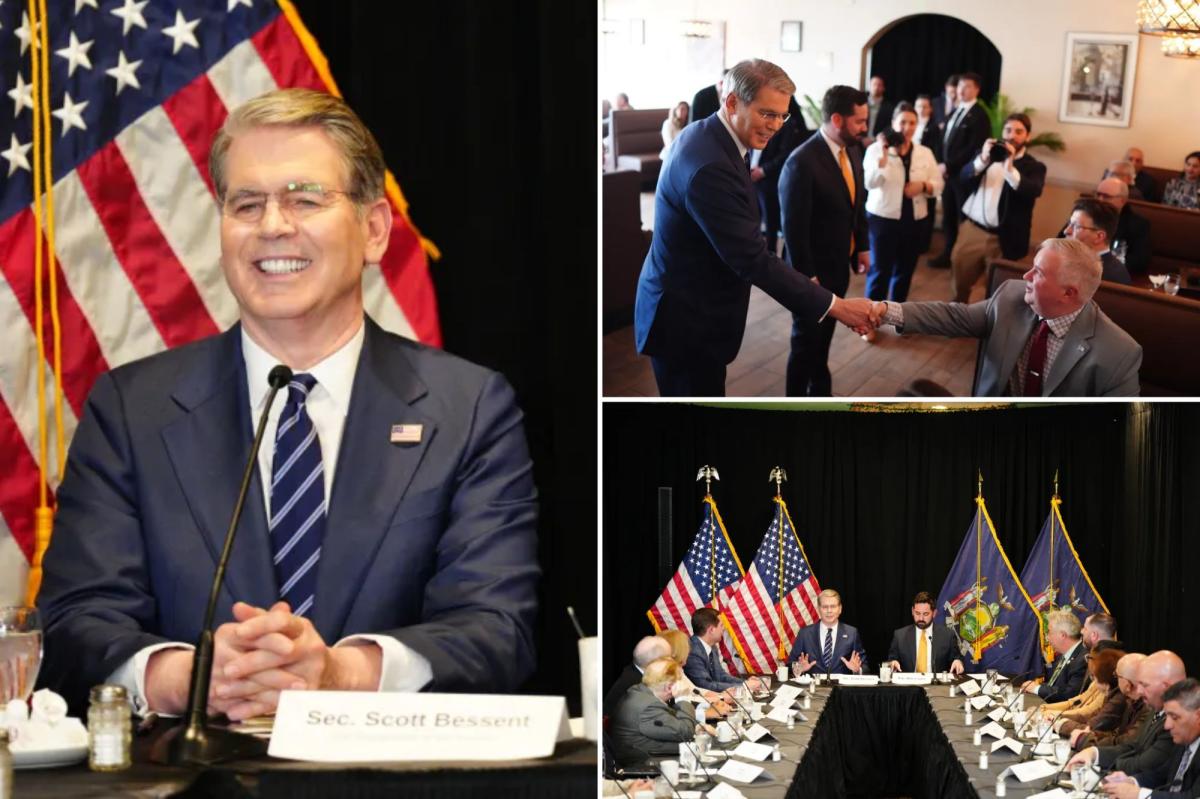


JEFFERSON VALLEY, N.Y. — Treasury Secretary Scott Bessent highlighted the Trump administration’s tax policy Friday, focusing on deductions for tipped wages and overtime pay that have benefitted nearly 30 million Americans.
The initiatives, known as “No Tax on Tips” and “No Tax on Overtime” deductions, are key elements of President Trump’s One Big Beautiful Bill Act (OBBBA). This legislation also reduced taxes on vehicle loan interest, increased standard deductions, and local tax deductions, offering substantial relief for businesses and seniors.
Speaking to small business owners in the Hudson Valley alongside Rep. Mike Lawler (R-NY), Bessent shared that 5.7 million individuals have capitalized on the “No Tax on Tips” deduction.
Additionally, Bessent noted that 23 million people have utilized the “No Tax on Overtime” deduction, describing it as the most significant change.
The latest statistics, which show growth from the 24.6 million reported last month, come just in time for the April 15 tax filing deadline.
During the event, community members from both political parties applauded the tax cuts initiated by Trump and Lawler’s efforts to increase the state and local tax (SALT) deduction cap.
Raj Aman, who runs a bar attached to a golf course in Yorktown, N.Y., said “No Tax on Tips” has encouraged more people to jump into the workforce.
“Three years ago, I couldn’t get any servers or bartenders,” Aman explained. “This year, we have people calling us that said, ‘Do you have a job opening?’ And we’ve already, for the start of the season of the golf course, we’ve already interviewed over 85 people from zero.”
“So basically, everybody wants their tips not being taxed,” Aman said. “They’re making a lot more money than they would ever imagine.”
Brendel Logan-Charles, deputy supervisor of neighboring Ramapo, and a Democrat, argued the success of the tax cuts should serve as a wake-up call for her party.
“Congressman, thank you,” she told Lawler. “Thank you. Thank you for always doing the work. Thank you for bringing the secretary here. This is a great day for us, and I will continue to support and tell my Democratic colleagues they need to get it together.”
Claire Kerrigan, a bartender at AJ’s Bar and Grill, said that the tax cuts were “great” because she wouldn’t have to put her dough aside and could now “spend it.”
“I’m not going to be putting it aside, like, ‘Oh, I have to pay my property taxes with it,’ or, something like that. It’s really, truly a big help,” Kerrigan said.
Sergio Esposito, former president of the Yorktown Chamber of Commerce and current town councilman and deputy supervisor, argued that the full effects of the tax cuts have yet to be felt.
“There’s going to be more money out there. People are going to be out there. They’re going to be spending more. They might go out to dinner an extra time or two. They might go out and buy something that they ordinarily couldn’t afford,” Esposito said.
“I am telling you this is going to be a really, really big Black Friday coming up,” he added.
Bessent and Lawler started their day touring the Regeneron Pharmaceuticals plant in Tarrytown, the “crown jewel” of the district, according to the congressman.
“What we saw there is exactly what strong pro-growth economic policy looks like in action, world class innovation, cutting-edge research, and hundreds and thousands of high-paying jobs right here in our own backyard,” Lawler said.
Lawler and Bessent said the tax cuts would help grow the economy, and used Regeneron as a local example.
“Thanks to the Working Families Tax Cut Act companies like Regeneron can immediately expense their R and D costs and take full advantage of bonus depreciation, which means they can hire more scientists, technicians and skilled workers, while keeping their operations here in America instead of shipping jobs overseas,” Lawler explained.
Bessent added that he was “encouraged to hear from the people of Regeneron that they are going to be creating new jobs here in New York,“ noting this was a trend he’s been seeing happening nationwide.
“We’re seeing an extra $100 billion in deductions for tens of thousands of big businesses and small businesses,” Bessent said.
The Treasury secretary also lauded the administration’s new Trump accounts for children, which will create investment accounts for children born during the president’s second term and seed them with $1,000 that compounds until the time a child is 18 years old.
“I think that this is the most important thing that we are doing for young people since the GI Bill,” Bessent said.