
Share this @internewscast.com
In a worrying trend, incidents of robbery on Britain’s public transport have surged by a staggering 136 percent since the pre-Covid era, igniting concerns over a potential ‘crime wave’ sweeping across the nation’s transit systems.
Recent figures released from the House of Commons Library reveal a significant rise in robberies reported to the British Transport Police, with cases escalating from 705 in 2018/19 to 1,663 in 2024/25.
During this same timeframe, theft-related crimes have also seen a notable uptick, increasing by 32 percent from 28,193 to 37,172 incidents. Additionally, hate crime occurrences have risen by 30 percent, jumping from 3,558 to 4,626 cases.
Sexual offences have not been exempt from this upward trend, climbing 17 percent from 1,894 reported incidents in 2018/19 to 2,220 in 2024/25. Conversely, harassment cases have experienced a slight decline, dropping by 8 percent from 145 to 134.
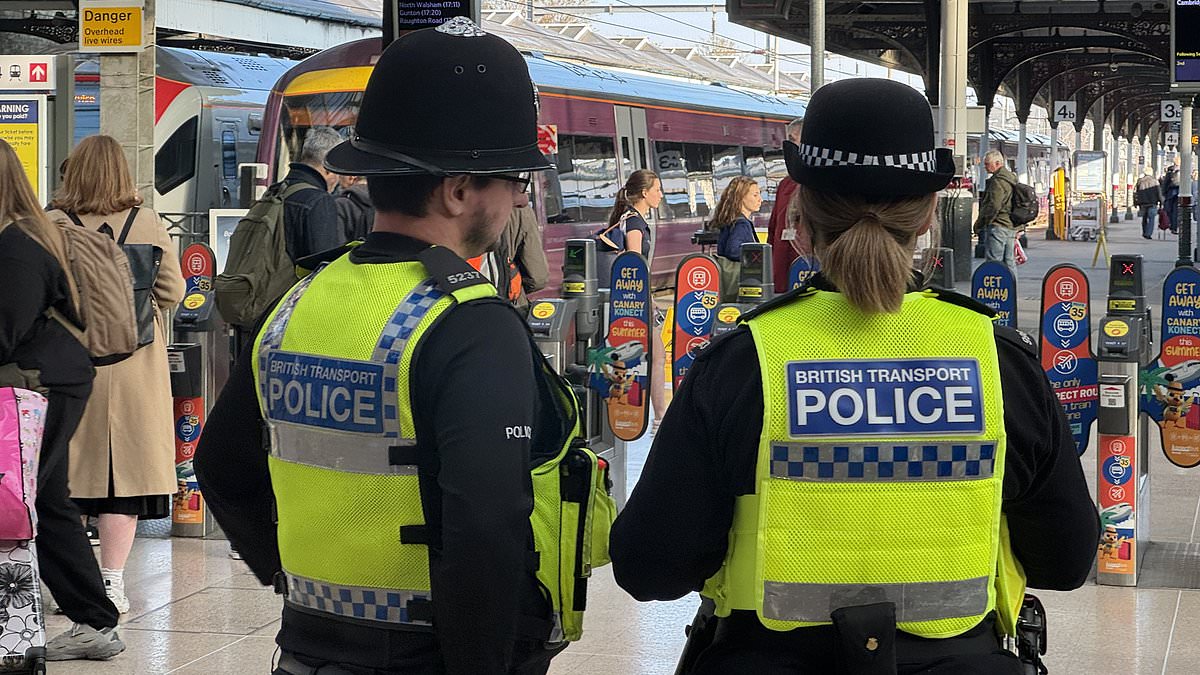
The Liberal Democrats, who conducted an analysis of this data, are urging the government to take decisive action by increasing the presence of police officers on public transport. They argue that such measures are crucial to tackling the ‘utterly shocking’ levels of crime currently plaguing the network.
In support of their call to action, they reference past studies conducted by the University of Cambridge in collaboration with the British Transport Police. These studies demonstrated that brief, targeted patrolling at high-crime London Underground stations could lead to a notable 28 percent reduction in reported criminal activities.
The study found that 97 per cent of the resulting crime reduction was during periods when police weren’t actually present.
Researchers pointed to a ‘phantom effect’ created by the 15-minute patrols occurring four times a day.

Data from the House of Commons Library showed there were 1,663 cases of robbery recorded by British Transport Police in 2024/25 – up from 705 in 2018/19
Lib Dem MP Max Wilkinson, the party’s home affairs spokesman, said: ‘The scale of crime happening every day on our public transport system is utterly shocking.
‘Whether it’s children heading to school on the bus or commuters travelling to work on the train, nobody should be forced to worry about having their phone stolen, being threatened or facing abuse.
‘The Government needs to get a grip on this crisis and restore order across the network.
‘The solution is obvious – more police regularly patrolling public transport. Sadly, the Government is dragging its heels and too many people are suffering as a result.’
Olly Glover MP, the party’s transport spokesman, added: ‘We need to bring an end to this epidemic now, and restore people’s faith in the safety of our buses, train stations and trams.’
British Transport Police, who police Britain’s railways, recorded 26 crimes per million passenger journeys across 2024/25.
A spokesman said: ‘It’s important to contextualise that the chance of being a victim of crime on the railway is extremely low, and the vast majority of journeys are made without incident.
‘Robbery rates have fallen for a second consecutive year on the network in London following targeted and intensified police activity – decreasing by a significant 35 per cent over two years in the winter months when robbery rates are typically at their highest.
‘We also know an increase in sexual offence reports over the years is partly down to our increased efforts to raise awareness of the behaviour we want to hear about and how to report it.
‘More victims are having the confidence to report this type of offending to us, knowing they will be believed and taken seriously.
‘Every day we have teams of officers patrolling stations and trains in plain clothes, so whether you see us or not, we are there keeping everyone on the railway safe.
‘Passengers are urged to report all crime to us by texting 61016, or calling 999 in an emergency.’
A Department for Transport spokesman said: ‘Everyone has the right to travel without fear.
‘That’s why the British Transport Police’s budget is being boosted by 15 per cent over the next three years to recruit over 200 extra officers and build on the fact more than eight in ten passengers currently tell us they feel safe travelling by train.
‘On top of this, the rate of crime on the railways fell again last year by 3 per cent, despite a 7 per cent increase in passenger journeys.’