Beneath Los Angeles, thousands of miles of aging water pipes — some dating back more than a century — are quietly deteriorating, raising fears that another major water main break could strike with little warning.
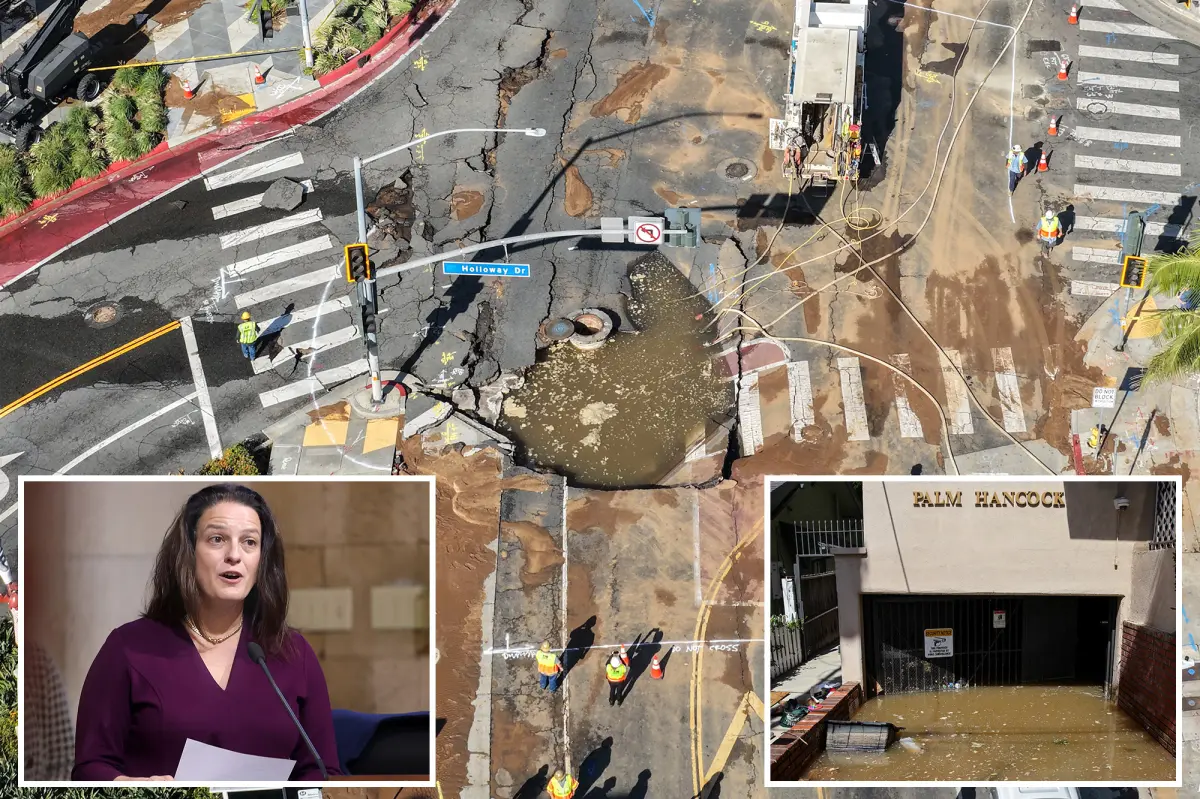
This week’s powerful rupture under Sunset Boulevard has intensified concerns that Los Angeles’ aging infrastructure is being pushed dangerously close to failure.
The break unleashed an estimated 17 million gallons of water across West Hollywood, flooding streets and leaving behind damage to homes, vehicles and local businesses.
City officials say more disasters like this are likely unless Los Angeles finally confronts decades of postponed repairs and infrastructure upgrades.
“For 50 years we’ve effectively been kicking the can down the road on maintenance, deferring and deferring until everything is breaking,” Councilmember Katy Yaroslavsky told The California Post.
Los Angeles has roughly 7,400 miles of water pipes running beneath its streets, and about 30% of that system is more than 80 years old, according to the Los Angeles Department of Water and Power.
Yaroslavsky, who chairs the City Council’s Budget and Finance Committee and helps oversee the city’s approximately $15 billion annual budget, has repeatedly argued that Los Angeles must prioritize aging infrastructure before routine maintenance issues turn into expensive emergencies.
The Sunset Boulevard water main break involved a 36-inch riveted steel trunk line installed in 1916 — when Woodrow Wilson was still president of the United States.
“Our infrastructure just isn’t built for what we’re facing, and it’s old,” Yaroslavsky added.
LADWP replaces about 45 miles of aging pipeline each year, but with thousands of miles still in service, officials acknowledge it will take decades to modernize the entire system.
LADWP earmarked $803.8 million in its 2026-27 budget to modernize its aging water system, including $590.1 million to replace deteriorating water mains and $213.7 million for repairs and maintenance. LADWP responds to three or four water main breaks per day, according to its website.
The city also faces an estimated $4 billion backlog to repair crumbling streets and sidewalks, along with another $2 billion needed to modernize its aging sewer network after decades of deferred maintenance.
“The DWP water main break is just one example of a much larger infrastructure problem that we have to address. It’s mostly Band-Aids right now instead of a comprehensive, proactive fix,” Yaroslavsky said.
ALSO READ: Lindsay Shiver Threatens to Sue Bahamas Police Over Investigation
“We’ve got tens of billions of dollars in deferred maintenance across streets, sidewalks, parks, sewers and storm drains, all while we’re spending huge sums on settlements after failures occur.”
Yaroslavsky argues Los Angeles’ current budgeting process makes long-term fixes difficult.
That’s why City Hall is asking voters to approve a sweeping Charter amendment in November that supporters say would overhaul how Los Angeles plans and pays for major infrastructure projects.
Mayor Karen Bass has championed the effort, arguing the city must end its “ad hoc” approach to maintaining roads, pipes and other public assets.
The measure would require Los Angeles to adopt a long-term capital infrastructure plan, move to a two-year budget cycle, streamline parts of Public Works and modernize contracting rules that supporters say have slowed projects and driven up costs.
The current failing infrastructure is costing the city in more ways than one.
The Los Angeles City Council recently approved a $20 million settlement after a 13-year-old Boyle Heights kid lost part of his leg when he was struck by a motorcycle while crossing in a marked crosswalk.
The lawsuit argued Los Angeles failed to address longstanding safety hazards at the intersection. After the crash, the city installed a pedestrian-activated traffic signal.
The city has paid more than $194 million to settle thousands of claims involving dangerous street conditions in the last six years, according to the City Controller’s liability claims dashboard.
Download The California Post App, follow us on social, and subscribe to our newsletters
An aging water main beneath Sunset Boulevard burst in 2014, unleashing up to 10 million gallons of water across UCLA, flooding Pauley Pavilion, parking garages and nearby buildings, damaging more than 100 vehicles and causing over $13 million in losses.
Just two days later, another aging water main burst in Eagle Rock while crews were still cleaning up the UCLA flood, underscoring the growing strain on Los Angeles’ aging water system. Another water main ruptured at Sunset Boulevard and Gower Street, flooding Hollywood streets in November 2025.
“We need a real capital infrastructure plan that actually gets funded, contracting reform so we’re not overpaying, and long-term funding that allows us to fix the places most at risk before they fail,” Yaroslavsky added.
“This isn’t rocket science. It’s coming up with a plan, putting money aside every year and being disciplined about it. That’s how you restore people’s faith in government, when people experience a city that actually works.”


