
Share this @internewscast.com
Today, Labour faced criticism for allegedly fostering a “jobless generation,” as recent statistics revealed that nearly one in six young adults are unemployed.
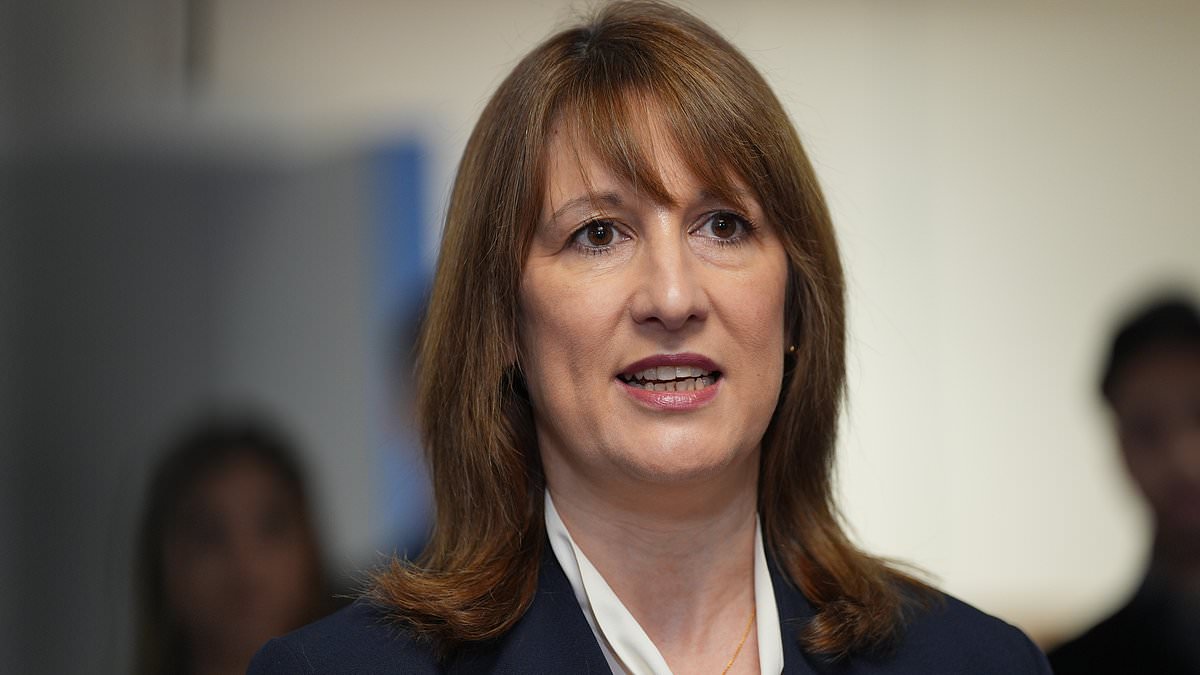
Rachel Reeves is under increased scrutiny concerning her economic strategies, following a rise in overall unemployment, which has hit a five-year peak at 5.2%.
Amongst this, the unemployment rate for individuals aged 16 to 24 climbed to 16.1% in the final quarter of 2025, marking the highest level since early 2015, as reported by the Office for National Statistics.
According to the Resolution Foundation, the UK’s youth unemployment has surpassed the EU average for the first time since records began in 2000, with Europe’s rate at 14.9% during the last quarter of the previous year.
This data adds to the growing evidence of economic stagnation, following last week’s weak GDP figures that indicated the economy is barely moving, suggesting Britain could be facing its “most dismal decade” in a century.
Andrew Griffith, the Conservative shadow business secretary, commented: “These figures highlight the effects of a ‘zombie government’ lacking a growth strategy.”
‘Labour’s Jobs Tax, economic uncertainty and their red tape Employment Rights Bill are holding back hiring, creating a jobless generation.’

Tory shadow business secretary Andrew Griffith said: ‘These figures show the impact of a ‘zombie government’ with no plan for growth

Rachel Reeves is facing renewed pressure over Labour’s economic plans today after unemployment rose to a five year high
Louise Murphy, senior economist at the Resolution Foundation, said: “We must urgently turn our attention to the UK’s unemployment problems.
“At the end of last year almost one-in-six young people who wanted to work couldn’t find a job. Unemployment risks climbing even further in 2026.”
“Getting youth unemployment down in this country – along with the share of young people who aren’t in education or training either – must be a top priority for 2026,” she added.
The weakened jobs market has seen sectors such as retail and hospitality come under particular strain after the Government hiked national insurance contributions and pushed through above-inflation increases in the minimum wage, with some companies cutting jobs and slowing hiring in response.
The headline rate of UK unemployment in December, up from 5.1 per cent in the three months to November, was the highest since the three months to January 2021 and the highest for over a decade outside of the pandemic era.
Most economists had expected unemployment to remain at 5.1 per cent in the latest quarter.
The number of people on payrolls also fell by 134,000 in the past year, the figures showed.
The ONS added that regular wage growth fell back once again, to 4.2 per cent in the three months to December, against a downwardly-revised 4.4 per cent in the three months to November, and was 0.8 per cent higher after taking Consumer Prices Index inflation into account.
The figures showed the wage growth rate in the public sector was more than double that of the private sector, 7.2 per cent versus 3.4 per cent.
But there was a welcome increase in vacancies, up by 2,000 quarter-on-quarter to 726,000 in the three months to January.
Liz McKeown, ONS director of economic statistics, said the data showed ‘more people who were out of work are now actively looking for a job’.
She added: ‘The number of vacancies has remained broadly stable since the middle of last year.
‘Alongside rising unemployment this means that the number of unemployed people per vacancy has increased, reaching a new post-pandemic high.
‘Meanwhile, redundancies are also showing an upward trend.’
The Government is ‘taking active measures’ to get more people into work, a minister has said in response to the figures.
Stephen Kinnock, a health minister, told Times Radio: ‘We know that we had the best growth of all the G7 European countries last year, and on unemployment, I think we’ve seen something like 440,000 new jobs created in the economy.’
Pointing to investment in apprenticeships and other schemes to get people back into work, he added: ‘We’re taking active measures to get more people back into work.
‘But of course, there’s still a long way to go, given the appalling economic inheritance that we got in July 2024.’
Last week the ONS said gross domestic product increased by just 0.1 per cent in the final quarter of last year and 1.3 per cent for 2025 as a whole.
Economists said it showed Britain was firmly stuck in the slow lane – a far cry from the Chancellor’s claim that it was about to turn a corner.
The Government’s tax rises, steep minimum wage increase, botched business rates reform and workers’ rights rules are blamed for crushing business.
Former Bank of England rate-setter Andrew Sentance said the private sector was being ‘clobbered’ and the latest figures were ‘pretty compelling evidence that UK Government policies are not generating economic growth’.