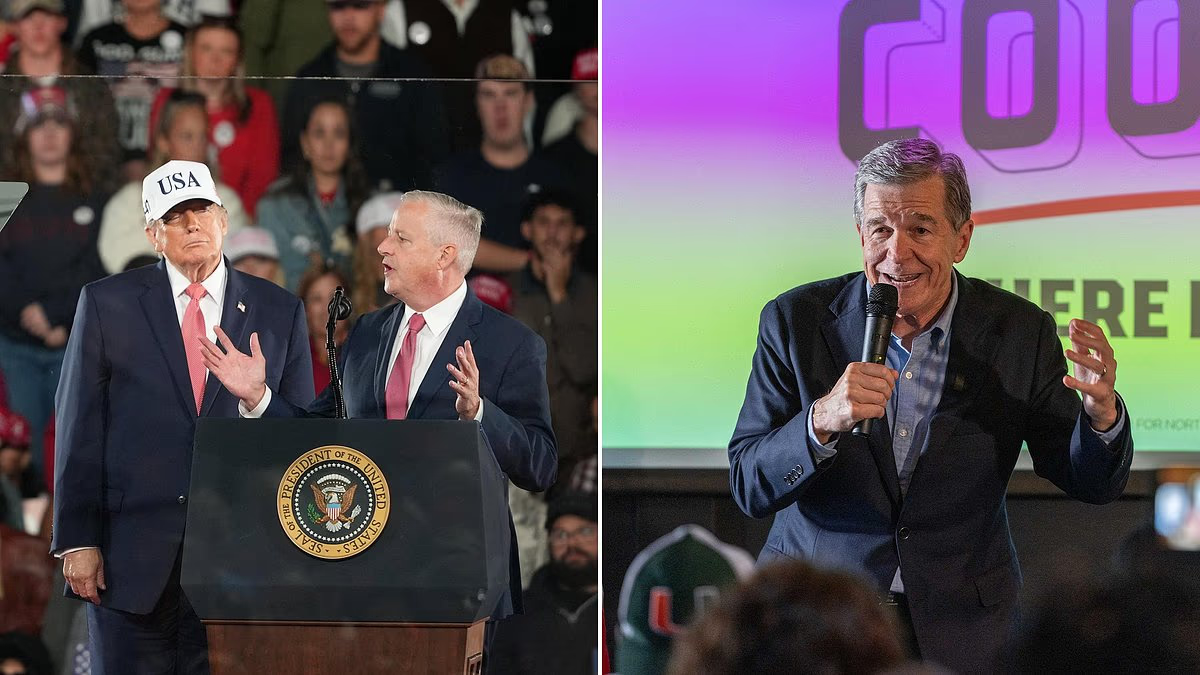

Former two-term Gov. Roy Cooper scored an early Democratic victory in North Carolina’s Senate race Tuesday, defeating former Republican National Committee Chairman Michael Whatley in a state Donald Trump carried three times.
The result marked the first major midterm win for Democrats, who have been buoyed by an early wave of momentum.
The Associated Press called the race for Cooper at 8:23 p.m., less than an hour after polls closed across North Carolina.
Cooper, who becomes the first Democrat elected to the U.S. Senate from North Carolina since 2008, built his campaign around the slogan “Make stuff cost less.”
The message resonated with voters in North Carolina and nationwide, where concerns over the economy and the rising cost of living featured prominently in exit polls.
Cooper took the stage at his Raleigh victory party shortly after the race was called, greeted by a jubilant crowd chanting, “Cooper! Cooper! Cooper!”
“Tonight,” Cooper said, “we told Washington loud and clear that North Carolinians will always matter more than the billionaires and the insiders.”
“I am still a prisoner of hope,” Cooper added, saying the results showed voters were ready for a change in direction.

Supporters of Democratic U.S. Senate candidate and former North Carolina Gov. Roy Cooper celebrate after his election to the Senate

Cooper fist-bumps a supporter’s child in North Carolina. He is the first Democrat to win a Senate race in the state since 2008

North Carolina Republican Senate candidate Michael Whatley, right, kisses his wife, Suzanne, after speaking at his election night party. Whatley conceded at around 9 p.m.
Cooper pledged to serve as an “independent voice” for North Carolina. He said his campaign focused on people struggling with higher costs, including expenses tied to Trump’s tariffs and rising prices for gas, diesel and fertilizer “because of this never-ending war.”
Whatley conceded at about 9 p.m., telling supporters, “While the results today are not what we’ve been working for, my commitment to you in this great state remains as strong as ever.”
“I will never stop fighting for North Carolina.”
Cooper’s victory leaves Democrats three seats short of a Senate majority. The balance of power will depend on contests in Texas, Ohio, Maine, Michigan and Alaska.
Tuesday’s outcome confirmed a result that pollsters and political advertisers had forecast for weeks.
Cooper held a nine-point advantage over Whatley in the final days of the campaign. His lead remained close to double digits so consistently that both parties stopped spending on advertising during the race’s closing weeks.
Fundraising further separated the candidates. Cooper reported roughly $20 million in contributions during the campaign’s third quarter, according to campaign data, far exceeding the approximately $2 million Whatley raised over the same period.
Despite his close relationship with Trump, Whatley struggled to connect with North Carolina voters. Trump visited the state several times during the final stretch to campaign on his friend’s behalf.
Those efforts ultimately failed to change the outcome.
Outgoing Republican Sen. Thom Tillis also used his position to level unusually sharp criticism at Trump during his final term, setting himself apart from many of his Republican colleagues in the Senate.

Cooper speaks during a campaign stop at Sugar Creek Brewing in Charlotte, North Carolina, as part of his “Make Stuff Cost Less” tour

Michael Whatley, the Republican Senate candidate in North Carolina, suffered a decisive defeat

Whatley speaks at an election night gathering in Gastonia, North Carolina
Tillis voted against Trump’s signature tax-and-spending package, criticized the president’s foreign policy and called Trump’s proposed summit with Russian President Vladimir Putin and Chinese President Xi Jinping “absurd.” He also said voting to confirm Defense Secretary Pete Hegseth was the “biggest regret of my career.”
Tillis’s criticism was even more pointed in his book, where he described Trump as a “snowflake” with “thinner skin than I once thought he did.”

Voters cast ballots at a polling station in Alaska during the 2026 midterm elections
Join the discussion
What does North Carolina’s shift toward Democrats signal about the future of American politics?
Tillis appeared to recognize the political headwinds in the weeks leading up to the election.
The retiring Republican said the party likely needed a more moderate nominee, arguing that Whatley’s background as a partisan operative made it harder to win over unaffiliated voters.
“Anybody with a brain should know we only win if we get enough undecided, unaffiliated voters our way,” Tillis told Politico.


