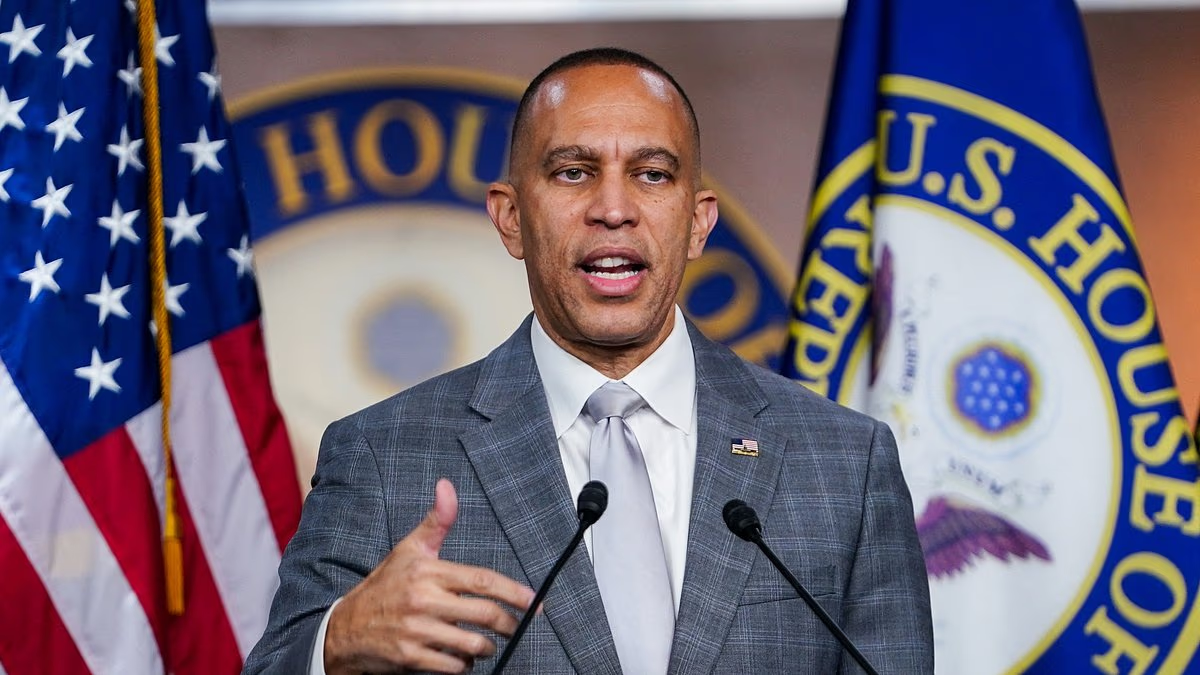

House Democratic Leader Hakeem Jeffries overcame a potential challenge from the party’s progressive wing Wednesday, winning the Democratic nomination for speaker and drawing support from some of his most outspoken critics as he prepares to lead a broad and ideologically varied caucus.
Jeffries prevailed in a secret-ballot vote by 251 to 11, with two members not voting.
Seven members-elect—Darializa Avila Chevalier, Adam Hamawy, Fredrick Haynes, Melat Kiros, Donavan McKinney, Chris Rabb and Claire Valdez—voted against him.
The incoming group of progressive lawmakers also pressed Jeffries to embrace a sweeping agenda that includes Medicare for All, tighter restrictions on ICE, campaign finance changes and an end to the war in Gaza. They argued that voters sent them to Washington with a mandate to pursue those priorities.
If he wins the full House vote in January, Jeffries would become the first Black speaker in American history. He would lead Democrats after years in the minority as the party works to turn its election victory into an effective governing majority.
Jeffries had faced criticism from progressives who viewed him as too cautious in challenging President Donald Trump. But he entered Wednesday’s leadership vote without an opponent after making efforts to win over prominent left-wing lawmakers, including New York Representative Alexandria Ocasio-Cortez.
The result represented a significant show of support for Jeffries, who has spent months managing frustration within the progressive wing over the Trump administration and demands for a clearer break with the Democratic establishment.
Beyond the House Democratic leadership elections, members were confronted by anti-war protesters who questioned and filmed them.

The campaign against Jeffries moved beyond Capitol Hill as activists promoted an online petition calling on Democrats to reject him and protesters disrupted his appearance at a political conference in Denver the previous week.

Jeffries will lead a large and politically diverse Democratic caucus, including new lawmakers who won districts carried by Trump and may be vulnerable at home or reluctant to support the party on every vote.

Progressives such as California Representative Ro Khanna have urged Jeffries to support tougher positions on issues including ending military aid to Israel, reducing defense spending and advancing Medicare for All.
The effort to block Jeffries had expanded beyond Capitol Hill, with activists promoting an online petition against his leadership and protesters interrupting him during a political conference in Denver the week before.
As Jeffries addressed the crowd, hecklers accused him of failing to stand up for ordinary Americans. The protesters were eventually removed from the event.
The confrontation highlighted the lingering frustration on the left, although supporters in the audience drowned out the demonstrators by chanting Jeffries’ name.
A petition urging Democrats to select someone else had collected more than one million signatures, signaling the depth of activist anger toward party leaders they considered disconnected from the Democratic base.
Still, the online opposition did not produce a congressional challenger, and Jeffries ultimately secured backing from across the caucus.
His victory may mark the start of an even more complicated political balancing act.
Jeffries will oversee a caucus that includes a new wave of lawmakers who won in districts carried by Trump. Many of those members face political risks at home and may not be willing to follow the party line on every vote.
The House majority coalition stretches from progressives representing reliably Democratic districts to moderates who prevailed in areas friendly to Trump.
Jeffries must hold that coalition together while responding to progressives seeking a more forceful agenda and protecting swing-district members from votes that could threaten their reelection prospects.


