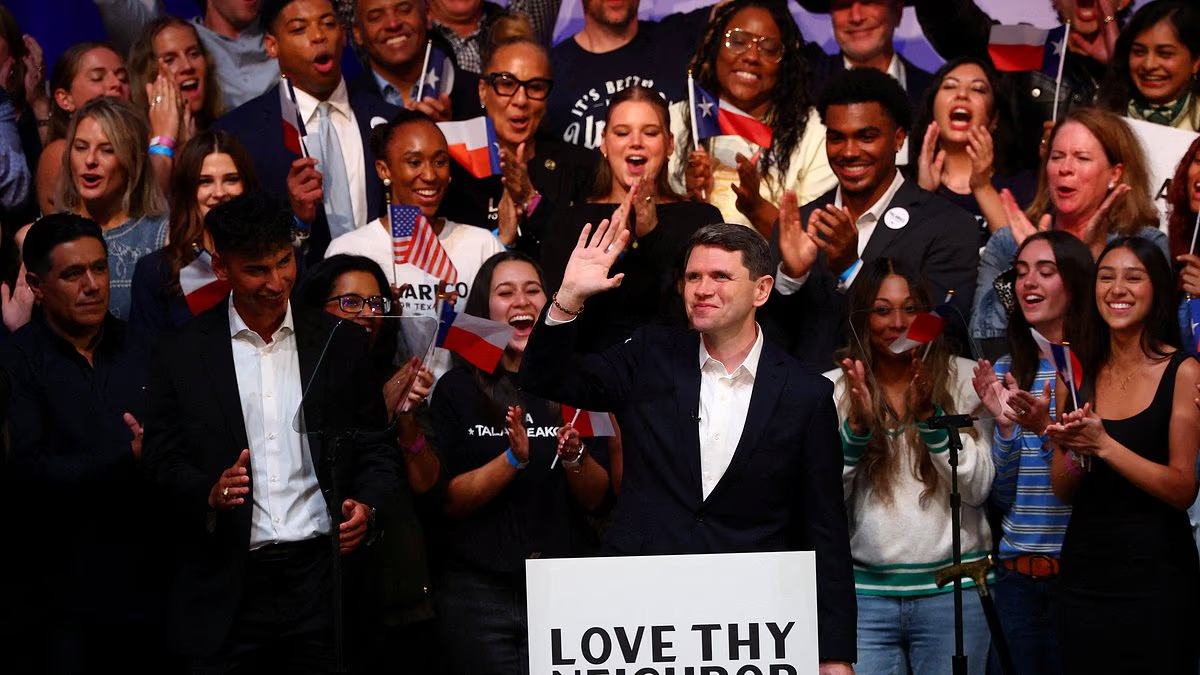

Prediction market Kalshi is celebrating a significant election-night performance after its favored candidates either won or were leading in 98 percent of races during the 2026 midterm elections, as traders placed billions of dollars on the results.
The figures underscore the growing influence of prediction markets during the 2026 election cycle. Traders committed substantial sums to forecasts ranging from control of Congress to the outcomes of individual House and Senate contests.
Kalshi said combined trading volume across its election markets topped $2.5 billion. That was nearly double the $1.3 billion recorded during the 2024 election cycle, which included the presidential election.
The company also said its markets identified the likely winners of major contests more quickly than traditional election analysts and forecasting sources.
The market for control of the House reached 99 percent certainty at 8.18pm ET on election night, while the Senate market crossed the same threshold at 9.02pm ET.
Kalshi’s trading data had pointed toward a Democratic wave months before voters went to the polls.
Traders first gave Democrats the edge in the Senate race for control in April. At the time, the odds of a so-called blue wave rose above 80 percent, while the likelihood of a blue tsunami reached 55 percent.
By election day, before ballots were counted, the market assigned Democrats a 75 percent chance of winning the Senate. The probability of a blue tsunami had also climbed to 70 percent.

The Texas Senate contest generated nearly $198 million in trading volume, making it the most actively traded individual race of the entire midterm cycle

In Kansas, traders backed Democrat Adam Hamilton during the race’s final five days, despite the state’s 94-year record without electing a Democrat to the Senate

In Maine, traders had favored Democrat Troy Jackson since August before he defeated Republican Senator Susan Collins, who was seeking a sixth term
Several individual contests offered further evidence of the market’s early predictions.
In Texas, traders switched their Senate favorite to Democrat James Talarico in mid-August, even though the state had not backed a Democrat in a statewide election since 1994.
By the close of election day, the Texas Senate race had drawn nearly $198 million in trading volume, making it the most heavily traded individual contest of the midterms.
In Maine, Troy Jackson had been the market favorite since August before defeating Republican Senator Susan Collins, who was pursuing a sixth term.
Traders also favored Democrat Adam Hamilton in Kansas during the final five days of the campaign, despite the state’s 94-year streak without electing a Democrat to the Senate.
Kalshi said its markets correctly identified the winner or leading candidate in 479 of 487 races nationwide. The contests included races for the House, Senate, governor, attorney general, lieutenant governor and secretary of state.
The results were calculated using market prices recorded at 5pm ET on election night, before votes had been counted, according to a new report released by Kalshi.
The findings indicate that prediction markets were highly accurate in forecasting election outcomes. Favorites won or were leading in 99 percent of House races, 97 percent of Senate contests and 97 percent of gubernatorial races.
Kalshi’s report also said its forecasts outperformed several major polling models when assessed using Brier scores, a measure of prediction accuracy.
For gubernatorial contests, Kalshi posted a Brier score of 0.0140, better than the 0.0183 average recorded by the polling models in its comparison.
Excluding gubernatorial races, Kalshi recorded a score of 0.0127, compared with 0.0167 for the model average.
The company said it also outperformed individual forecasting models from organizations and outlets including The Economist, Polymarket, Silver Bulletin and VoteHub.
Attention is already shifting to the 2028 presidential race. Kalshi said hundreds of millions of dollars have been traded on markets forecasting the next Democratic and Republican presidential nominees.


